
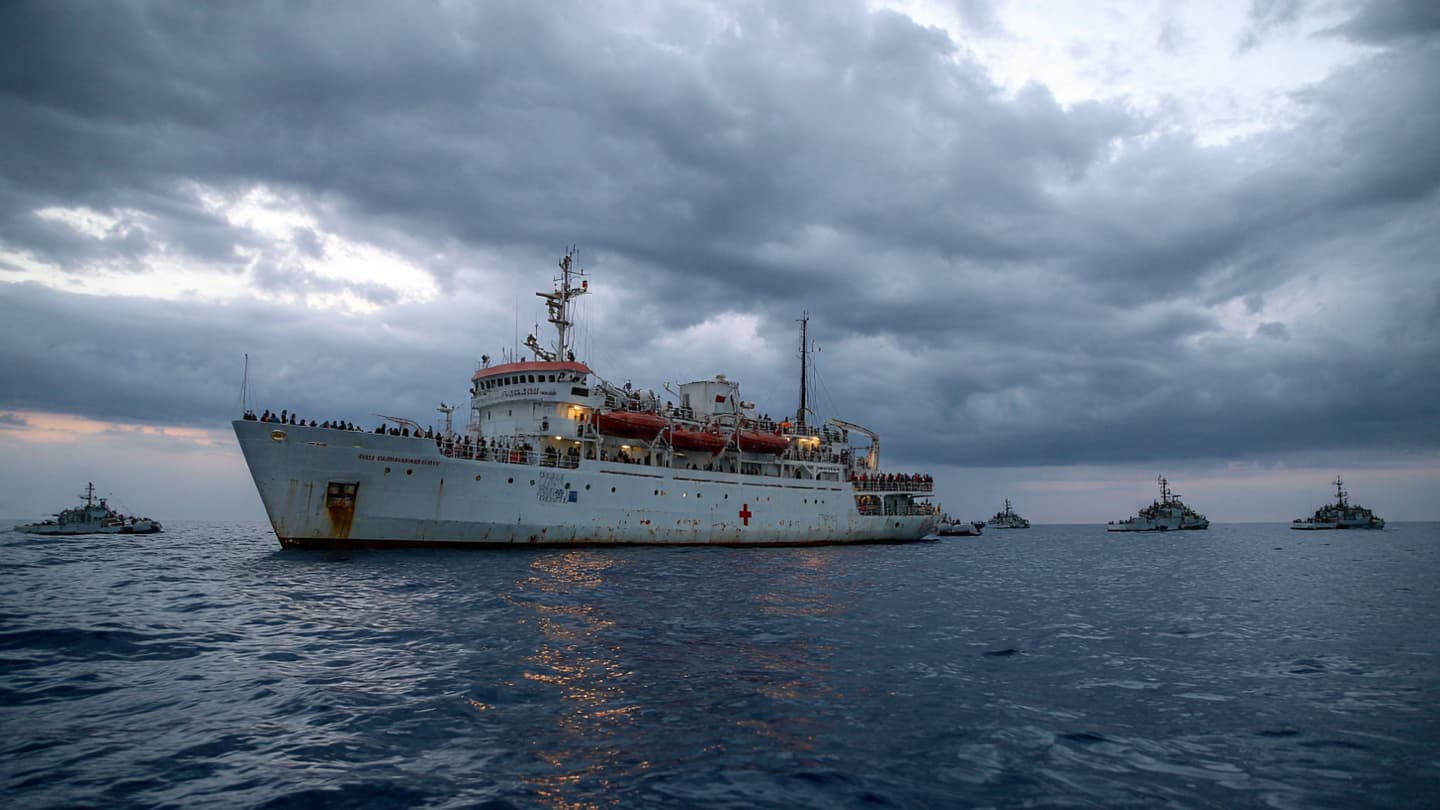
The Mediterranean carried its usual calm from a distance — long bands of blue water moving beneath pale summer light, fishing boats tracing quiet paths across the horizon. Yet beneath that stillness, the sea once again became part of a larger human story, one shaped by blockade, protest, detention, and the fragile language of accusation and denial that often follows conflict.
In recent days, activists involved in a Gaza-bound flotilla accused Israeli authorities of sexual assault, violence, and degrading treatment while in detention after Israeli forces intercepted their vessel. The allegations emerged following the activists’ release and transfer through diplomatic channels, adding another deeply sensitive layer to the already tense international debate surrounding Gaza, humanitarian access, and Israel’s security operation.
Several activists described harsh treatment during detention, including allegations of physical abuse, invasive searches, intimidation, and sexual violence. Human rights organizations and legal advocates have called for independent investigations into the claims, while Israeli authorities have strongly denied accusations of systemic abuse and stated that detainees were treated according to legal and security procedures.
The flotilla itself had been organized as part of ongoing international efforts to challenge restrictions surrounding Gaza and deliver humanitarian aid by sea. For years, such missions have occupied a difficult symbolic space — part protest, part relief effort, part political theater carried out across contested waters. Supporters describe them as acts of solidarity amid humanitarian crisis, while Israeli officials argue that maritime restrictions remain necessary for national security and to prevent weapons smuggling into Gaza.
In moments like these, the Mediterranean becomes more than geography. It turns into a corridor where competing narratives travel alongside ships: security and resistance, sovereignty and solidarity, law and human suffering. Each interception at sea echoes far beyond the vessels themselves, feeding international debates already strained by months of war, displacement, and civilian loss across Gaza and southern Israel.
The allegations of abuse arrive within a broader global climate increasingly attentive to the treatment of detainees during armed conflict and security operations. Claims involving sexual violence carry particular emotional weight, demanding careful investigation while also exposing the difficulty of establishing trust in environments shaped by deep political polarization. Human rights groups have urged transparency, independent oversight, and access to medical documentation where possible.
Meanwhile, ordinary life continues uneasily around the edges of the crisis. Along Mediterranean ports, ferries still depart on schedule, tourists continue walking crowded waterfronts, and fishermen return at dawn beneath gull-filled skies. Yet for those detained during the flotilla operation, the sea may now carry different memories — not of open horizons, but of confinement and uncertainty.
The Israeli government has continued defending the interception policy surrounding Gaza, emphasizing the country’s ongoing security concerns after months of regional violence and cross-border attacks. International reactions, however, remain divided. Some governments have called for restraint and accountability, while others have focused on the legality of maritime enforcement and the broader instability surrounding Gaza’s humanitarian conditions.
As investigations and public statements continue, the story settles into the wider landscape of a conflict where truth is often contested alongside territory itself. Allegations, denials, witness accounts, and political responses now move outward through diplomatic channels and international media, each carrying its own emotional gravity.
And so the Mediterranean watches again in silence — waves touching the shores of Gaza, Israel, Cyprus, and distant European ports alike. The sea remains unchanged in its motion, but the people crossing it continue to carry the burdens of a region where humanitarian hopes, political confrontation, and personal trauma often travel aboard the same fragile vessel.
AI Image Disclaimer: Images were generated using AI tools to illustrate the themes and setting of the story and are not authentic photographs.
Sources:
Reuters Al Jazeera The Guardian Associated Press Amnesty International
Note: This article was published on BanxChange.com and is powered by the BXE Token on the XRP Ledger. For the latest articles and news, please visit BanxChange.com