
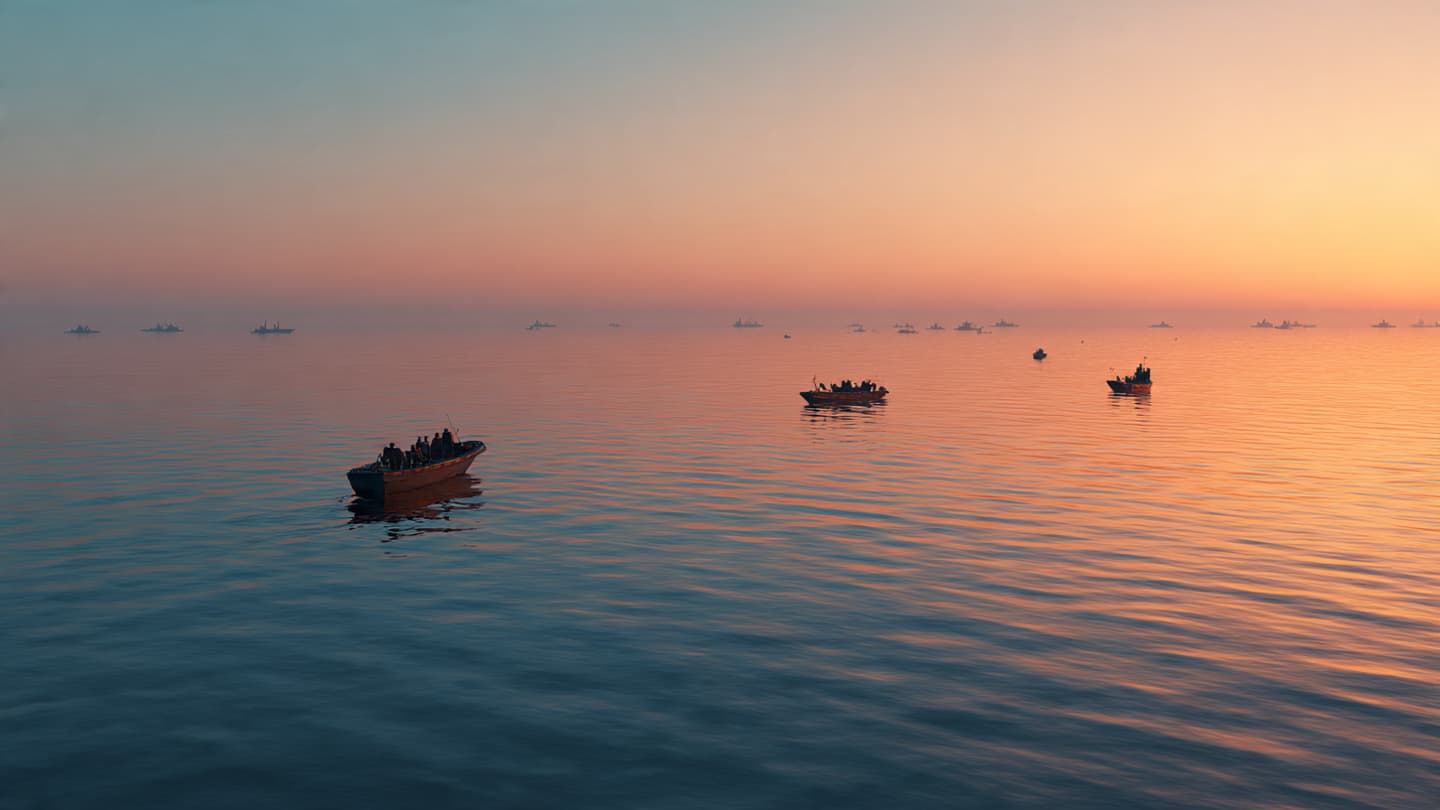
The Mediterranean often carries contradictions gently. On some mornings, its waters appear almost motionless beneath pale sunlight, fishing boats tracing familiar routes between ancient coastlines while cargo ships move silently toward distant ports. Yet these same waters have long carried the weight of politics, migration, blockade, and war — a sea where humanitarian gestures and military realities frequently collide beneath the same horizon.
This week, diplomatic tensions deepened after Canadian officials condemned what they described as the “appalling abuse” of Canadian citizens detained by Israel following the interception of a Gaza-bound flotilla. The comments, delivered by Anita Anand, have drawn renewed international attention to both the humanitarian voyage itself and the increasingly fraught politics surrounding access to the Gaza Strip.
The flotilla had attempted to approach Gaza as part of a broader activist effort aimed at challenging restrictions and drawing global awareness to humanitarian conditions inside the territory. Israeli authorities intercepted the vessels before they reached shore, detaining activists and passengers from several countries. Among them were Canadians whose alleged treatment in detention has now become the subject of diplomatic protest from Canada.
In Ottawa, Anand said detainees had been subjected to abusive treatment following their arrest, language that introduced a sharper tone into an already sensitive international dispute. Israeli authorities, meanwhile, have defended maritime interception policies as part of national security measures tied to the long-standing blockade surrounding Gaza.
Far from government statements and diplomatic briefings, the flotilla itself reflected something older and deeply symbolic: the belief that civilian voyages can still serve as acts of political witness. Such missions often carry medical supplies, food, journalists, and activists, but they also carry symbolism — small civilian boats moving deliberately toward one of the world’s most heavily contested coastlines.
The waters surrounding Gaza have for years existed under overlapping layers of military monitoring, humanitarian concern, and international legal debate. Israel maintains that maritime restrictions are necessary to prevent weapons smuggling and protect national security. Critics argue that the blockade has contributed to severe humanitarian hardship for Gaza’s civilian population, particularly after months of war and displacement that have devastated infrastructure throughout the territory.
Within Canada, the incident has stirred discussion not only about Middle East policy, but also about the responsibilities governments hold toward detained citizens abroad. Diplomatic language in such cases is often carefully calibrated, balancing alliances, legal realities, and domestic political pressures. Anand’s unusually direct wording suggested growing concern within Ottawa over both the conditions of detention and the broader political sensitivity surrounding the flotilla’s interception.
Meanwhile, across Gaza itself, ordinary life continues beneath extraordinary strain. Families remain displaced amid damaged neighborhoods, aid deliveries move intermittently through tightly controlled crossings, and hospitals operate under immense pressure. For many activists participating in flotilla missions, the voyages are designed less as direct logistical solutions and more as public attempts to force international attention back toward the humanitarian dimension of the conflict.
The episode also reflects how modern conflicts increasingly unfold across multiple stages at once — battlefields, diplomatic chambers, international courts, and global media networks. A small flotilla on open water can quickly become the center of international debate involving questions of sovereignty, humanitarian law, civil resistance, and geopolitical alignment.
In Israel, the issue arrives during a period of heightened security sensitivity following months of regional instability and ongoing conflict. Government officials have repeatedly emphasized the risks associated with unauthorized maritime access to Gaza, particularly amid continuing tensions involving regional armed groups and international criticism over military operations.
Still, the imagery surrounding flotillas often resonates far beyond immediate political outcomes. Civilian boats facing naval interception evoke older maritime traditions of protest and solidarity, where movement across water becomes both literal journey and symbolic act. In photographs released after the detentions, narrow decks, life jackets, and crowded cabins appeared against the vast openness of the Mediterranean — small human spaces surrounded by immense political gravity.
As diplomatic discussions continue, Canadian officials are reportedly seeking further information regarding the detained citizens and their treatment. International rights organizations have also called for transparency surrounding detention conditions and legal procedures connected to the interception.
By evening, the Mediterranean once again settles into relative calm, waves folding quietly against harbors from Tel Aviv to Cyprus. Yet somewhere between those coastlines, the memory of intercepted boats and detained activists continues drifting through diplomatic channels and public debate alike.
And in that wide stretch of water — ancient, contested, and endlessly traveled — another chapter has been added to the long history of how conflict, humanitarian concern, and political symbolism meet upon the sea.
AI Image Disclaimer: Visual depictions accompanying this article were generated using AI tools and are intended as illustrative interpretations of reported events.
Sources:
Reuters CBC News Associated Press BBC News Al Jazeera
Note: This article was published on BanxChange.com and is powered by the BXE Token on the XRP Ledger. For the latest articles and news, please visit BanxChange.com