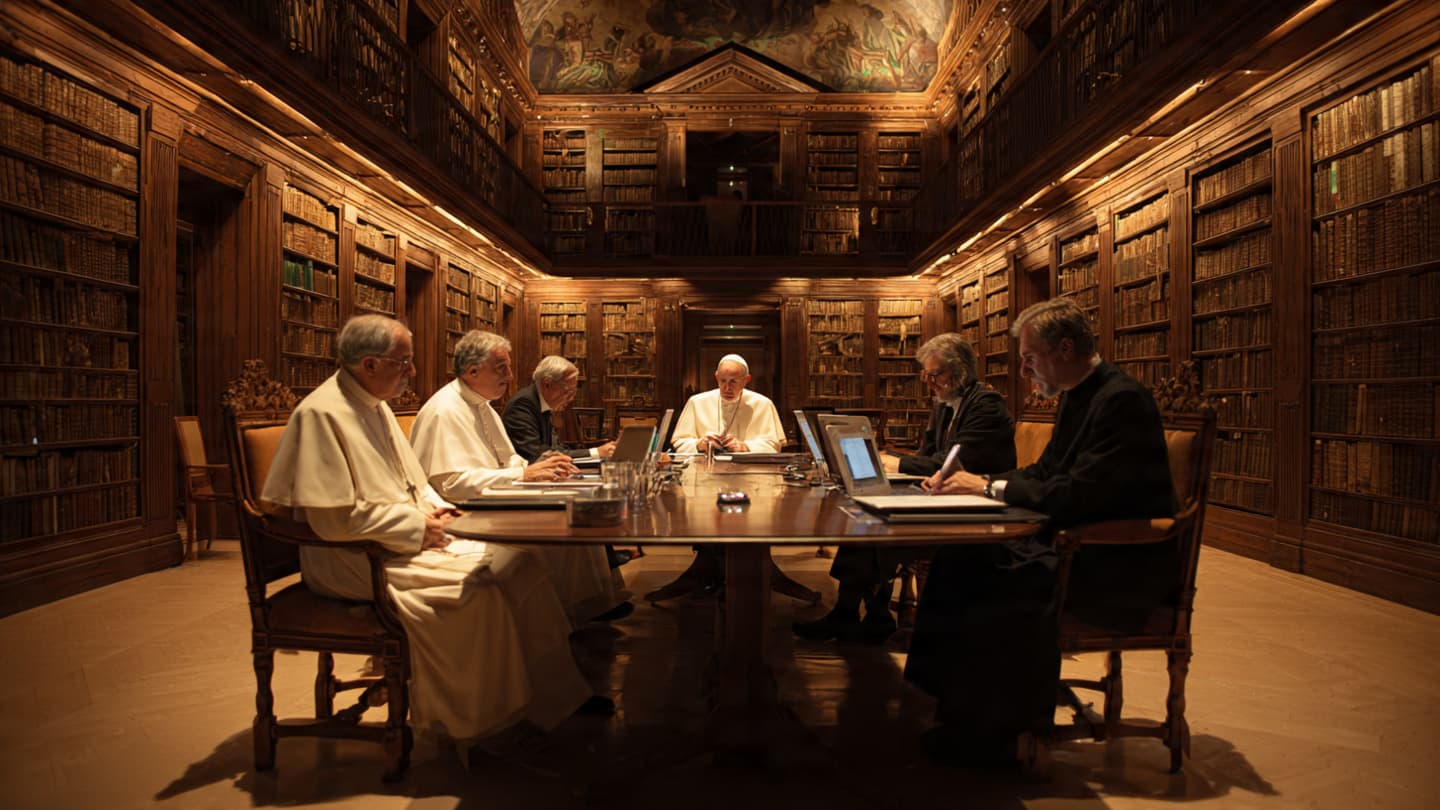
In the early morning hours, before tourists gather beneath the columns of St. Peter’s Square, the Vatican moves through a quieter rhythm. Footsteps echo across marble corridors. Bells drift gently above Rome’s terracotta rooftops. Inside centuries-old libraries and offices lined with manuscripts, conversations continue about subjects that did not exist when those walls were first raised — algorithms, neural networks, synthetic voices, and the uncertain shape of intelligence created by human hands.
This week, the Vatican announced that Pope Leo will issue a new text focused on human dignity and artificial intelligence, developed in collaboration with an Anthropic co-founder and other technology and ethics figures. The document is expected to address the moral and philosophical implications of rapidly advancing AI systems, exploring how technological innovation intersects with questions of labor, creativity, truth, autonomy, and the value of human life.
The partnership itself reflects a striking moment in modern history: one of the world’s oldest religious institutions engaging directly with architects of one of its newest transformative technologies. While the Vatican has spoken previously about ethical concerns surrounding artificial intelligence, this initiative appears designed to move beyond caution alone, toward a broader reflection on what remains distinctly human in an increasingly automated age.
Artificial intelligence now threads quietly through daily existence. It shapes search engines, financial systems, hospitals, education, entertainment, logistics, and communication. Much of it operates invisibly, woven into ordinary routines so seamlessly that many people interact with AI dozens of times each day without fully noticing. Yet beneath the convenience lies a growing unease shared across governments, universities, workplaces, and religious communities alike: how quickly technology can alter the texture of human experience before societies have agreed on the principles meant to guide it.
For the Vatican, discussions about technology are rarely framed only as technical matters. They are treated as questions about the soul of civilization itself — about dignity, work, community, memory, and moral responsibility. Pope Leo’s forthcoming text is expected to continue a tradition within Catholic social teaching that examines how economic and technological transformations affect human identity and social cohesion.
The involvement of an Anthropic co-founder also signals the increasingly blurred boundary between ethical philosophy and technological development. AI companies now find themselves not only engineering software, but participating in debates once dominated by lawmakers, academics, theologians, and historians. Questions surrounding machine learning systems — their biases, capabilities, labor impacts, and influence over public discourse — have grown too large to remain solely inside laboratories or corporate offices.
In Rome, these discussions unfold against a city layered with centuries of reflection on human meaning. Ancient ruins stand beside modern cafés filled with students typing on glowing laptops. Priests walk through crowded streets while tourists livestream the skyline from smartphones. The coexistence of the ancient and the technological feels especially visible there, where history itself seems to observe the arrival of each new era with cautious patience.
The Vatican has increasingly positioned itself as a moral participant in global debates over AI governance and digital ethics. Previous statements from Church leaders have warned against systems that reduce people to data points or economic functions, emphasizing the importance of preserving empathy, accountability, and human-centered decision-making. Concerns surrounding misinformation, surveillance, labor displacement, and emotional manipulation have become central themes in many of these conversations.
Yet the emerging relationship between faith institutions and technology companies is not purely adversarial. Many religious leaders and AI researchers alike speak in surprisingly similar terms about responsibility, humility, and unintended consequences. Both worlds, despite their differences, confront questions about power: who shapes society, who benefits from innovation, and how rapidly changing tools alter the conditions of human life.
Outside Vatican walls, Rome continues moving through its familiar patterns. Scooters weave through narrow streets. Evening light settles across the Tiber River. Pilgrims and tourists gather in open squares while conversations about artificial intelligence unfold quietly inside conference halls and private meetings nearby. The future often arrives this way — not suddenly, but alongside ordinary life, blending into the existing rhythm before its full consequences are understood.
Pope Leo’s text is expected to be released later this year, accompanied by broader dialogue involving ethicists, academics, and technology leaders. While it will not resolve the growing global debate surrounding AI, the document may help shape how institutions beyond the technology sector frame the conversation in years ahead.
And so, beneath the bells and stone of Vatican City, another chapter begins in humanity’s long habit of questioning its own creations — searching, once again, for what should remain sacred in an age increasingly defined by machines.
AI Image Disclaimer: Illustrations were generated using AI technology to visually represent themes discussed in the article.
Sources Reuters Associated Press Vatican News The New York Times Financial Times
Published by Banx Network. This article is part of the Banx decentralized media programme, powered by the BXE token on the XRP Ledger.