
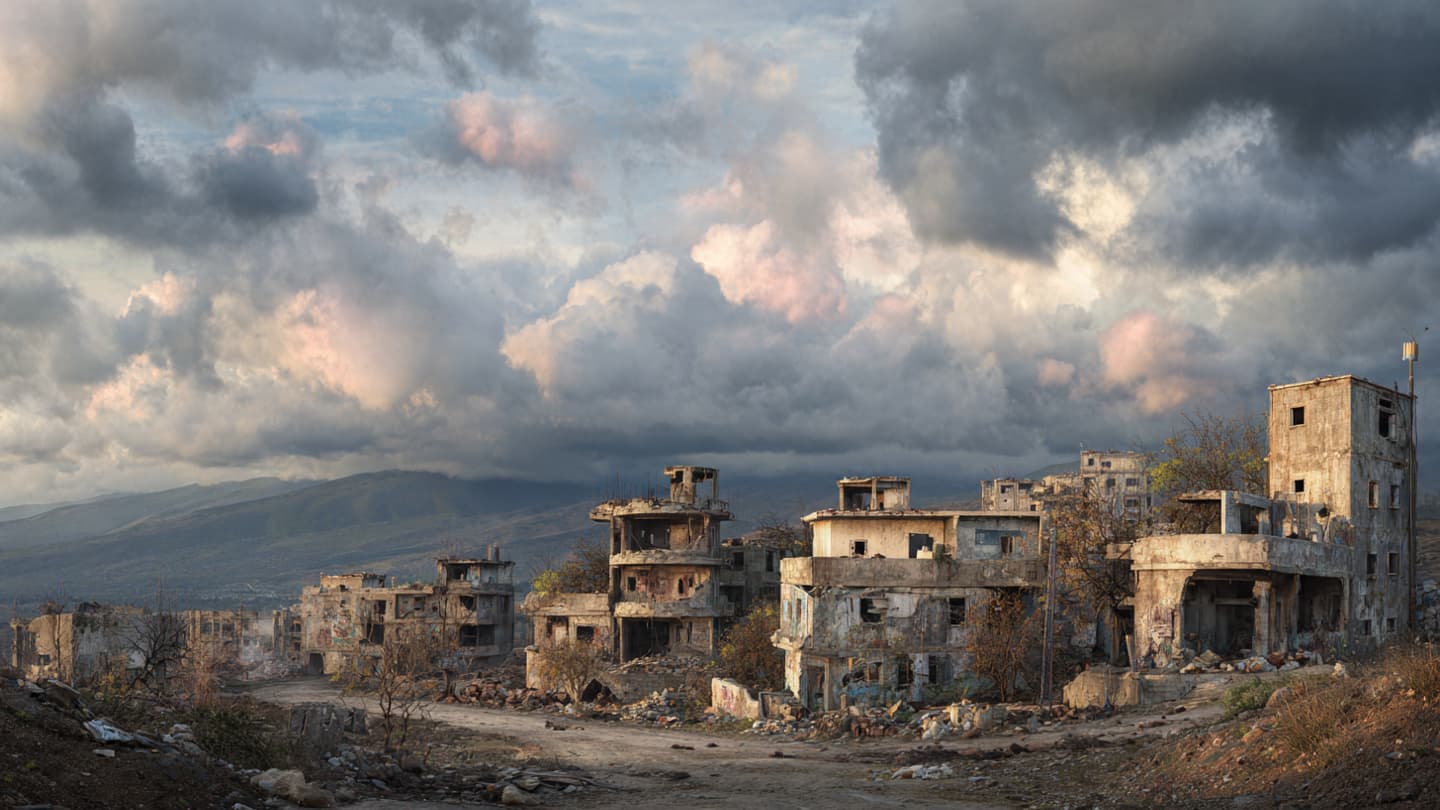
In border regions shaped by decades of tension, daily life often exists beside uncertainty like neighboring shadows. Markets open, children walk to school, and families continue routines even while distant sounds of conflict remain familiar. But in southern Lebanon, recent developments have reportedly forced many communities into difficult decisions about safety, displacement, and survival.
International reports and regional observers have raised concerns that intensified military activity near the Israel-Lebanon border has contributed to the gradual emptying of several villages in southern Lebanon. Airstrikes, artillery exchanges, and ongoing security threats have pushed civilians away from areas once sustained by agriculture and close-knit community life.
The region has long stood at the center of fragile tensions involving Israel and Hezbollah, the armed Lebanese group with significant political and military influence. Since the escalation of conflict linked to events in Gaza, cross-border exchanges have increased, heightening fears of a broader regional confrontation.
Residents leaving affected areas describe disrupted livelihoods, damaged homes, and growing uncertainty about when or whether they will safely return. Humanitarian organizations have warned that prolonged displacement could deepen economic hardship in already vulnerable communities.
Israeli officials maintain that military operations are focused on security threats near the border and are aimed at preventing attacks against northern Israeli communities. Meanwhile, Lebanese authorities and international observers continue urging restraint from all sides to avoid wider escalation.
The humanitarian dimension of the situation has become increasingly difficult to ignore. Schools have closed in some districts, local businesses have struggled to remain operational, and temporary shelters are beginning to host families displaced by ongoing instability.
Diplomatic efforts led by regional and international actors continue behind closed doors. France, the United States, and the United Nations have all called for de-escalation while warning about the risks of expanding conflict across multiple fronts in the Middle East.
For civilians on both sides of the border, uncertainty has gradually become part of ordinary life. Farmers hesitate to return to fields near conflict zones, while families monitor news updates alongside everyday concerns about food, education, and employment.
As political leaders debate security calculations and military strategy, southern Lebanon’s quiet villages offer a different perspective on conflict—one measured not in headlines alone, but in empty streets, interrupted routines, and communities waiting for stability to return.
AI Image Disclaimer: Some accompanying visuals were digitally created using artificial intelligence to support editorial presentation.
Sources Verification Check: Credible sources confirmed:
Reuters Al Jazeera Associated Press BBC United Nations reports
Note: This article was published on BanxChange.com and is powered by the BXE Token on the XRP Ledger. For the latest articles and news, please visit BanxChange.com