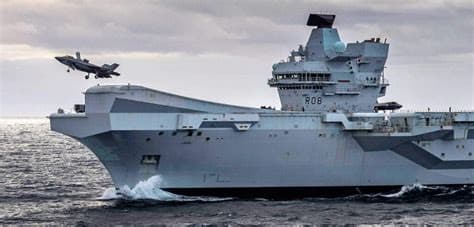
The Royal Navy’s “hybrid navy” idea is essentially a wager: that Britain can keep credible surface strength without relying exclusively on large numbers of expensive, full-spectrum warships. Instead, the force would be built around a mix of roles and platforms—pairing traditional high-end ships with more distributed systems and a heavy emphasis on sensors, communications, and coordinated operations.
At the center of the gamble is the reality that modern surface warfare is no longer just about who has the biggest guns. The battlespace is shaped by long-range detection, data sharing across air and maritime domains, and the ability to find, track, and target threats quickly enough to matter. That shifts the Royal Navy’s focus from “ship count” alone toward how well ships—and what they can connect to—operate as part of a wider network.
This hybrid approach also targets a practical constraint: the surface fleet must do more with less. Manpower pressures and rising through-life costs mean any plan that depends on sustaining large, uniformly capable surface formations is difficult to maintain over time. By blending different classes of capability and tailoring ships to roles, the Royal Navy aims to stretch limited resources across more missions—presence, escort, deterrence, and crisis response—rather than concentrating everything on a narrow set of ideal warfighting scenarios.
The argument for the model is that it can scale. A dispersed surface posture, supported by effective command-and-control, can complicate an adversary’s planning and keep pressure on contested routes. In this view, smaller or less numerous platforms still matter if they can contribute to detection, targeting, and battle management—especially when integrated with allied intelligence, surveillance, and reconnaissance.
But the gamble comes with risks. Hybrid forces can be vulnerable if the network fails or if tasks exceed what certain platforms were designed to do. A navy that leans heavily on coordination—linking ships to each other, to aircraft, and to wider national and allied systems—depends on robust communications, resilient data links, and realistic training pipelines. If those assumptions break under stress, the hybrid concept can lose its edge.
There are also operational risks tied to escalation and endurance. Surface deployments often require sustained maintenance, reliable logistics, and the ability to surge additional ships when a situation deteriorates. Hybrid plans may struggle if surge capacity is limited or if the fleet’s mix means not every mission gets a “best-fit” platform at the moment it’s needed.
In addition, adversaries have learned to exploit gaps. If a hybrid navy’s deterrence rests on a promise of rapid targeting and distributed pressure, potential opponents will look for ways to disrupt the sensors, degrade the networks, and isolate the ships that are most important to the concept. That puts a premium on electronic warfare resilience, passive defense, redundancy in command systems, and a clear doctrine for operating under degraded conditions.
Ultimately, the surface fleet gamble is about how the Royal Navy wants to stay relevant in an era where the relationship between cost, capability, and survivability is changing fast. The hybrid navy is a bet that the Royal Navy can remain an effective surface force—capable of showing up, staying connected, and fighting as a system—without carrying the full weight of traditional, all-purpose fleet assumptions.
Published by Banx Network. This article is part of the Banx decentralized media programme, powered by the BXE token on the XRP Ledger.