
Key Highlights
- Protest Response:Albanian police used tear gas and water cannons to disperse protesters.
- Injuries Reported:Three police officers and one protester were injured during the clashes.
- Ongoing Unrest:Protests against government corruption have persisted for over a month.
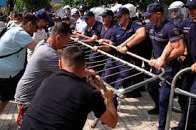
Albanian police clashed with anti-government protesters outside the parliament in Tirana on Thursday, deploying tear gas and water cannons to disperse the crowd. The unrest erupted as demonstrators threw eggs and flour at police and lawmakers, marking a significant escalation in ongoing protests against the government’s handling of corruption allegations.
Reports from local media indicate that the confrontation resulted in injuries to three police officers and one protester. The protests, which have been ongoing for more than a month, are primarily driven by public dissatisfaction with alleged corruption linked to coastal development projects and the management of protected areas. Protesters initially rallied against a luxury resort project purportedly associated with Jared Kushner, the son-in-law of former U.S. President Donald Trump, but the movement has since expanded to encompass broader grievances regarding government transparency and accountability.
On Thursday morning, as lawmakers arrived for a parliamentary session, protesters gathered outside the building. Tensions escalated when demonstrators began throwing eggs at the officials. In response, police utilized water cannons and tear gas to push back the crowd, leading to a chaotic scene outside the parliament.
Prime Minister Edi Rama, who has been in power since 2013, commented on the protests, stating that they have shifted from a message of civic values to one of conflict and violence. His administration has faced increasing scrutiny over its handling of corruption allegations, particularly concerning the coastal development projects that have sparked public outrage.
Earlier this year, protests erupted demanding the resignation of Deputy Prime Minister Belinda Balluku over similar corruption allegations. Although Balluku was dismissed from her position, the mistrust among opposition groups has continued to fester, fueling further demonstrations. In light of the recent unrest, a new protest has been announced for Saturday, indicating that tensions are likely to persist in the coming days.
The Albanian government has consistently denied any wrongdoing related to the corruption allegations, asserting that the protests are politically motivated. However, the sustained public outcry suggests a significant level of discontent among citizens regarding the government's actions and transparency.
As the situation develops, it remains to be seen how the government will respond to the ongoing protests and whether further clashes will occur in the future. The protests reflect a broader struggle for accountability and governance in Albania, a country that has faced numerous challenges in its path toward European integration and democratic reform.
Published by Banx Network. This article is part of the Banx decentralized media programme, powered by the BXE token on the XRP Ledger.



