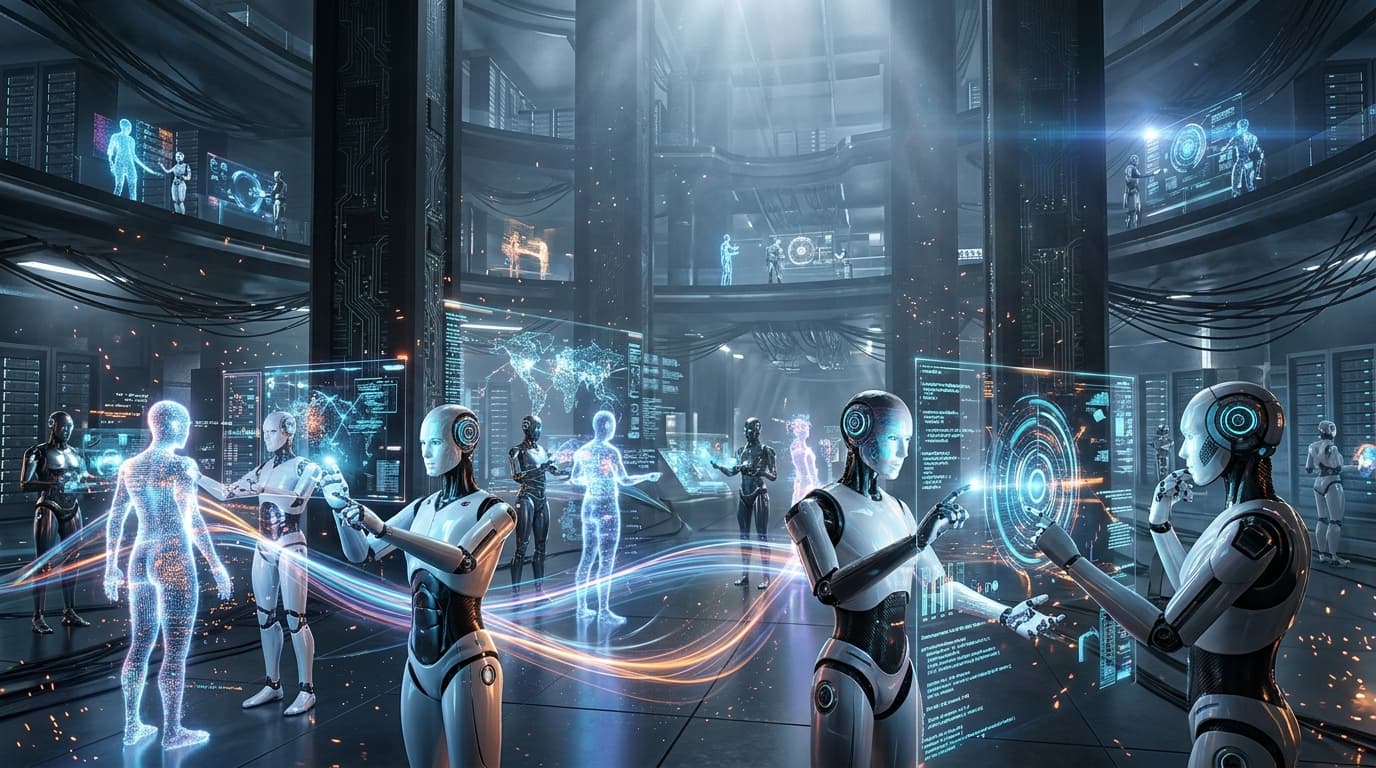
Artificial intelligence is rapidly transforming industries worldwide, but growing concerns surrounding automation and workforce disruption are now driving one of the biggest economic debates of the modern era. Technology leaders, economists, businesses, and policymakers increasingly find themselves confronting a difficult question: how will artificial intelligence reshape human employment over the coming decades? The discussion has intensified as AI capabilities continue advancing at extraordinary speed. Artificial intelligence systems that once handled narrow tasks now increasingly perform work involving language processing, customer service operations, research assistance, software development support, content generation, financial analysis, logistics optimization, and increasingly complex decision-making functions. Companies globally continue investing aggressively. Artificial intelligence spending continues accelerating across technology firms, banking institutions, manufacturing sectors, healthcare systems, logistics companies, education providers, and media organizations. Businesses increasingly view automation capabilities as competitive advantages capable of improving efficiency while reducing operational costs. Supporters argue artificial intelligence may ultimately drive economic expansion. Technology revolutions throughout history frequently disrupted industries while simultaneously creating entirely new opportunities. Industrial machinery transformed manufacturing. Computers reshaped office environments. Internet technology created industries that previously did not exist. Some economists believe artificial intelligence may follow similar patterns. New industries may emerge. Workforce demands may evolve. Productivity gains could potentially strengthen economic growth while creating opportunities impossible to predict today. Technology leaders frequently emphasize that innovation historically generates long-term employment growth despite short-term disruption. Critics remain more cautious. Automation concerns increasingly focus on job displacement risks. Artificial intelligence systems continue improving capabilities traditionally performed by human workers. Administrative functions increasingly face automation pressure. Customer support systems increasingly integrate AI capabilities. Data processing tasks increasingly rely upon machine learning infrastructure. Content production environments increasingly incorporate automation tools. Concerns continue expanding beyond repetitive work. Advanced AI capabilities increasingly influence professional industries once considered relatively protected from automation disruption. Legal support systems increasingly integrate AI tools. Financial analysis capabilities continue expanding. Software development increasingly incorporates artificial intelligence assistance. Healthcare technology systems continue evolving. Education technology increasingly explores AI integration. The scope continues growing. Labor economists increasingly debate whether workforce adaptation can occur quickly enough to match technological acceleration. Skill requirements continue evolving. Digital literacy increasingly influences employment opportunities. Technical adaptability increasingly shapes long-term workforce competitiveness. Education systems increasingly face pressure to modernize. Workforce training initiatives increasingly attract policy attention. Governments globally continue evaluating strategies designed to prepare labor markets for technological transformation. Corporate leaders increasingly emphasize workforce adaptation. Employee reskilling programs continue expanding. Training initiatives increasingly support technology transitions. Businesses increasingly recognize workforce development remains critical during periods of rapid technological change. Artificial intelligence discussions increasingly extend beyond economics. Social implications continue attracting attention. Questions surrounding fairness continue emerging. Questions surrounding transparency continue expanding. Questions involving ethical deployment increasingly shape policy discussions. Regulatory frameworks continue developing globally. Governments increasingly balance innovation support alongside accountability requirements. International competition continues accelerating. Countries globally increasingly recognize artificial intelligence leadership as strategic economic positioning. Technology investment increasingly influences competitiveness. Research funding continues expanding. Infrastructure development continues accelerating. Artificial intelligence increasingly intersects with national economic priorities. The workforce transition discussion remains deeply complex. Technology transformation rarely follows simple patterns. Some industries may experience disruption faster than others. Some professions may evolve rather than disappear. New opportunities may emerge alongside challenges. The future remains uncertain. What appears increasingly clear, however, is artificial intelligence will influence labor markets significantly. Businesses continue adapting. Workers continue adjusting. Governments continue evaluating responses. Education systems continue evolving. Technology development continues accelerating. The conversation surrounding jobs and artificial intelligence is no longer theoretical. It is increasingly becoming one of the defining economic questions of the modern world. Artificial intelligence continues advancing. The workforce continues changing. And societies globally now face the challenge of ensuring technological progress strengthens opportunity rather than widening uncertainty. The next decade may determine how successfully that balance is achieved
Published by Banx Network. This article is part of the Banx decentralized media programme, powered by the BXE token on the XRP Ledger.