From Earth, a space mission often appears as a brief sequence of dramatic moments—a launch rising toward the sky and a capsule descending back to the ground. Between those points, however, unfolds a quieter story shaped by routine, discipline, and scientific discovery. That story reached its latest chapter as China's Shenzhou 21 astronauts safely returned to Earth after completing a record-setting mission.
The crew spent approximately 210 days aboard the Tiangong space station, establishing the longest single mission undertaken by a Chinese astronaut team. Their stay reflected China's continuing efforts to expand its capabilities in human spaceflight.
Recovery teams met the returning astronauts after their landing in Inner Mongolia. Chinese space officials reported that the crew members were in good condition following months in orbit.
The mission attracted additional attention because of earlier concerns involving spacecraft safety and orbital debris. Operational adjustments were made during the mission period to ensure crew safety and maintain contingency plans if needed.
Although reports described the astronauts as briefly "stranded," space authorities emphasized that safety procedures remained in place and that mission operations continued under careful supervision.
During their time aboard Tiangong, the astronauts conducted a broad range of scientific experiments. Research activities included studies related to biology, materials science, aerospace medicine, and technologies intended to support future missions.
The crew also completed maintenance tasks and spacewalks that contributed to the ongoing operation of China's orbital laboratory. Such activities form part of broader efforts to develop long-duration human spaceflight experience.
The mission arrives during a period of growing international activity in orbit, as governments and private organizations alike seek to deepen scientific research and prepare for future exploration beyond low Earth orbit.
With the astronauts now back on Earth, scientists will analyze mission data while medical teams evaluate the effects of extended space travel. The successful completion of Shenzhou 21 marks another milestone in China's evolving space program.
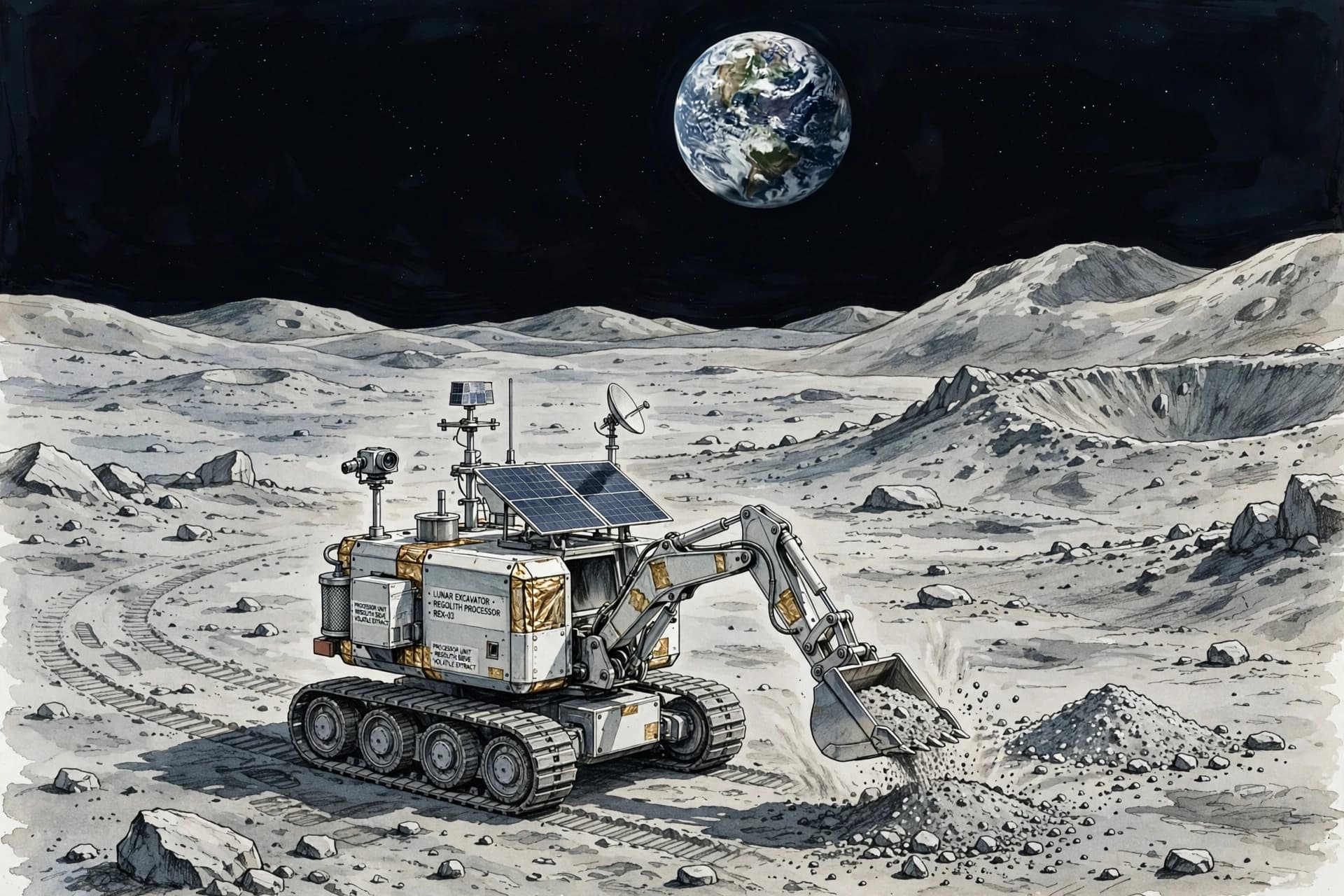
AI Image Disclaimer: This article contains an AI-generated illustration intended to depict the mission and recovery process.
Source Verification Check Credible sources available:
Xinhua China Manned Space Agency Associated Press Phys.org
Published by Banx Network. This article is part of the Banx decentralized media programme, powered by the BXE token on the XRP Ledger.