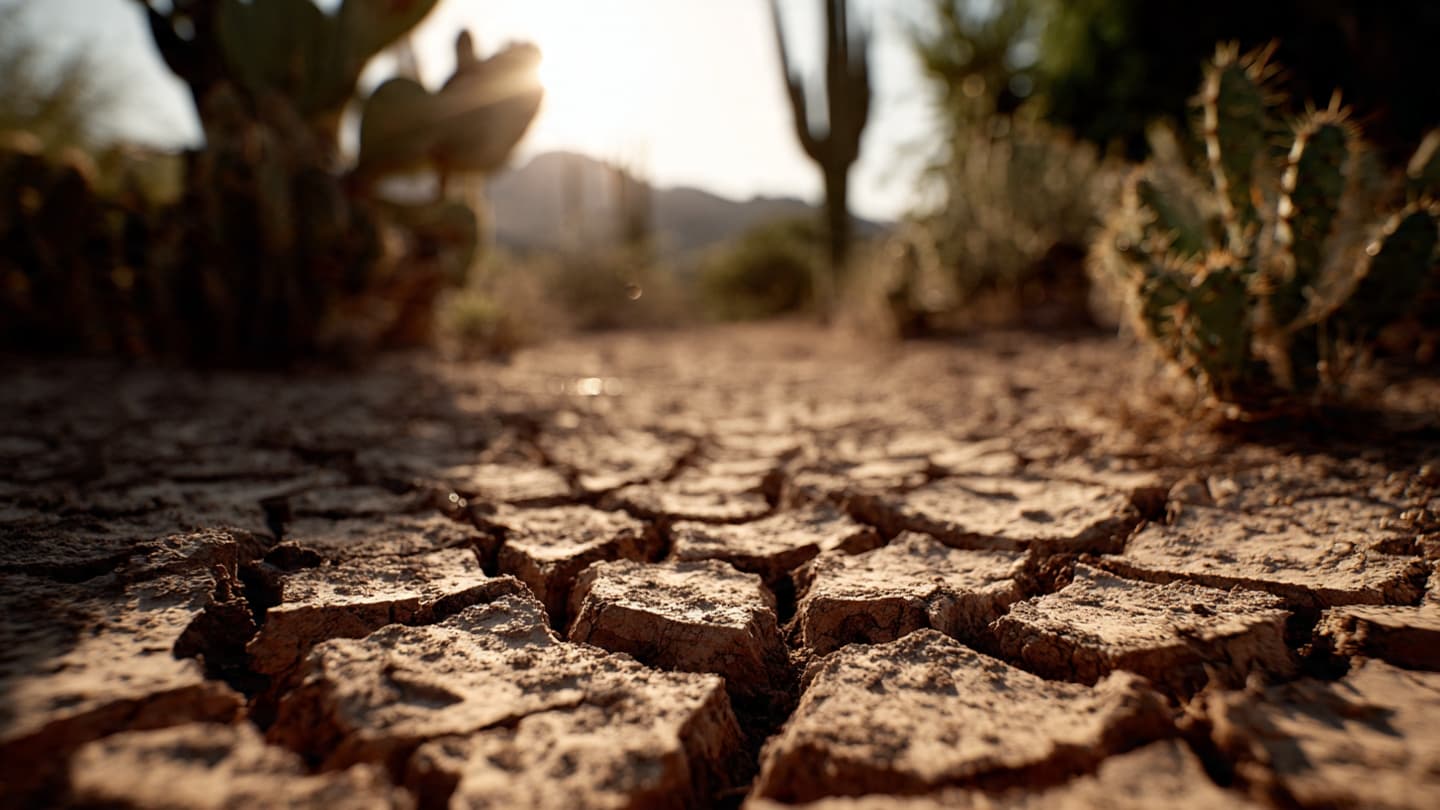
Across the American West, heat can make the landscape appear almost motionless. Roads shimmer beneath the sun, distant mountains seem softened by the air, and dry vegetation waits along the edges of forests and highways. During a recent heat wave, that stillness carried a more serious meaning as temperatures moved toward records while wildfire danger increased across several states.
The Associated Press reported that a heat wave affected large areas of the western United States, with a high-pressure system creating a heat dome that trapped hot air near the ground. Las Vegas reached 115 degrees Fahrenheit, while Phoenix was expected to reach 116 degrees and El Centro, California, was forecast to approach 118 degrees.
Great Falls, Montana, was also facing the possibility of a record high near 104 degrees. The range of locations affected by the heat demonstrated how broadly the atmospheric pattern extended, from desert communities in the Southwest to areas farther north that generally experience different summer conditions.
The heat became more difficult to escape after sunset. Elevated overnight temperatures reduce the amount of cooling available to people and buildings, meaning the body has less time to recover before another hot day begins. In cities, concrete, asphalt, and buildings can retain warmth long after direct sunlight disappears.
The same conditions also influenced wildfire danger. Montana faced red flag warnings while fires were already burning in parts of the state. In Nevada, low humidity increased dryness, while parts of the Pacific Northwest were dealing with active fires and difficult firefighting conditions.
Washington experienced particularly intense fire activity. The Old Trails Fire near Spokane spread rapidly amid strong winds and high temperatures, prompting emergency measures and evacuations. The situation illustrated how quickly heat becomes more consequential when combined with wind and dry vegetation.
Oregon was also dealing with major fire activity. The Rowe Creek Complex had expanded across a large area, while other fires affected Idaho, Utah, and California. The geography differed from one location to another, but the combination of heat, dryness, wind, and available vegetation created challenging conditions for firefighters.
For residents, extreme heat often changes daily routines in quieter ways than a wildfire does. People may shift outdoor activities to cooler hours, seek air-conditioned spaces, or use community cooling centers. Outdoor workers face particular challenges because their schedules can be difficult to adjust even when temperatures become dangerous.
Scientists have linked the broader increase in extreme heat to human-caused climate change, while the current weather pattern has also been influenced by a strong El Niño event. These factors operate alongside local weather conditions, creating a complicated background for individual heat waves and fire seasons.
As the western summer continues, temperatures and wildfire conditions remain closely watched by weather and emergency agencies. The recent heat wave has demonstrated how quickly a period of extreme warmth can overlap with fire danger, leaving communities across the West preparing for both the immediate heat and the possibility of rapidly changing conditions.
AI Image Disclaimer
AI-generated imagery accompanies this article as a visual interpretation and should not be considered photographic documentation.
Sources
Associated Press National Weather Service NOAA
Note: This article was published on BanxChange.com and is powered by the BXE Token on the XRP Ledger. For the latest articles and news, please visit BanxChange.com
.jpg&w=3840&q=75 "Adam Scott Says His Daughter’s Acting Class Was Forced to Watch His Failed ‘Office’ Audition as an Example of What Not to Do")