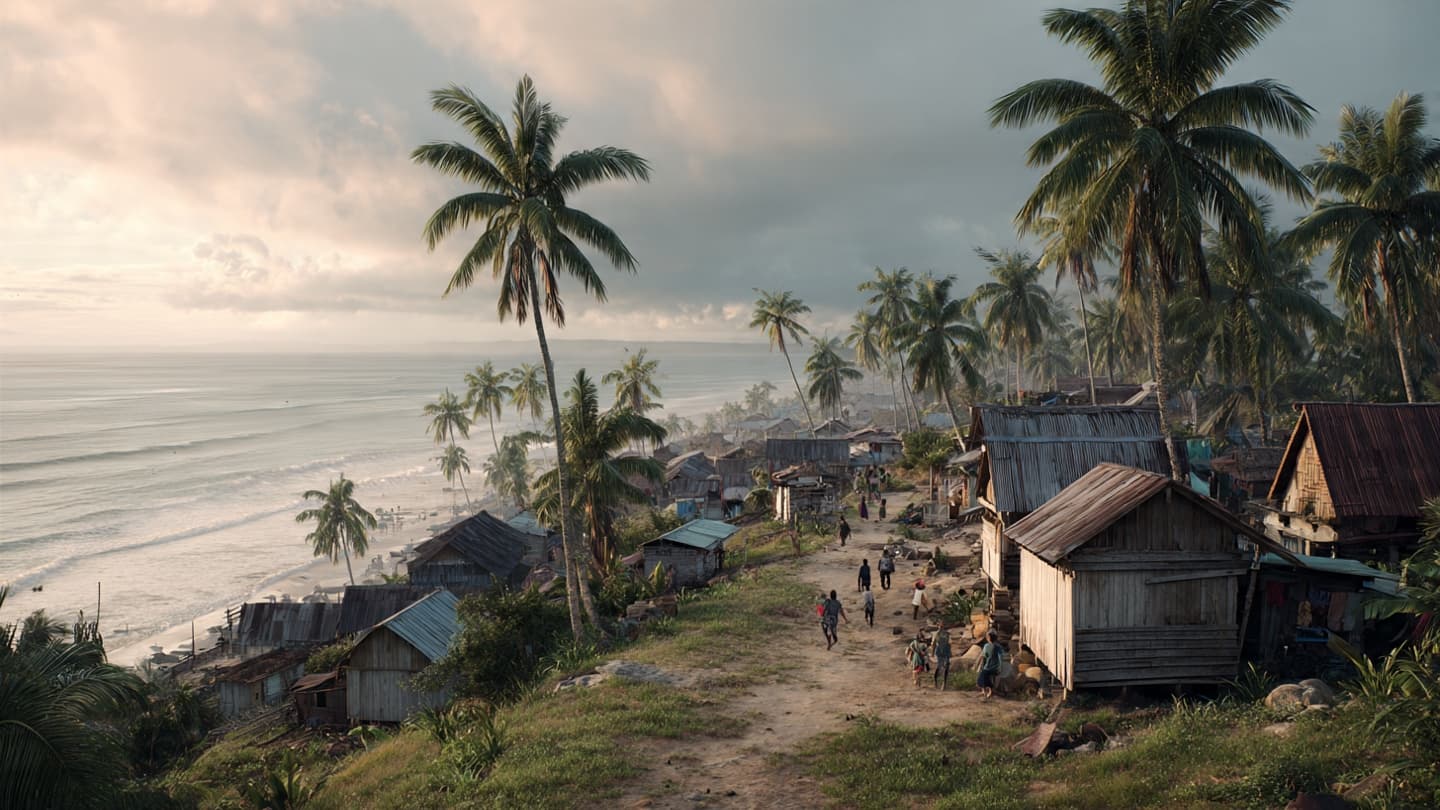
Before dawn, Flores was still wrapped in the ordinary quiet of early morning. Then the ground began to move. Buildings shook, roads were damaged, and residents rushed from homes as a powerful earthquake struck offshore, turning a familiar Saturday morning into a sudden emergency across eastern Indonesia.
The earthquake had a magnitude of 7.7 and struck near Nagekeo Regency in East Nusa Tenggara. Indonesia's disaster agency, BNPB, said the epicenter was in the sea about 38 kilometers northeast of Mbay, at a depth of approximately 15 kilometers.
The scale of the shaking was felt across a broad part of the region. Buildings and homes collapsed in several locations, while landslides blocked roads and complicated access to communities that needed assistance. The Trans-Flores highway was among the important routes affected by the disaster.
By the latest reports, at least 38 people had died, with casualties reported in several areas of Flores. In Maumere, the largest town in Sikka Regency, 20 deaths were reported, while a landslide in Reok village claimed another 16 lives. More than a dozen people were also injured, according to reports from authorities and local officials.
The earthquake briefly brought the sea into the center of attention. Authorities issued a tsunami warning after the offshore earthquake, prompting people in potentially affected coastal areas to move away from the shoreline. The warning was later lifted after monitoring found no significant continuing sea-level threat.
For communities on an island, evacuation can be complicated by geography. Roads may be narrow or damaged, communication systems can fail, and landslides can isolate villages from larger towns. In the aftermath of the Flores earthquake, those problems slowed the movement of emergency teams and made the full scale of the damage difficult to establish immediately.
Reuters reported that approximately 2,000 people had evacuated from affected areas. Power outages and communication disruptions added to the uncertainty, while rescue teams continued working to reach places where roads had become difficult or impossible to use.
Aftershocks added another layer of anxiety. Following a major earthquake, residents may hesitate to return indoors even when buildings appear intact, while rescue teams must work carefully around structures that may have been weakened by the initial shaking. The landscape can remain unsettled long after the strongest movement has passed.
Indonesia lies along the Pacific Ring of Fire, a region where several tectonic plates meet and where earthquakes and volcanic activity occur frequently. Flores and the surrounding islands have experienced destructive earthquakes before, making preparedness and rapid emergency response especially important for communities living across the region.
For now, rescue and assessment operations remain underway. Authorities are continuing to identify victims, inspect damaged buildings, restore access to isolated areas, and provide assistance to displaced residents. The earthquake has left a wide physical and human footprint across Flores, while the full extent of the damage will become clearer as emergency teams reach more communities.
Image Disclaimer
The following visuals are AI-generated conceptual illustrations created to represent the reported earthquake and its aftermath, not actual photographs.
Sources
Reuters Associated Press BNPB BMKG
Note: This article was published on BanxChange.com and is powered by the BXE Token on the XRP Ledger. For the latest articles and news, please visit BanxChange.com