
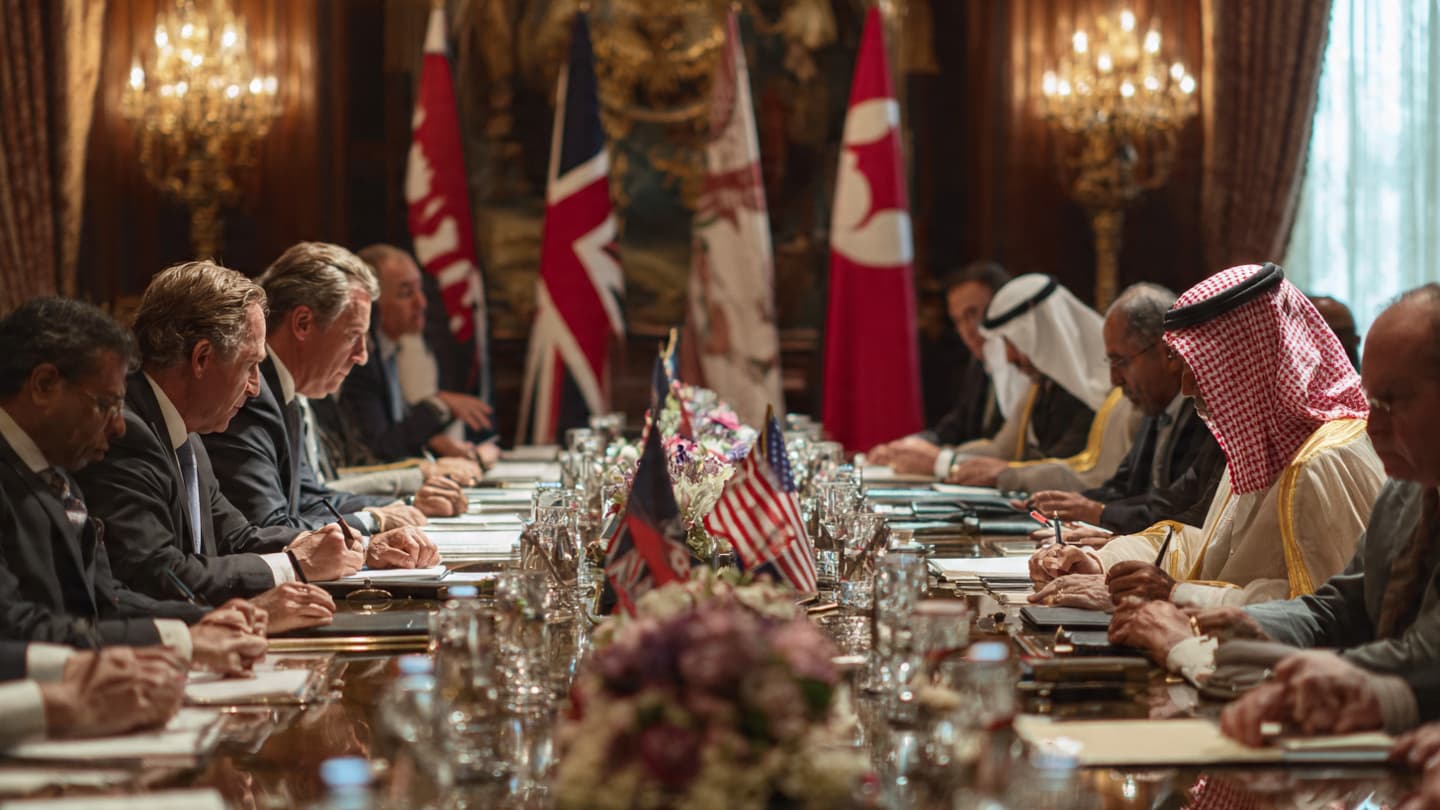
Key Highlights
- Trade Deal:The UK has secured a £3.7 billion trade agreement with six Gulf nations.
- Economic Diversification:Gulf states are diversifying economies beyond oil.
- Future Prospects:The agreement aims to enhance long-term investment opportunities.
The United Kingdom has recently announced a significant £3.7 billion trade agreement with six Gulf nations, marking a pivotal moment in its post-Brexit economic strategy. This agreement, which includes members of the Gulf Cooperation Council such as Saudi Arabia, the United Arab Emirates, Qatar, Kuwait, Bahrain, and Oman, is designed to deepen commercial cooperation and expand long-term investment opportunities across various sectors.
British officials have highlighted that this trade deal is not merely a financial transaction but a strategic move to strengthen economic ties beyond Europe. As the UK navigates its new position in the global market following Brexit, the focus on partnerships with Gulf nations reflects a broader ambition to secure stability in an increasingly uncertain economic landscape. The agreement is expected to support industries ranging from technology and energy to financial services and infrastructure, showcasing the diverse potential of these partnerships.
For the Gulf nations, this agreement represents a crucial step in their ongoing efforts to diversify their economies, which have historically relied heavily on oil revenues. Over the past decade, these countries have invested significantly in sectors such as tourism, logistics, renewable energy, artificial intelligence, and urban development. This diversification is essential for preparing for future economic transitions and reducing dependency on fossil fuels.
Analysts have noted that the timing of this agreement is particularly relevant, as international trade patterns are increasingly shaped by geopolitical competition and supply chain vulnerabilities. In this context, countries are actively seeking to build broader networks of commercial cooperation to mitigate economic risks. The Gulf region has emerged as a vital economic center, attracting global investment through large-scale infrastructure projects and sovereign wealth funds, making it an attractive partner for the UK.
Business groups in Britain have largely welcomed the announcement, viewing the Gulf markets as areas of significant growth potential. Sectors such as finance and advanced technology are expected to benefit from increased cross-border investment and reduced barriers to cooperation. However, rights organizations and policy observers have urged that economic partnerships should be balanced with discussions surrounding labor protections and regional stability. These considerations are crucial, especially in negotiations involving rapidly developing economies where human rights issues may arise.
As both sides prepare for the implementation of this agreement, discussions will continue in the coming months, with additional sector-specific agreements anticipated as negotiations progress. The UK government has reiterated the strategic importance of the Gulf region for long-term trade and energy cooperation, emphasizing the need for sustained dialogue and collaboration.
In conclusion, this trade agreement not only signifies a financial commitment but also reflects a strategic pivot in the UK's approach to international trade, aiming to foster resilience and adaptability in a rapidly changing global economy.
Published by Banx Network. This article is part of the Banx decentralized media programme, powered by the BXE token on the XRP Ledger.



