
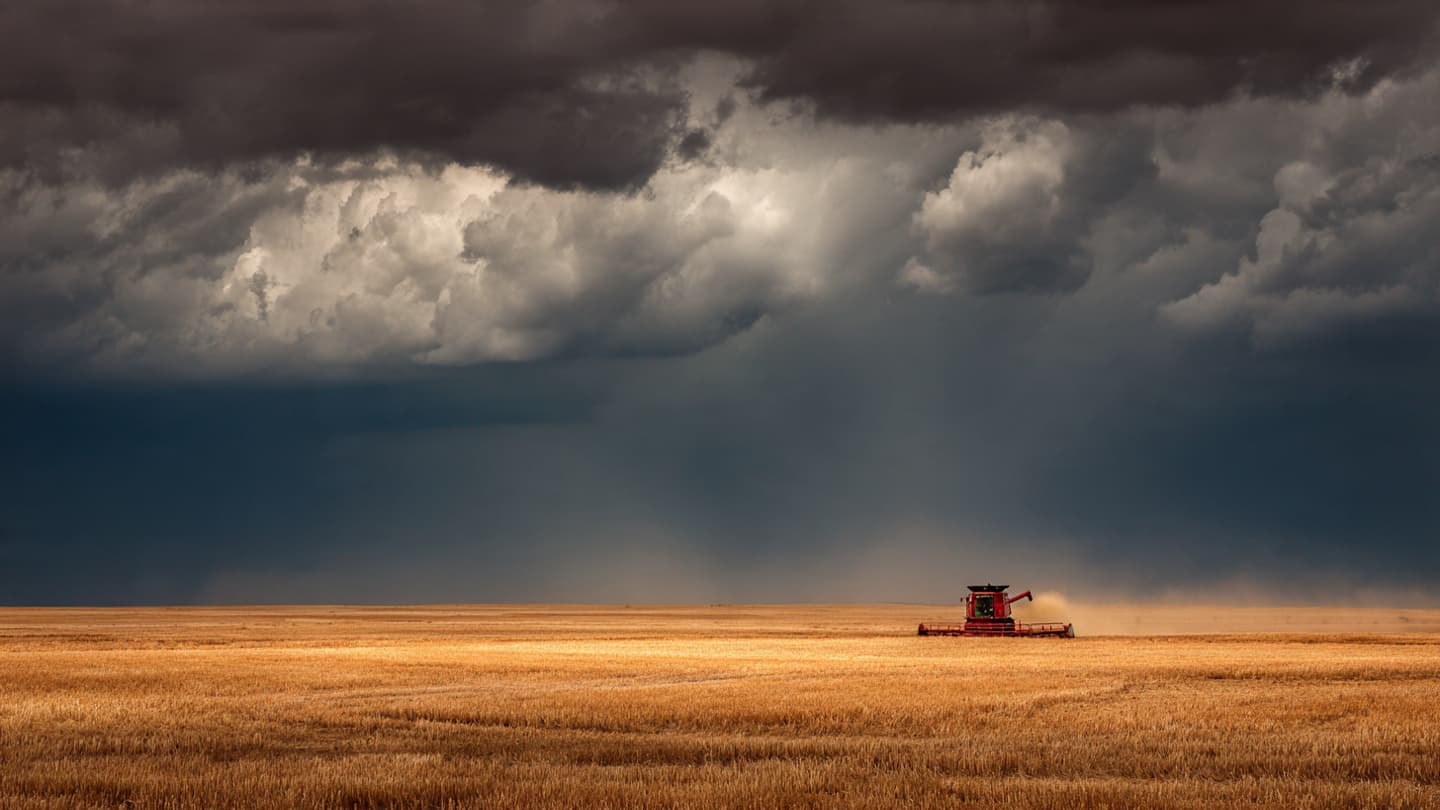
The wheat fields of Kansas have long carried a sense of continuity, stretching toward the horizon like waves moving across the Great Plains. For generations, farmers have worked these lands through droughts, storms, and uncertain markets. Yet this year, many producers say the challenges arriving together — extreme weather and rising costs — have created one of the most difficult growing seasons in decades.
Agricultural experts now warn that Kansas could face its weakest wheat harvest since 1972. Persistent drought conditions, uneven rainfall, strong winds, and periods of damaging heat have stressed crops across large portions of the state. In some areas, fields that once promised healthy yields now show thin stands and dry soil.
Farmers also continue struggling with increased operational expenses. Fuel prices, fertilizer costs, equipment maintenance, and insurance expenses have placed additional financial pressure on producers already coping with unpredictable weather. Many growers say profit margins have narrowed significantly despite years of experience adapting to difficult conditions.
Kansas remains one of the most important wheat-producing states in the United States, making its harvest closely watched by commodity markets and agricultural analysts. Lower yields in the region may influence grain supplies, export volumes, and pricing patterns both domestically and internationally.
Agricultural researchers note that weather extremes have become a growing concern across many farming regions. Periods of prolonged drought are increasingly interrupted by sudden heavy rainfall or severe storms, creating conditions that can complicate planting schedules and reduce crop resilience. Wheat, while relatively hardy, still depends heavily on seasonal stability.
Rural communities often feel the effects beyond the fields themselves. Equipment suppliers, grain elevators, transportation networks, and local businesses are all connected to agricultural performance. A poor harvest season can ripple through small towns where farming remains a central economic foundation.
Despite the difficulties, many Kansas farmers continue preparing for future seasons with cautious determination. Agriculture has always involved uncertainty, and producers across the Plains have historically adapted through changing technologies, soil management practices, and crop planning strategies. Even so, some say the current combination of financial and environmental strain feels unusually intense.
Agricultural organizations and universities are continuing to study drought-resistant crop varieties and improved water management systems. Policymakers have also discussed support measures aimed at helping producers manage increasingly volatile conditions linked to climate variability and market pressures.
As combines move slowly across Kansas fields this season, the harvest may ultimately reflect more than a single difficult year. For many farmers, it represents another chapter in the ongoing effort to sustain agriculture amid changing environmental and economic realities.
AI Image Disclaimer: Some visuals used alongside this article were generated with AI-assisted image technology.
Sources: Associated Press, Reuters, Kansas Wheat Commission, USDA, The Wichita Eagle
Note: This article was published on BanxChange.com and is powered by the BXE Token on the XRP Ledger. For the latest articles and news, please visit BanxChange.com