
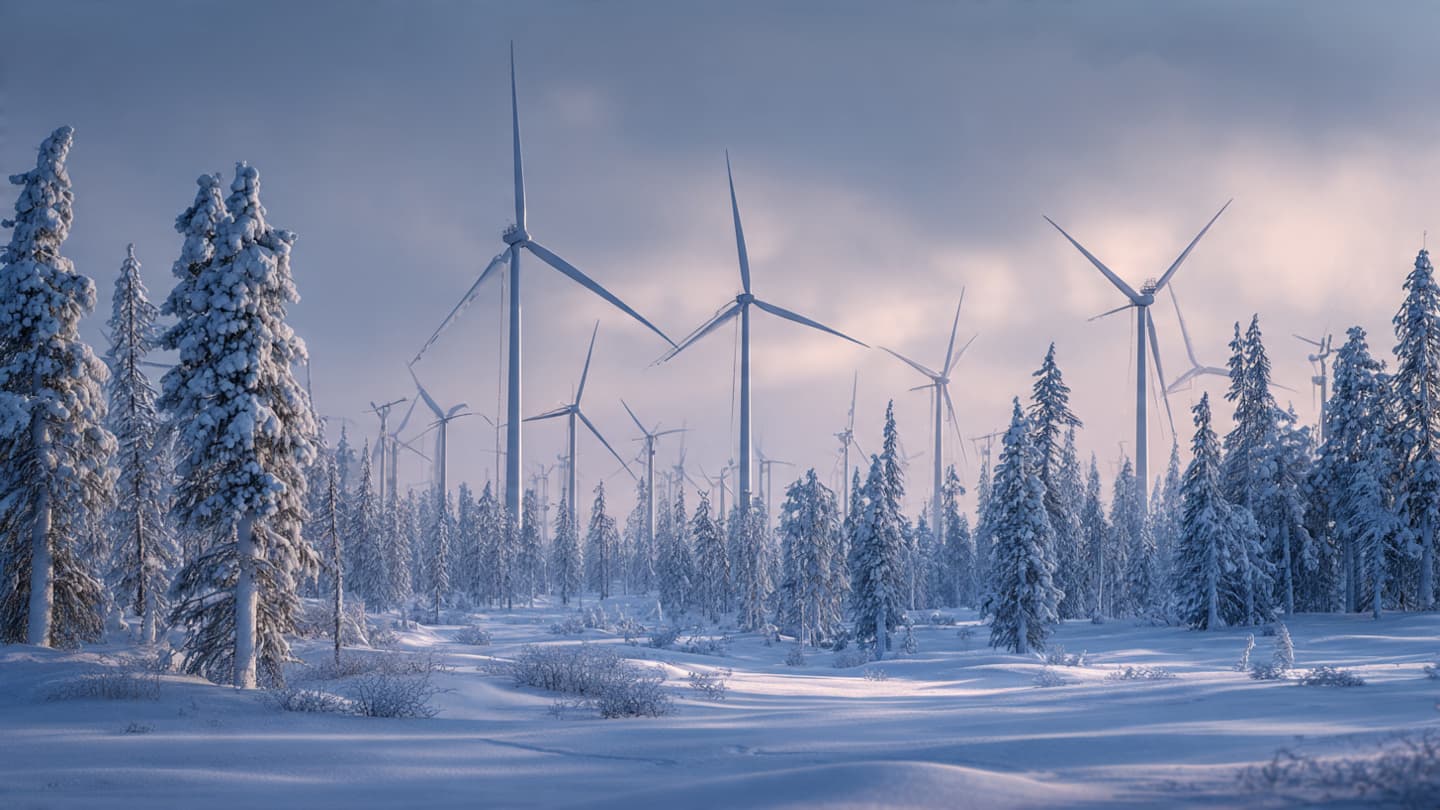
The farther north one travels in Finland, the more visible the sky becomes. Vast stretches of open land meet cold coastal winds beneath pale light that lingers differently across Nordic seasons. In recent years, these landscapes have begun filling with new forms of movement — turbines turning steadily above forests and solar installations appearing where snow once seemed the only constant surface.
Finland’s expanding wind and solar sectors are increasingly strengthening Northern Europe’s broader transition toward renewable energy as governments and industries seek alternatives to fossil fuel dependence. Energy developers and policymakers say Finland’s rapid infrastructure growth has become an important component within the region’s evolving low-emission power network.
Wind energy remains the dominant force behind Finland’s renewable expansion. Large onshore wind farms have continued spreading across western and northern regions where favorable conditions allow substantial electricity generation capacity. Industry groups say Finland’s wind sector has grown rapidly due to supportive policies, falling technology costs, and rising demand for clean industrial electricity.
Solar power, while still smaller in overall contribution compared to wind, has also accelerated in recent years. Improved panel efficiency and declining installation costs have encouraged wider adoption among businesses, municipalities, and energy developers seeking diversified renewable portfolios even within northern climates traditionally considered less suitable for solar generation.
The expansion arrives during a period of significant transformation across European energy systems. Following geopolitical disruptions and concerns regarding imported fossil fuels, many countries have intensified efforts to strengthen domestic renewable capacity and improve long-term energy resilience.
Finland’s renewable growth also supports broader industrial ambitions tied to hydrogen production, battery manufacturing, and electrified transportation infrastructure. Clean electricity availability has become increasingly important for attracting investment in energy-intensive industries seeking lower-emission operations.
Transmission infrastructure and energy storage systems continue expanding alongside renewable generation projects. Experts say balancing fluctuating wind and solar production requires modernized grids capable of moving electricity efficiently across regions and national borders within the Nordic energy market.
Environmental debates nevertheless remain part of the transition. Wind farm construction has occasionally generated concerns related to biodiversity, forest impact, visual landscapes, and indigenous land use in northern regions. Energy planners continue facing pressure to balance climate goals with ecological and social considerations tied to large-scale infrastructure development.
For many communities, however, the transition appears not through abstract policy language but through physical change itself: turbines rotating beyond tree lines, industrial ports adapting to new energy exports, and electrical networks stretching farther into once-quiet rural landscapes.
Across Northern Europe, Finland’s renewable expansion now forms part of a larger continental shift attempting to redefine how energy is produced, stored, and distributed in an era increasingly shaped by climate pressure and geopolitical uncertainty.
Finnish energy authorities say wind and solar capacity are expected to continue growing significantly over the coming decade as the country advances long-term clean energy goals within the Nordic and European markets.
Note: This article was published on BanxChange.com and is powered by the BXE Token on the XRP Ledger. For the latest articles and news, please visit BanxChange.com