The night sky often appears calm and unchanging, yet beyond that tranquil view lies a universe in constant motion. Planets orbit stars, comets travel vast distances, and countless asteroids follow paths shaped by gravity over millions of years. Later this month, one such object will draw attention as asteroid 1997 NC1 makes a notable approach to Earth.
Astronomers have confirmed that the asteroid is expected to pass near Earth on June 27, making its closest approach in centuries. Although the object is classified as large by astronomical standards, scientists emphasize that it poses no collision risk.
The asteroid's trajectory has been carefully monitored through observations conducted by professional observatories and space agencies. Tracking systems allow researchers to predict its path with a high degree of accuracy.
Near-Earth asteroids are of particular interest because they provide valuable information about the early history of the solar system. Many are considered remnants from the period when planets first formed billions of years ago.
Scientists use close approaches as opportunities to gather additional data. Telescopes can study an asteroid's size, composition, rotation, and surface characteristics in greater detail when it is relatively near Earth.
Public fascination with asteroids often increases whenever a large object approaches our planet. Popular culture has frequently portrayed asteroid encounters as dramatic events, though most monitored objects present no danger.
Planetary defense programs around the world continue to improve detection capabilities. Space agencies invest in advanced monitoring systems designed to identify potentially hazardous objects long before they could become threats.
Recent missions have demonstrated humanity's growing ability to study and even alter the trajectories of small celestial bodies under controlled conditions. These efforts contribute to long-term preparedness and scientific understanding.
As asteroid 1997 NC1 passes safely through Earth's cosmic neighborhood, researchers will continue observing its journey. The event offers both a scientific opportunity and a reminder of the dynamic universe that surrounds our planet.
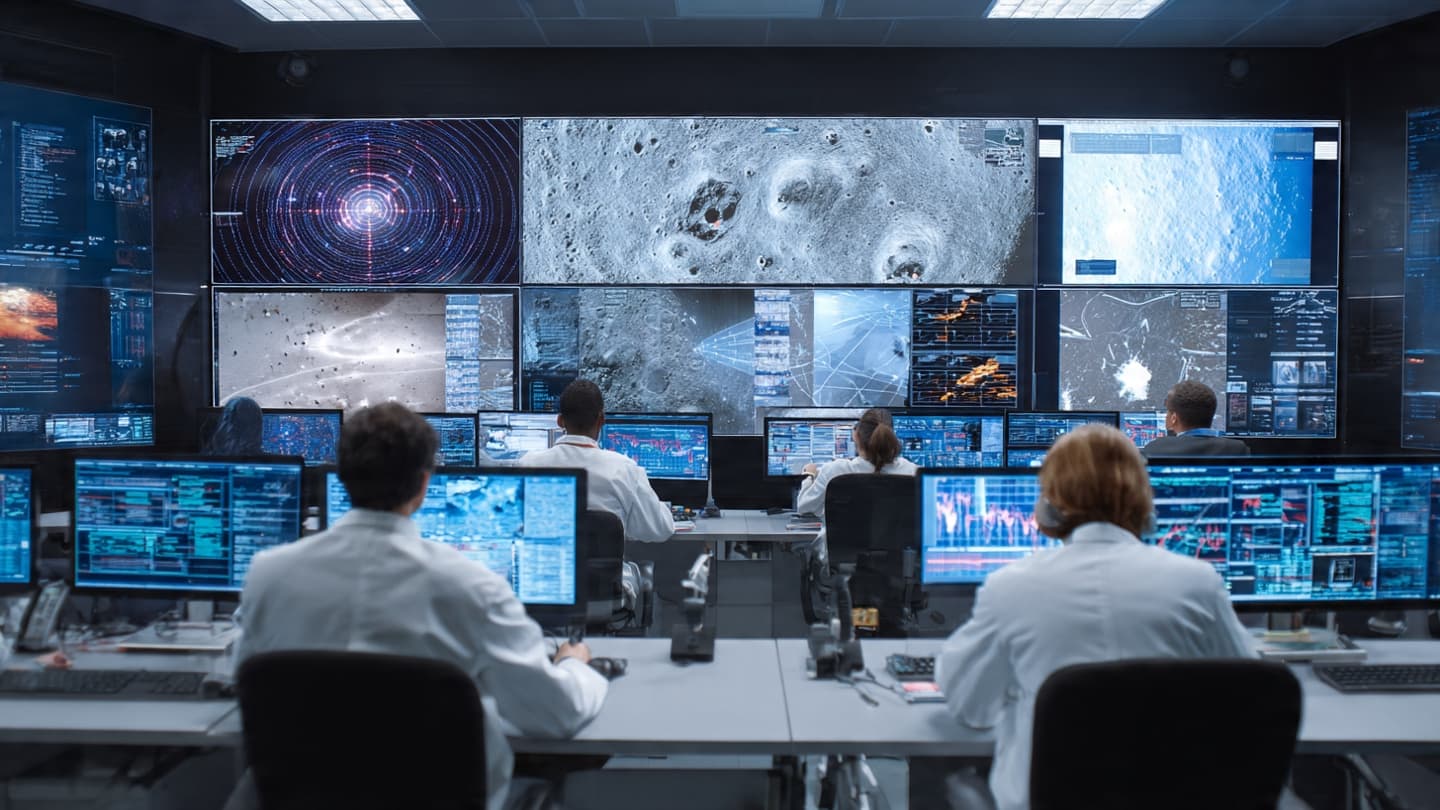
AI Image Disclaimer: The visual illustrations in this article are AI-generated representations and should not be considered actual telescope imagery.
Sources (Verification Check): NASA, Jet Propulsion Laboratory (JPL), Space.com, Times of India
Published by Banx Network. This article is part of the Banx decentralized media programme, powered by the BXE token on the XRP Ledger.