Some images do more than capture a moment. They become maps of time itself, preserving light that began its journey long before humanity learned to study the stars. A newly released image from the Hubble Space Telescope offers such a perspective, revealing a remarkable cluster of galaxies gathered across the vastness of space.
The image focuses on a massive galaxy cluster known as MACS0329-0211. Containing countless stars, enormous quantities of gas, and significant concentrations of dark matter, the cluster represents one of the largest structures found in the universe.
Galaxy clusters are not merely collections of neighboring galaxies. They are dynamic environments shaped by gravity over billions of years. Their immense mass influences surrounding space, bending light from even more distant objects through a phenomenon known as gravitational lensing.
Hubble's latest observation showcases this effect in extraordinary detail. Distorted arcs and elongated shapes visible in the image are actually light from galaxies located far behind the cluster. Their appearance has been altered by the gravitational influence of the massive foreground structure.
Scientists use such observations to investigate fundamental questions about the universe. By studying how light bends around galaxy clusters, researchers can estimate the distribution of dark matter, an invisible substance believed to make up much of the cosmos.
The image also demonstrates the continuing scientific value of the Hubble Space Telescope. More than three decades after its launch, the observatory remains a critical tool for astronomical research despite the arrival of newer instruments such as the James Webb Space Telescope.
Researchers frequently combine observations from multiple telescopes to gain a more complete understanding of celestial phenomena. Hubble's expertise in visible and ultraviolet wavelengths complements Webb's capabilities in the infrared spectrum.
Beyond its scientific importance, the image serves as a reminder of the extraordinary scale of the universe. Each point of light may represent billions of stars, while the distances involved span millions or even billions of light-years.
As astronomers continue exploring the cosmos, images like this provide both data and inspiration. They reveal not only where galaxies exist, but also how the universe itself has evolved across unimaginable stretches of time.
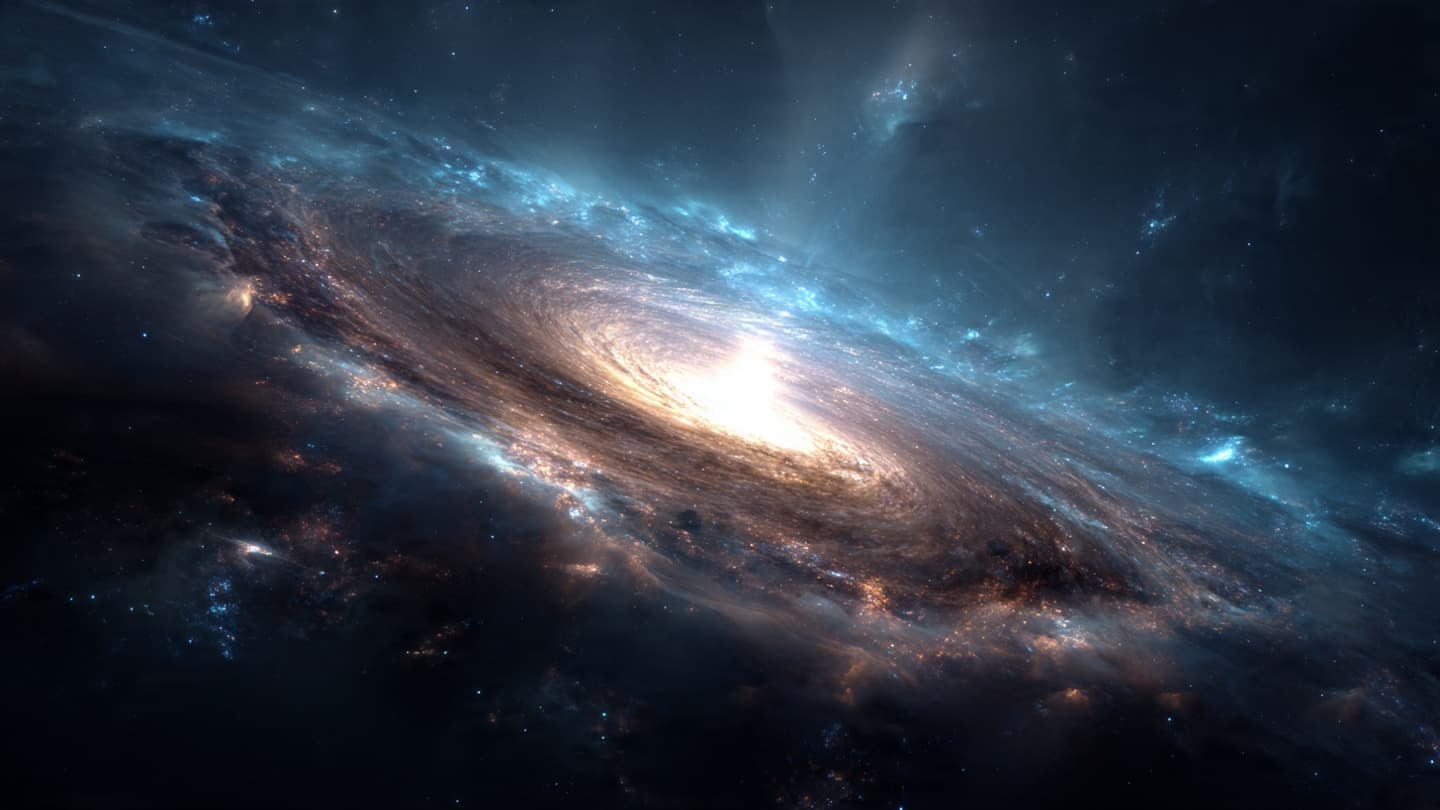
AI Image Disclaimer: Visuals accompanying this article are AI-generated representations inspired by publicly available astronomical imagery and scientific findings.
Sources Verified NASA ESA Hubble Space Telescope Team Space Telescope Science Institute Space.com
Published by Banx Network. This article is part of the Banx decentralized media programme, powered by the BXE token on the XRP Ledger.