
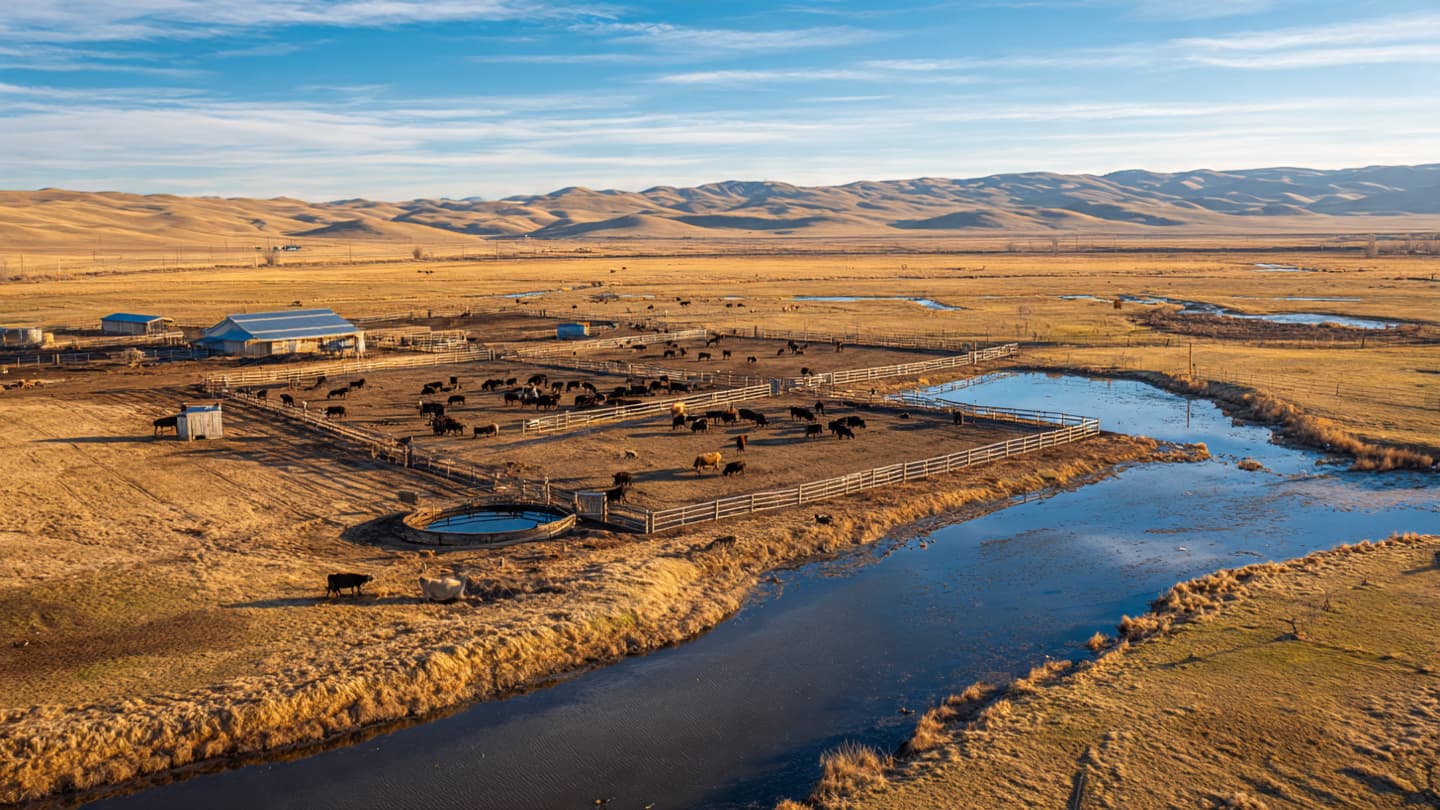
Modern food systems often resemble rivers whose sources are hidden from view. A meal arriving on a dinner plate may appear simple, yet behind it lies a network of water, land, energy, transportation, and agricultural practices. New attention to the environmental footprint of conventionally farmed beef is encouraging a closer examination of these invisible connections.
Body:
According to widely cited environmental assessments, producing one kilogram of conventionally farmed beef can require approximately 15,400 liters of water. This figure includes water used directly by animals as well as water consumed in growing feed crops and supporting agricultural operations.
Researchers frequently use everyday comparisons to help illustrate such large numbers. In this case, the water requirement is often described as roughly equivalent to filling around one hundred standard bathtubs. The comparison helps place abstract measurements into a more understandable context.
Greenhouse gas emissions represent another major area of study. Conventional beef production can generate significant amounts of carbon dioxide equivalent emissions, including methane released during digestion and emissions associated with feed production, land use, and transportation.
Scientists note that environmental impacts vary considerably across production systems. Factors such as climate, farming practices, feed sources, herd management, and land conditions can influence the overall footprint associated with beef production.
The discussion surrounding food sustainability has expanded in recent years as governments, businesses, and consumers seek ways to balance nutritional needs with environmental goals. Researchers continue to compare the impacts of different agricultural products to better understand potential pathways toward efficiency.
Supporters of improved agricultural methods point to advances in grazing management, feed technology, methane reduction strategies, and resource monitoring. These approaches aim to reduce environmental impacts while maintaining food production capacity.
At the same time, experts emphasize the importance of considering regional differences. Agricultural systems operate under varying environmental and economic conditions, meaning that results observed in one location may not apply universally elsewhere.
The broader conversation ultimately extends beyond any single food item. It reflects growing interest in understanding how everyday consumption choices connect with global challenges involving water resources, climate change, and land management.
Closing:
As scientific research continues to examine the environmental costs and benefits of food production, data on water use and emissions provide valuable context for policymakers, producers, and consumers alike. Understanding these figures helps inform discussions about the future of sustainable agriculture.
AI Image Disclaimer: The visual illustrations associated with this article may include AI-generated imagery created for explanatory purposes.
Source Verification Check: United Nations FAO, World Resources Institute, Our World in Data, Nature Food, Environmental Research Letters
Note: This article was published on BanxChange.com and is powered by the BXE Token on the XRP Ledger. For the latest articles and news, please visit BanxChange.com