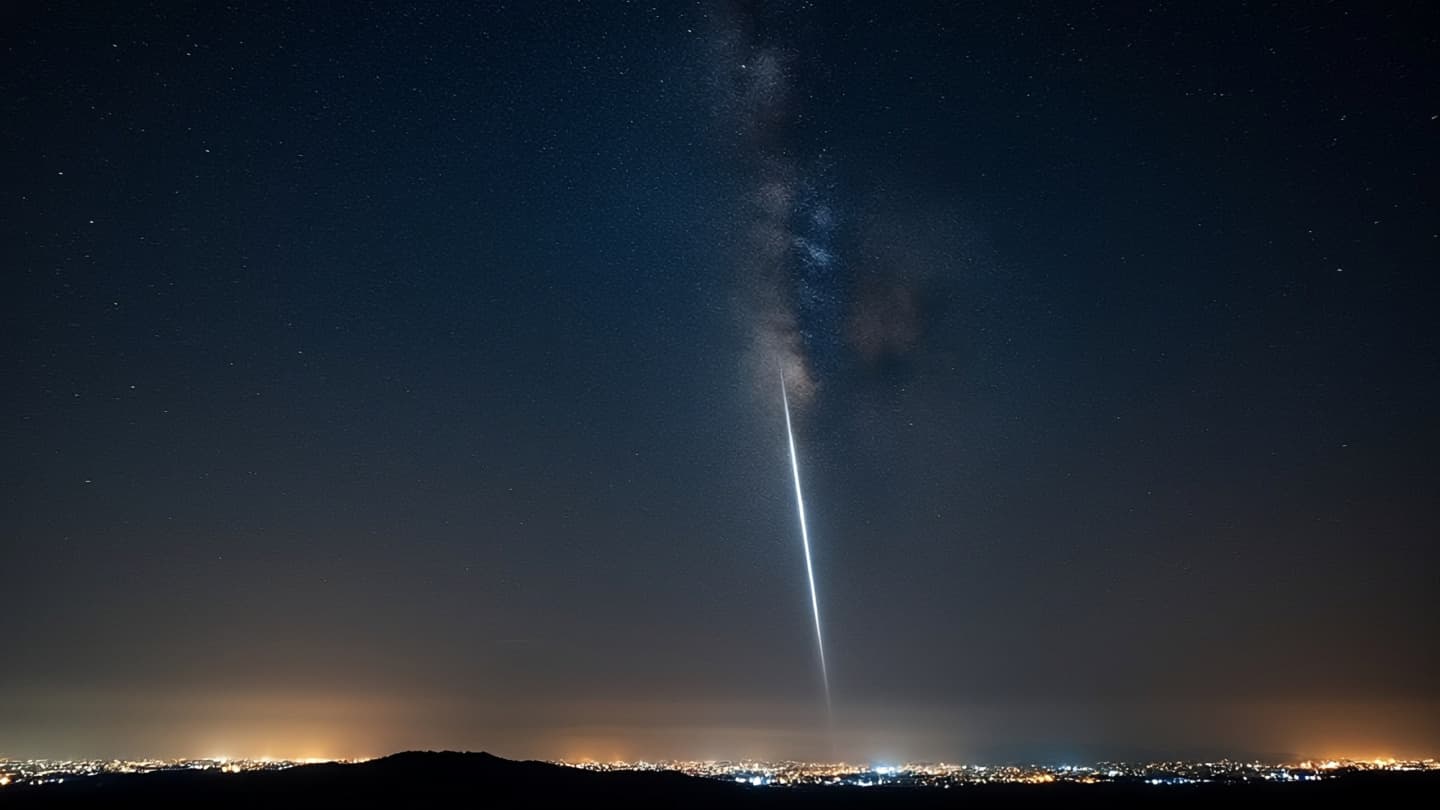
Opening: On a clear night in April 2029, the sky above Europe, Africa, and parts of Asia will host a visitor from the depths of the solar system. Apophis, a 375-meter asteroid, will glide past Earth at a distance closer than many of our own communications satellites. For two billion people, this celestial encounter will be visible to the naked eye, a moving star that traces a path across the darkness. It is a rare opportunity to witness the dynamic nature of our cosmic neighborhood, reminding us that we share our orbit with countless rocky wanderers.
Body: Apophis, named after the Egyptian god of chaos, was discovered in 2004 and initially caused concern due to early calculations suggesting a potential impact in 2029. However, subsequent observations refined its trajectory, ruling out any collision risk for at least the next century. Instead of a threat, the 2029 flyby has become a celebrated scientific event. The asteroid will pass within 32,000 kilometers of Earth’s surface, well inside the ring of geostationary satellites that orbit our planet.
The visibility of Apophis is exceptional. Most asteroids are too faint or distant to be seen without powerful telescopes. But Apophis’s size and proximity will make it shine with a magnitude of 3.1, comparable to the dimmest stars in the Little Dipper. Under dark skies, away from city lights, observers will be able to track its movement in real-time. It will appear as a steady point of light, drifting against the background stars at a noticeable pace.
For astronomers, this flyby is a golden opportunity. Radar observations and optical measurements will provide detailed data on Apophis’s shape, rotation, and composition. This information is crucial for understanding the physical properties of near-Earth objects. It also helps refine models for planetary defense, improving our ability to predict the paths of other potentially hazardous asteroids in the future.
The event also serves as a powerful educational tool. Schools, museums, and astronomy clubs are planning viewing parties and public outreach programs. It offers a chance to engage people of all ages with science, fostering a sense of wonder and curiosity. Seeing an asteroid with one’s own eyes makes the abstract concepts of orbital mechanics and solar system dynamics tangible and immediate.
Safety concerns, while largely alleviated, remain a topic of public interest. Experts emphasize that Apophis poses no danger, but the close approach highlights the importance of monitoring near-Earth objects. Agencies like NASA and ESA continue to track thousands of asteroids, ensuring that any genuine threats are identified well in advance. The Apophis flyby demonstrates the success of these efforts in turning fear into knowledge.
Culturally, the event may inspire art, literature, and reflection. Throughout history, comets and asteroids have been viewed as omens or symbols of change. In modern times, they represent the interconnectedness of Earth and the cosmos. Watching Apophis pass by is a reminder of our place in a vast and active universe, where gravity dances with rock and ice in an eternal ballet.
As the date approaches, anticipation builds. Weather permitting, millions will look up, united by a shared experience. It is a moment of global connection, transcending borders and languages. The sky, usually a backdrop for daily life, becomes a stage for a cosmic performance, inviting us to pause and appreciate the beauty of the unknown.
Closing: On April 13, 2029, the asteroid Apophis will make a close, safe pass by Earth, visible to the naked eye for billions of people. This event offers a unique opportunity for scientific study and public engagement. It highlights the importance of asteroid monitoring and celebrates our connection to the solar system.
AI Image Disclaimer: Please be aware that the visual aids in this piece are AI-generated interpretations designed to support the narrative of the asteroid flyby.
Sources: NASA Jet Propulsion Laboratory European Space Agency Sky & Telescope National Geographic
Published by Banx Network. This article is part of the Banx decentralized media programme, powered by the BXE token on the XRP Ledger.