
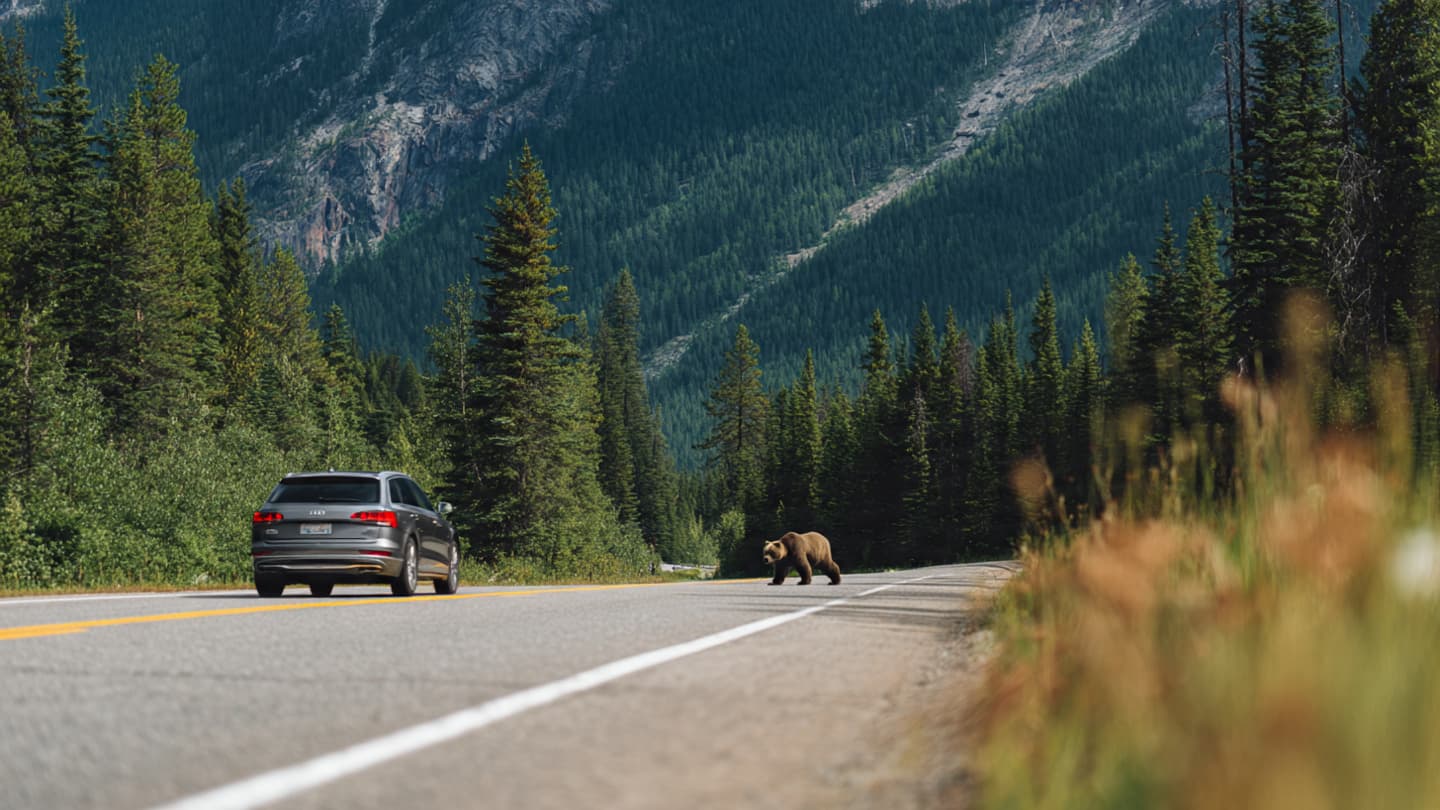
Nature often appears calm from a distance, like a quiet forest painted beneath a mountain sky. Yet behind that tranquility lies a balance shaped by instincts older than roads, vehicles, and tourist attractions. A recent incident in Romania served as a vivid reminder that wildlife remains governed by its own rules, regardless of how familiar animals may seem to visitors.
The event occurred along Romania's famous Transfăgărășan Highway, a scenic route known for attracting travelers hoping to observe wild bears. Georgi Bizhev, a 46-year-old visitor from Bulgaria, stopped his vehicle after encountering a mother bear accompanied by a cub. Reports indicate that he attempted to feed the animals before the situation suddenly escalated.
According to accounts provided to local media, the bear became agitated and lunged toward the vehicle. The animal reportedly reached through an open window, biting Bizhev's arm and attempting to pull him from the car. Witnesses nearby began honking horns and shouting in an effort to distract the bear and bring the encounter to an end.
Bizhev later explained that he remained restrained by his seatbelt, a factor that may have prevented more severe injuries. Emergency responders transported him for medical treatment, and reports indicated that surgery was required to address wounds suffered during the attack. Recovery is expected to take several months.
Romanian authorities have long warned visitors against feeding bears. The practice is illegal and can result in significant fines. Wildlife experts note that feeding alters natural behavior, encouraging animals to associate humans and vehicles with food sources.
The Transfăgărășan region has become particularly well known for close encounters between tourists and bears. Social media photographs and videos often portray these interactions as harmless, but conservation officials emphasize that wild animals remain unpredictable even when they appear calm.
Researchers explain that mother bears are especially protective when cubs are present. Any perceived threat, sudden movement, or unusual activity can trigger a defensive response. Such behavior is a natural survival mechanism rather than an indication of aggression toward humans in general.
The incident has renewed discussions about responsible wildlife tourism. Conservation groups continue encouraging visitors to observe animals from safe distances while avoiding actions that may disrupt natural behavior or create dangerous situations.
Authorities continue to remind travelers that the safest encounter with wildlife is one conducted with caution and respect. The Romanian case highlights how quickly a seemingly ordinary roadside stop can become a serious emergency when boundaries between humans and wild animals are crossed.
AI Image Disclaimer: The accompanying images are AI-generated illustrations intended to visualize the reported event and are not actual photographs
Note: This article was published on BanxChange.com and is powered by the BXE Token on the XRP Ledger. For the latest articles and news, please visit BanxChange.com