The center of the Milky Way has often been compared to a distant stage hidden behind a curtain. Although astronomers know a supermassive black hole resides there, many of its behaviors remain difficult to observe. Recent research has now illuminated part of that mystery, revealing evidence of activity that scientists have searched for over half a century.
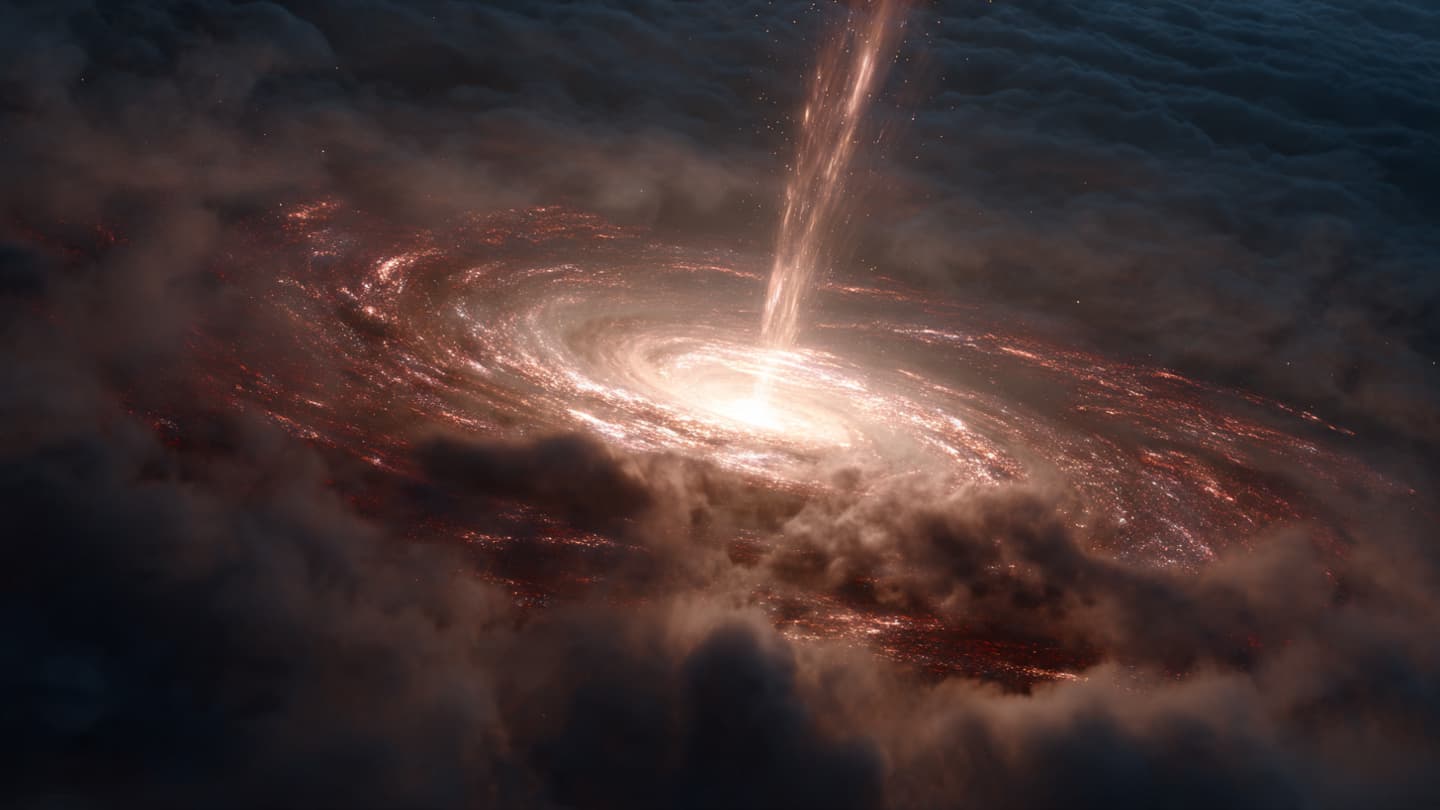
At the heart of our galaxy lies Sagittarius A*, a supermassive black hole containing roughly four million times the mass of the Sun. While similar black holes in other galaxies often display dramatic jets and outflows, the Milky Way’s central black hole has appeared comparatively quiet.
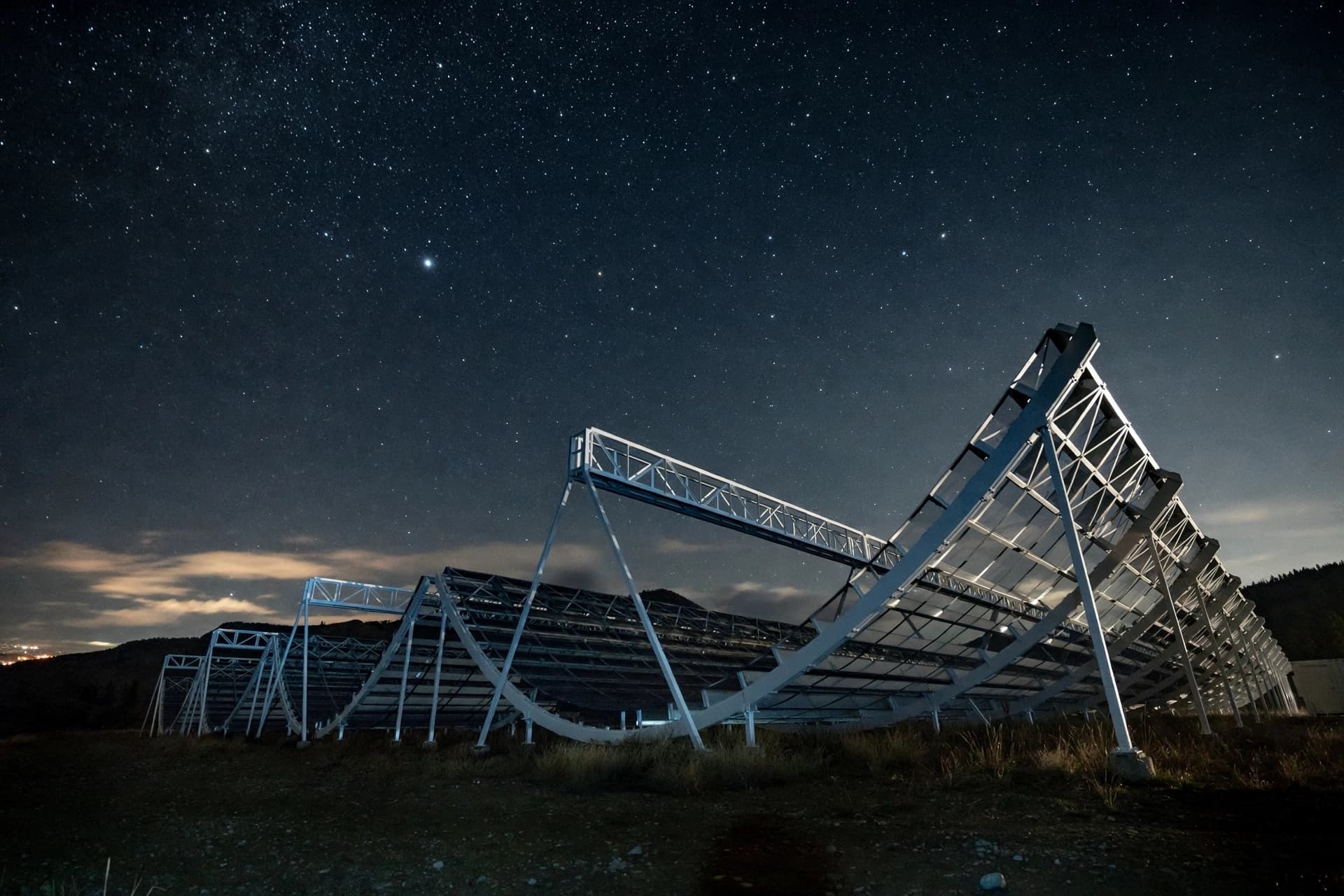
A team of astronomers using the Atacama Large Millimeter/submillimeter Array (ALMA) and NASA’s Chandra X-ray Observatory has now identified compelling evidence of a long-suspected black-hole wind emerging from Sagittarius A*. The discovery was reported in The Astrophysical Journal Letters.
Researchers mapped cold gas surrounding the black hole and found a cone-shaped cavity extending outward from the galactic center. The structure appears to have been carved by a persistent outflow of material moving away from Sagittarius A*, effectively pointing back toward the black hole itself.
Scientists describe the phenomenon not as a violent cosmic storm but as a relatively gentle wind. Even so, such outflows play important roles in shaping the environments around supermassive black holes and influencing the movement of surrounding gas.
The detection resolves a question that has persisted since the 1970s. Theoretical models predicted that black holes consuming matter should also expel some material outward, yet direct evidence from Sagittarius A* remained elusive.
Understanding these winds helps astronomers study how galaxies evolve over time. Material flowing away from central black holes can affect star formation, gas distribution, and the broader dynamics of galactic systems. Although Sagittarius A* is relatively inactive today, it still influences its surroundings.
The discovery also highlights the growing power of modern observatories. By combining radio and X-ray observations, researchers can investigate regions that were once impossible to examine in such detail, revealing subtle structures hidden near the galaxy’s core.
Astronomers say the newly detected wind offers a clearer picture of the Milky Way’s central black hole and provides an important benchmark for future studies of supermassive black holes throughout the universe.
AI Image Disclaimer: The accompanying artwork consists of AI-generated visualizations inspired by astronomical observations.
Sources (verification check): Reuters, ALMA Observatory, Space.com, Smithsonian Magazine, The Astrophysical Journal Letters
Published by Banx Network. This article is part of the Banx decentralized media programme, powered by the BXE token on the XRP Ledger.