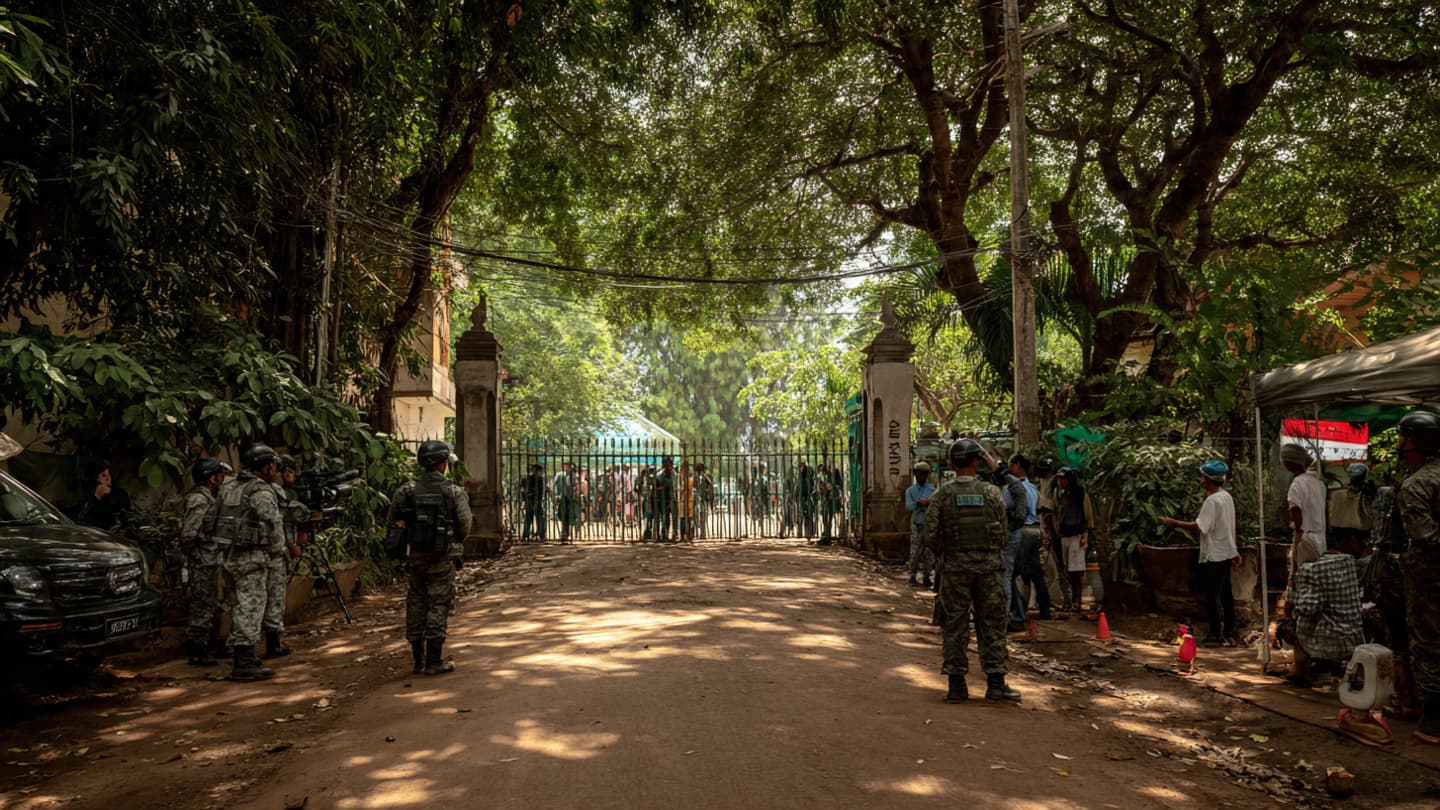
Photographs can sometimes carry more weight than speeches. A single image, released after years of absence, often awakens memories that governments, citizens, and history itself have tried to place quietly aside. In Myanmar, the recent appearance of new images connected to Aung San Suu Kyi has once again stirred attention across a country still navigating deep political uncertainty.
Reports from regional media indicated that Myanmar’s former civilian leader had been moved from prison conditions to house arrest. The emergence of new photographs shortly afterward quickly spread through international news networks and social media discussions, reviving global focus on one of Southeast Asia’s most closely watched political figures.
Aung San Suu Kyi has remained largely isolated since the military takeover in 2021, which ended Myanmar’s brief experiment with partial democratic governance. Following the coup, the military administration detained senior political leaders and imposed broad restrictions amid nationwide unrest. Since then, international observers have repeatedly raised concerns about political freedoms, human rights conditions, and judicial transparency inside the country.
The newly circulated images appeared modest in presentation yet significant in symbolism. For supporters, they offered reassurance regarding her condition after years of limited public visibility. For others, the photographs represented another reminder of the unresolved political divisions that continue shaping Myanmar’s national trajectory.
Myanmar itself remains deeply affected by prolonged instability. Armed conflict between military forces and resistance groups has intensified across multiple regions, displacing civilians and straining economic conditions. Daily life for many communities has become increasingly uncertain, with humanitarian organizations warning about growing needs related to healthcare, food access, and displacement.
International reactions to the reports have been cautious. Several governments and human rights organizations renewed calls for political dialogue and broader reconciliation efforts. However, diplomatic progress has remained difficult, partly because regional powers continue balancing humanitarian concerns with strategic and economic interests in Myanmar.
The story of Aung San Suu Kyi also carries complicated international dimensions. Once widely celebrated globally as a democratic symbol, her reputation later became more contested because of criticism surrounding the Rohingya crisis. As a result, global reactions to developments involving her often contain layers of both sympathy and unresolved debate.
Within Myanmar, however, the immediate concern for many citizens remains stability itself. Years of unrest have reshaped businesses, education systems, and local communities. In such an atmosphere, even small developments involving prominent political figures can quickly become emotionally significant, reflecting broader hopes or anxieties about the country’s future.
For now, the appearance of new photographs does not necessarily signal a major political shift. Yet in a nation where public visibility has become tightly controlled, the quiet release of a single image can still carry extraordinary symbolic power, reminding both Myanmar and the wider world that unresolved chapters rarely disappear entirely.
AI Image Disclaimer: Certain accompanying visuals may be AI-assisted illustrations designed to represent public events and political environments.
Sources: ABC Australia, Reuters, Associated Press
Published by Banx Network. This article is part of the Banx decentralized media programme, powered by the BXE token on the XRP Ledger.
.jpg&w=3840&q=75 "Blake Lively Awarded $400,000 in Legal Fees After Justin Baldoni Lawsuit Dismissed")