For centuries, the Moon has served as a symbol of mystery, exploration, and scientific curiosity. Though its surface has been mapped in extraordinary detail, researchers continue searching for new ways to understand its composition and history. A proposed next-generation X-ray telescope may help reveal aspects of the lunar landscape that remain hidden from conventional observation.
Scientists are developing a lightweight X-ray imaging system designed to create detailed chemical maps of the Moon's surface. By identifying the distribution of various elements, researchers hope to gain a deeper understanding of how the Moon formed and evolved over billions of years.
Unlike traditional optical telescopes, X-ray instruments detect high-energy radiation reflected or emitted by materials. This capability allows researchers to study chemical composition and identify features that may not be visible through ordinary imaging techniques.
Understanding the Moon's chemistry has become increasingly important as international interest in lunar exploration grows. Governments and space agencies are planning missions aimed at scientific research, technological development, and potential long-term operations on the lunar surface.
Detailed chemical maps could help scientists identify regions containing valuable resources or unique geological characteristics. Such information may prove useful for future exploration efforts and contribute to broader studies of planetary formation.
The proposed telescope is designed to be more compact and efficient than many previous systems. Advances in materials science and engineering have made it possible to develop instruments capable of gathering sophisticated data while reducing weight and complexity.
Researchers emphasize that the project remains under development. Additional testing and refinement will be necessary before the technology can be deployed as part of a lunar mission or orbital observation platform.
The effort reflects a broader trend in space science toward increasingly specialized instruments. Modern exploration often depends on tools designed to answer highly specific questions about the environments being studied.
As plans move forward, scientists hope the telescope will provide a richer picture of the Moon's composition and history. The project illustrates how innovation continues to expand humanity's ability to explore even our closest celestial neighbor.
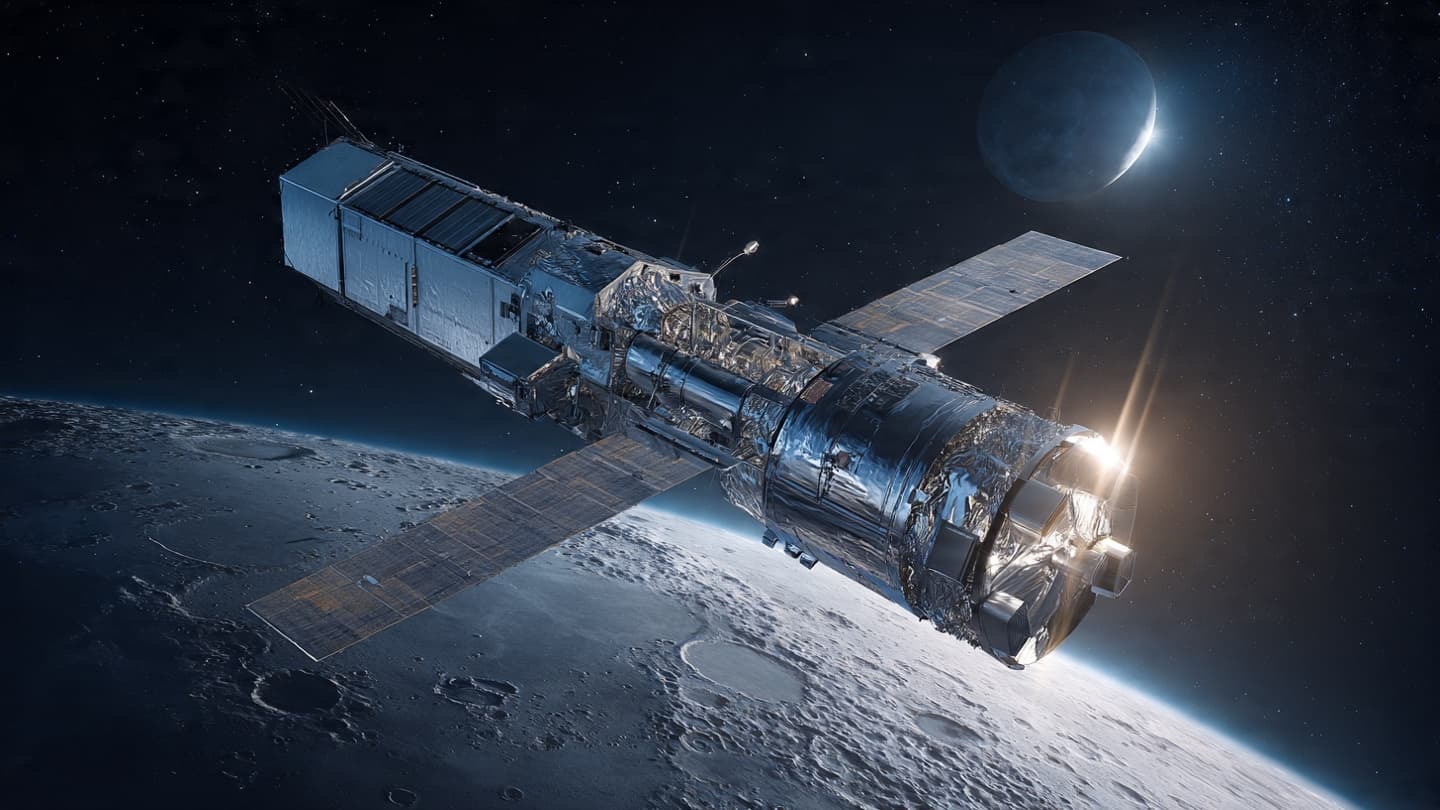
AI Image Disclaimer The illustration accompanying this article is AI-generated and intended to visualize concepts related to lunar exploration and scientific observation.
Sources ScienceDaily, NASA, Nature Astronomy, Space.com
Published by Banx Network. This article is part of the Banx decentralized media programme, powered by the BXE token on the XRP Ledger.