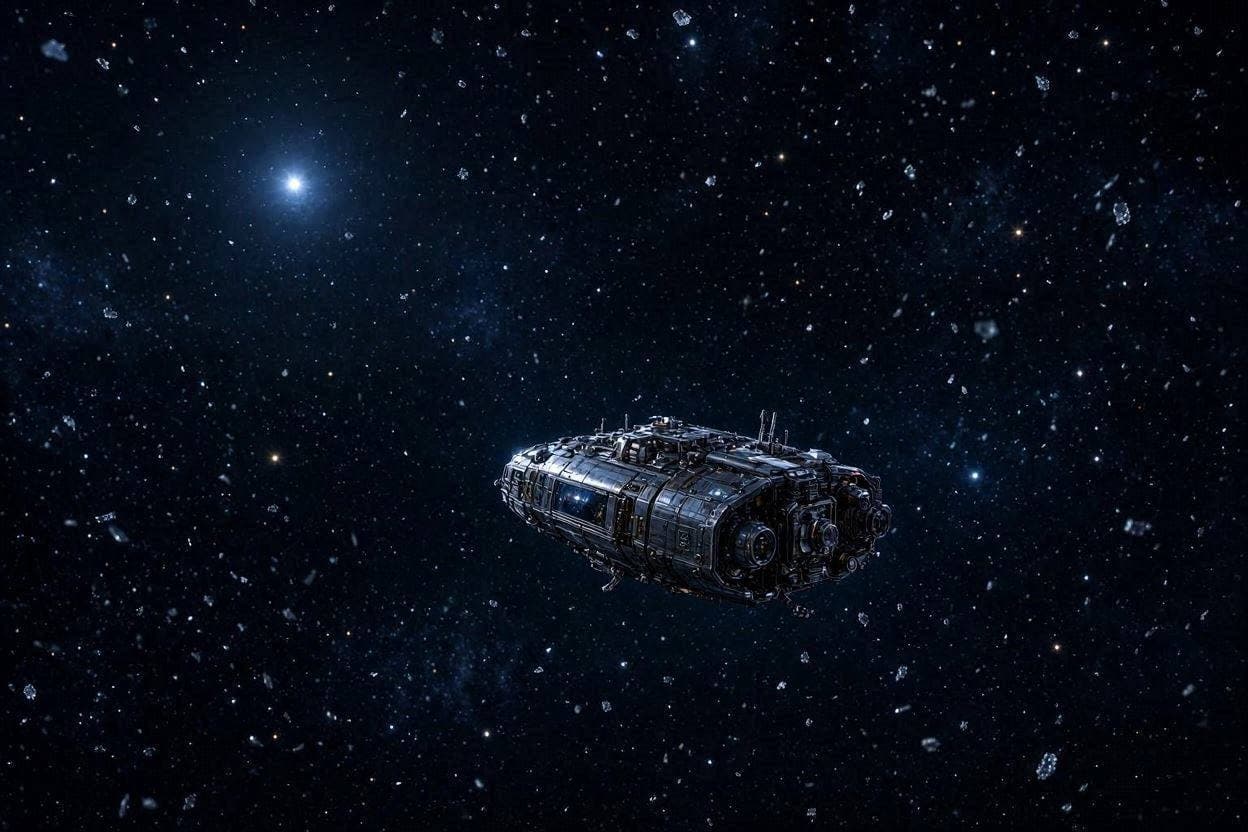
In the profound silence of the outer solar system, where sunlight is little more than a distant star, a small machine stirs from its long slumber. Six billion miles from Earth, beyond the icy realm of Pluto and into the scattered debris of the Kuiper Belt, NASA’s New Horizons probe has awakened. It is a moment that feels less like a technical routine and more like a quiet heartbeat in the void, reminding us that our curiosity extends far beyond the warm glow of our own sun. This awakening is not merely a switch flipped; it is a testament to human endurance and the relentless desire to know what lies in the dark.
Body: The journey of New Horizons has been one of historic firsts. After its celebrated flyby of Pluto in 2015, which revealed a world of surprising complexity and beauty, the probe continued outward. It encountered Arrokoth, a ancient relic of the solar system’s formation, before venturing into the uncharted waters of the heliosphere. Now, as it drifts through the cold emptiness, its periodic awakenings serve a dual purpose: to check the health of its systems and to gather data that no other spacecraft can provide.
During these active phases, New Horizons turns its instruments toward the surrounding space. It measures the density of dust, the intensity of cosmic rays, and the subtle shifts in the solar wind as it weakens against the interstellar medium. These measurements are crucial for understanding the boundary where the sun’s influence ends and the galaxy begins. It is a region of transition, a threshold that defines the edge of our home system. The data collected here helps scientists map the invisible structures that shape our cosmic neighborhood.
The hibernation periods themselves are a marvel of engineering. To conserve power and extend the mission’s life, the probe shuts down most of its systems, leaving only a timer and a few critical components active. This state of suspended animation allows it to survive for years without significant degradation. When the timer triggers a wake-up call, the spacecraft must reboot, reorient itself toward Earth, and establish communication across billions of miles. It is a delicate dance of precision and patience.
What makes this current awakening particularly poignant is the solitude of the probe. There are no other human-made objects nearby, no companions to share the view. It is alone in a way that is difficult for us to comprehend, yet it continues its work with steadfast reliability. The signals it sends back take hours to reach us, traveling at the speed of light but still burdened by the vast distance. Each byte of data is a message in a bottle, thrown into an ocean of darkness.
The scientific community watches these awakenings with a mix of anticipation and reverence. While the major discoveries may be behind it, the ongoing observations provide a unique perspective on the outer solar system. They offer a baseline for future missions and help refine our models of planetary formation. In a sense, New Horizons is building a library of knowledge that will be read by generations of astronomers who have yet to be born.
As the probe completes its current cycle of operations, it will likely return to hibernation, drifting further into the unknown. But for now, it is awake, listening, and watching. It serves as a silent ambassador for humanity, carrying our questions into the deep. Its presence there is a reminder that even in the most remote corners of the universe, we have left a trace of our passing.
Closing: In the end, New Horizons is more than a collection of metal and circuits. It is a symbol of our reach, a mechanical eye that refuses to close. As it wakes and sleeps in the distant dark, it connects us to the edges of our solar system, offering a glimpse of the vastness that surrounds us. We may never visit these places ourselves, but through New Horizons, we are already there.
AI Image Disclaimer: Please note that any accompanying visuals for this narrative are artificially generated interpretations meant to evoke the spirit of the story, not documentary evidence.
Sources: NASA Science Mission Directorate Johns Hopkins Applied Physics Laboratory Space.com
Published by Banx Network. This article is part of the Banx decentralized media programme, powered by the BXE token on the XRP Ledger.