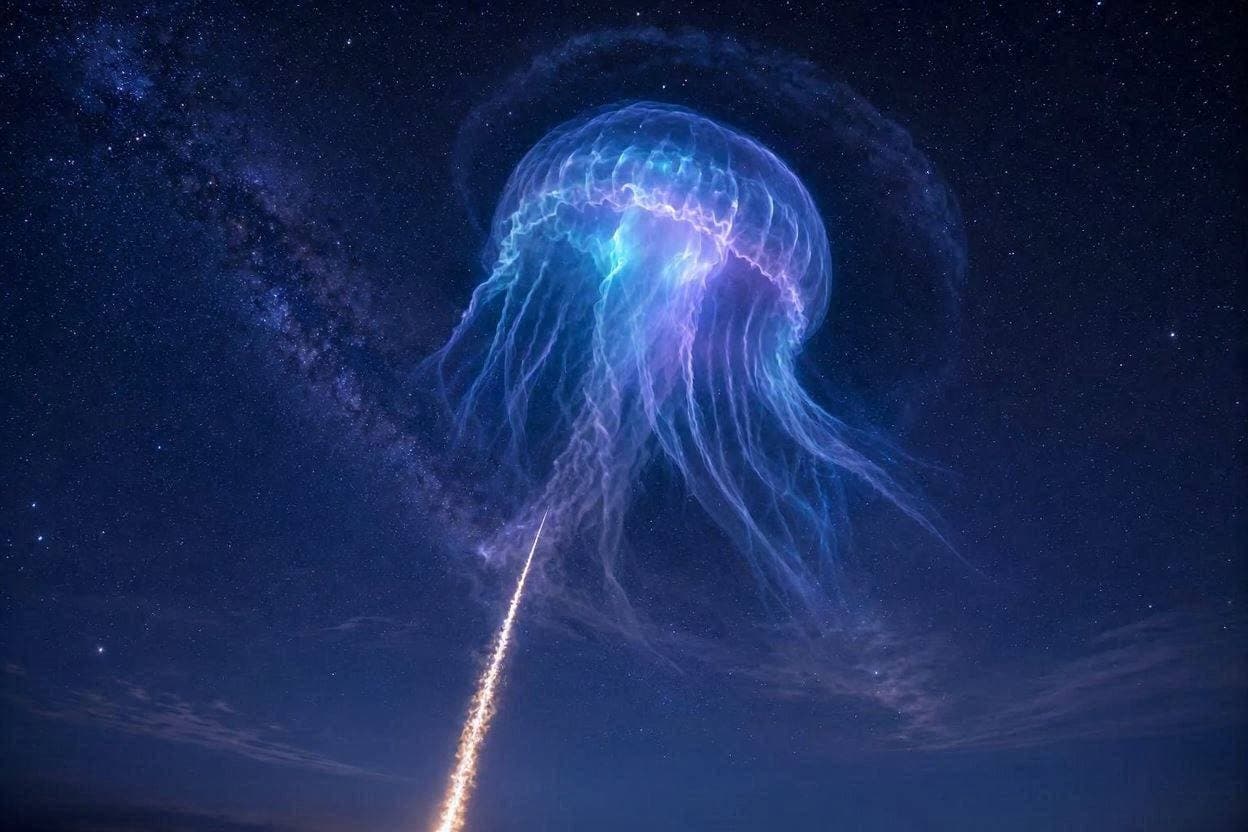
In the quiet hours before dawn, when the world is still wrapped in slumber, the sky above can transform into a canvas of unexpected art. On July 10, 2026, observers across various regions were treated to a surreal spectacle: a glowing, ethereal shape resembling a jellyfish drifting through the stars. This phenomenon, captured as the "Space Photo of the Day," was not a celestial visitor from deep space but a man-made marvel created by a SpaceX launch, illustrating the beautiful intersection of technology and nature.
The "space jellyfish" effect occurs when a rocket launches during twilight hours, either just before sunrise or just after sunset. At these times, the ground is dark, but the upper atmosphere is still illuminated by the sun. The rocket’s exhaust plume, composed of ice crystals and particles, catches this high-altitude sunlight, causing it to glow brightly against the dark backdrop. As the plume expands and interacts with wind shear in the upper atmosphere, it takes on intricate, swirling shapes that mimic marine life.
For many witnesses, the sight is both mesmerizing and slightly disorienting. The translucent tendrils of the plume seem to pulse and drift, creating an illusion of biological movement. Social media quickly filled with images and videos, as people shared their awe at the unexpected beauty. For some, it sparked curiosity about space exploration; for others, it was simply a moment of wonder in their daily routine.
SpaceX, known for its frequent launches, has become a regular source of such visual phenomena. The company’s Falcon 9 and Starship vehicles leave distinct trails that vary depending on atmospheric conditions and the time of launch. While the primary goal is to deliver payloads to orbit, the secondary effect is often a public display of aerospace engineering that transcends technical achievement to become aesthetic experience.
Astronomers and photographers often plan their shoots around these launches, knowing that the combination of rocket exhaust and specific lighting conditions can yield stunning results. The "jellyfish" appearance is particularly prized for its symmetry and delicate structure. It serves as a reminder that even industrial activities can produce moments of profound natural beauty, blurring the lines between the artificial and the organic.
However, the increasing frequency of launches also raises discussions about light pollution and its impact on astronomical observations. While the jellyfish effect is fleeting and harmless, the cumulative brightness of satellite constellations and rocket trails can interfere with sensitive telescopes. Balancing the benefits of space access with the preservation of the night sky remains an ongoing challenge for the industry.
As the glow fades and the plume dissipates into the upper atmosphere, the sky returns to its usual state. But for those who looked up, the memory of the space jellyfish remains—a testament to human ingenuity and the enduring magic of the night sky. It is a brief, bright reminder that we are living in an age where the heavens are no longer just for looking at, but for reaching.
Closing: A SpaceX launch on July 10, 2026, created a striking "space jellyfish" effect in the night sky, caused by sunlight illuminating the rocket’s exhaust plume during twilight. The phenomenon highlights the visual beauty of spaceflight while sparking conversations about its impact on the night sky.
AI Image Disclaimer: Please note that any accompanying visuals for this article are AI-generated representations intended for illustrative purposes only.
Sources: Space.com, NASA Astronomy Picture of the Day Archives, Major News Networks, SpaceX Mission Logs
Published by Banx Network. This article is part of the Banx decentralized media programme, powered by the BXE token on the XRP Ledger.