
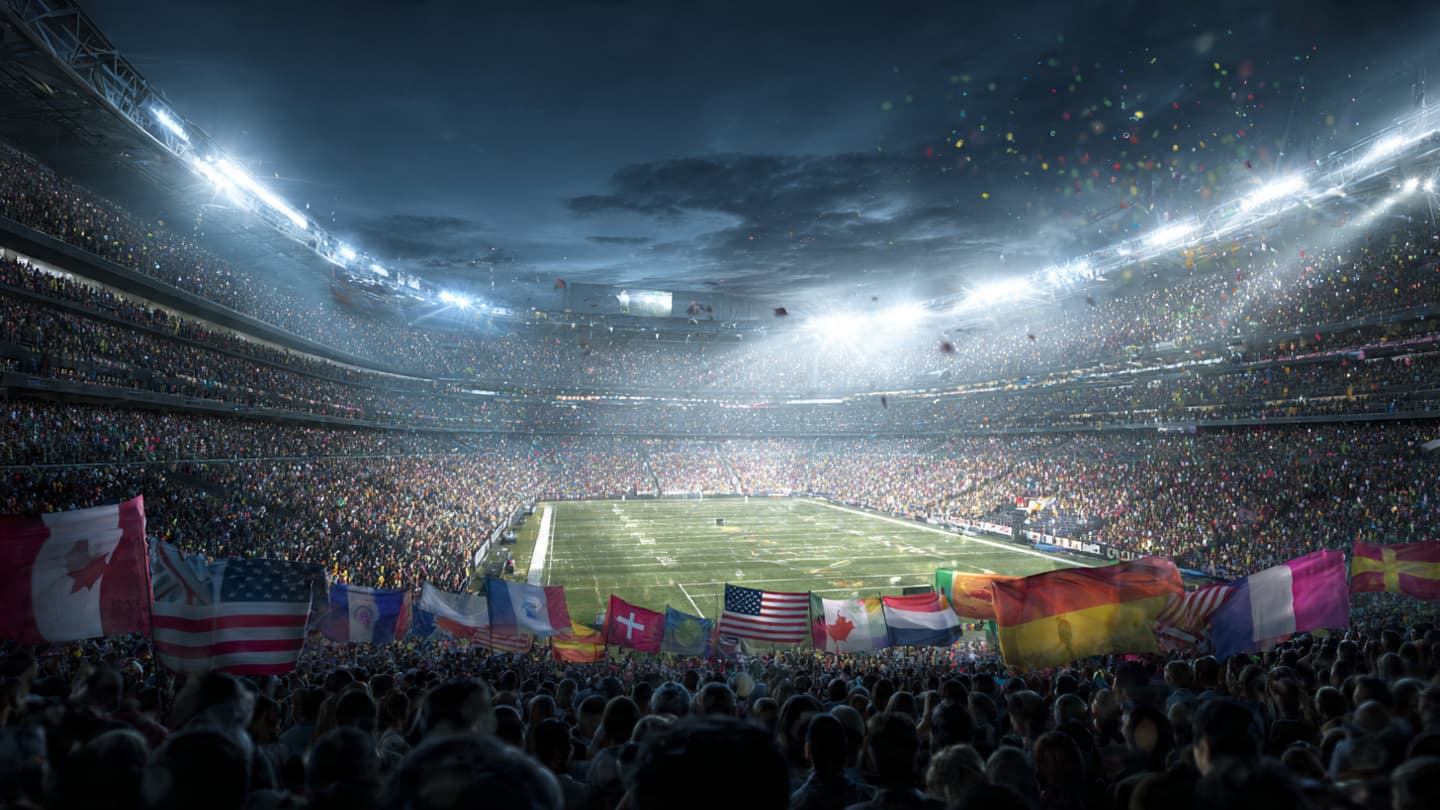
Sport often serves as a mirror reflecting cultural change. What begins as a niche interest can gradually grow into a shared national experience, gathering new supporters with each passing generation. In the United States, soccer has spent decades building its place within a sporting landscape traditionally dominated by other games, and the 2026 FIFA World Cup is widely seen as a defining moment in that journey.
The tournament, hosted jointly by the United States, Canada, and Mexico, represents the largest World Cup ever organized. For American soccer, it offers an opportunity to showcase the sport before audiences both at home and around the world.
Interest in soccer has steadily increased across the United States over the past several decades. Youth participation, professional league development, and international broadcasting have all contributed to the sport's expanding presence.
Major League Soccer has experienced significant growth since its founding, while international competitions have attracted increasingly large audiences. The success of both men's and women's national teams has also helped broaden public engagement.
The World Cup arrives at a time when soccer is becoming more visible in American culture. Stadium attendance, television viewership, and grassroots participation have all shown signs of long-term expansion.
Organizers view the tournament as more than a sporting event. It is also an opportunity to strengthen tourism, infrastructure development, and international cultural exchange throughout host cities.
Analysts note that expectations are high. The tournament's scale means that logistical planning, transportation systems, and fan experiences will receive global attention throughout the competition.
For supporters, however, the event remains fundamentally about the game itself. Millions of fans are expected to gather in stadiums, public viewing areas, and communities across North America.
As matches unfold, the World Cup may provide a clearer picture of soccer's evolving place in American society. Whether measured through attendance, enthusiasm, or cultural impact, the tournament marks a significant chapter in the sport's continuing growth.
AI Image Disclaimer: Illustrations associated with this article are AI-generated visual interpretations created for editorial use.
Sources (Verification Check): New York Post, Reuters, FIFA, Associated Press, The Athletic
Note: This article was published on BanxChange.com and is powered by the BXE Token on the XRP Ledger. For the latest articles and news, please visit BanxChange.com