The universe rarely reveals its history in a straightforward way. Instead, it leaves subtle traces scattered across distant stars and planets, inviting astronomers to reconstruct stories that unfolded over millions or even billions of years. Every newly discovered exoplanet offers another chapter in that ongoing exploration, sometimes challenging ideas that have long guided planetary science.
An international team of astronomers has reported the discovery of TOI-2195 A b, an unusually inflated Hot Neptune orbiting a K-type star approximately every 4.16 days. What makes the planet especially intriguing is evidence suggesting it may not have formed as a Neptune-sized world at all. Instead, researchers propose that it originally resembled a Jupiter-like gas giant before losing most of its mass during a dramatic evolutionary process.
The study describes TOI-2195 A b as possessing about 1.46 times Neptune's mass while maintaining a radius nearly 80 percent that of Jupiter, making it exceptionally inflated for a planet of its mass. Observations also indicate that the planet follows a nearly polar orbit relative to its host star, an orbital configuration that provides important clues about its past dynamical evolution.
According to the researchers, the planet may have experienced what is known as the Eccentric Kozai-Lidov mechanism, a gravitational interaction caused by a distant stellar companion. This process could have gradually stretched the planet's orbit into an extremely elongated path, bringing it repeatedly very close to its host star. During these close encounters, intense tidal forces and stellar radiation likely stripped away much of the planet's gaseous envelope.
Computer simulations conducted by the research team suggest the planet may have lost up to 90 percent of its original mass through repeated episodes of Roche lobe overflow, in which material escapes from a planet whose outer atmosphere extends beyond its gravitational boundary. The remaining planet then migrated inward while tidal heating contributed to its unusually large radius.
The findings provide fresh insight into one of astronomy's longstanding puzzles: the relative scarcity of Hot Neptunes orbiting very close to their stars. Scientists have proposed several explanations for this "Hot Neptune Desert," including atmospheric evaporation and planetary migration. The newly discovered system offers observational evidence that at least some Hot Neptunes may represent the surviving cores of much larger gas giants.
Beyond explaining a single planet, the research contributes to a broader understanding of how planetary systems evolve over time. Modern exoplanet studies increasingly reveal that migration, tidal interactions, and atmospheric loss all play interconnected roles in determining the final appearance of planets observed today. Each newly characterized system helps astronomers refine theoretical models describing planetary formation throughout the galaxy.
As next-generation observatories continue discovering new exoplanets with increasingly precise instruments, researchers expect to identify additional worlds that follow similar evolutionary pathways. Whether TOI-2195 A b proves to be an unusual exception or part of a much larger population, the discovery expands scientific understanding of how dynamic and diverse planetary evolution can be across the universe.
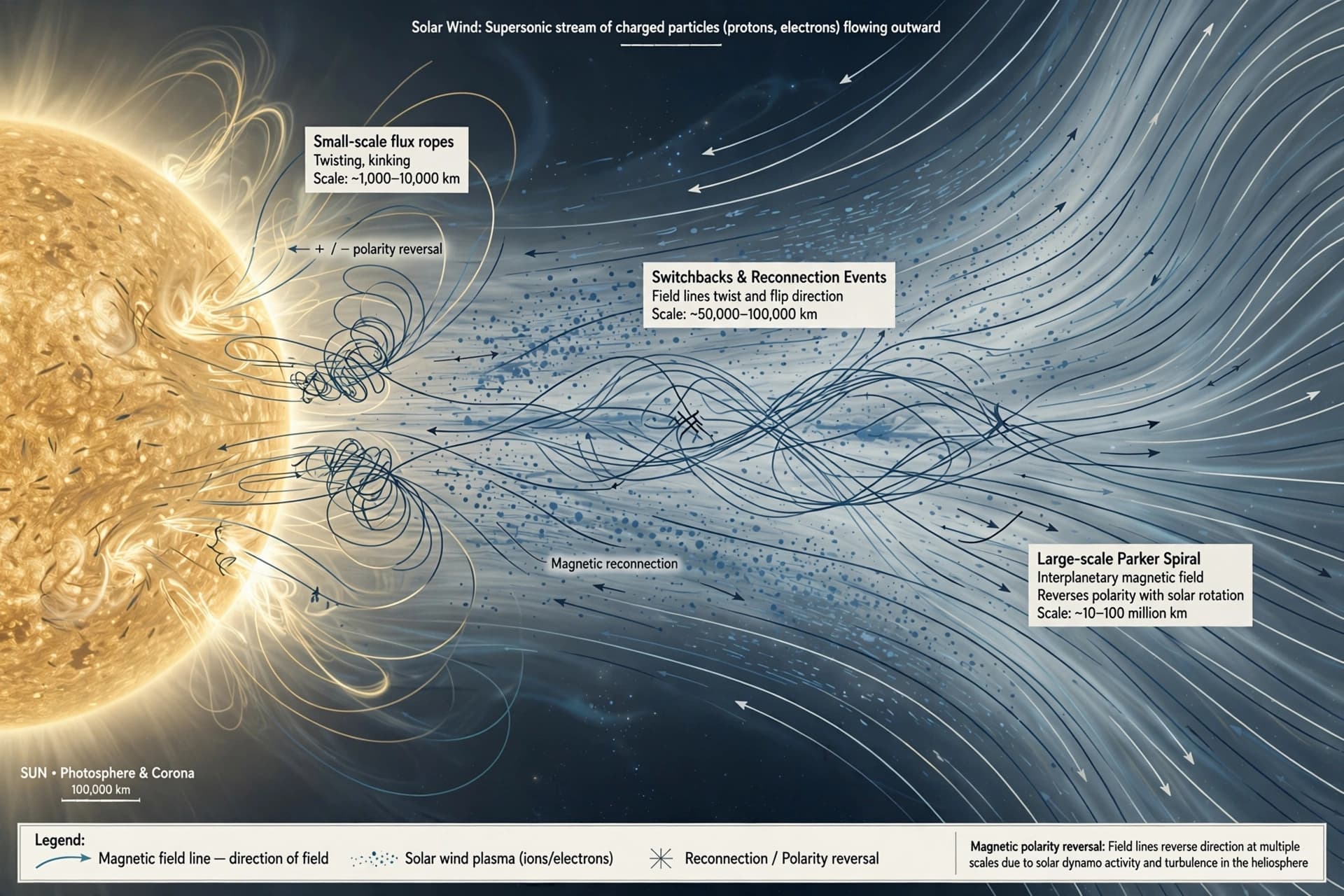
AI Image Disclaimer: The illustrations accompanying this article are AI-generated visual interpretations created to represent scientific concepts and should not be considered actual telescope imagery.
Source Verification Check: arXiv, Nature Astronomy, Nature
Published by Banx Network. This article is part of the Banx decentralized media programme, powered by the BXE token on the XRP Ledger.