
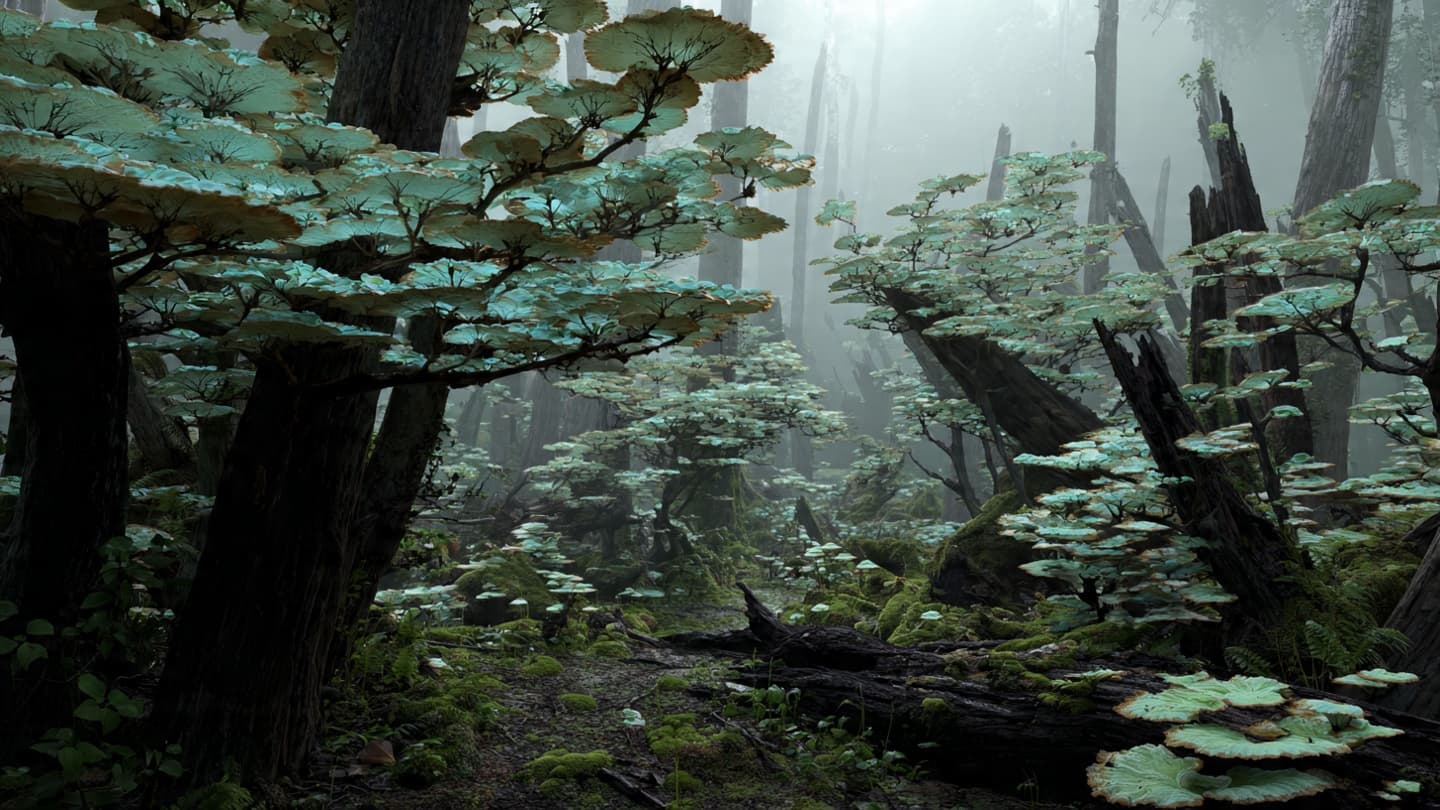
After the asteroid impact that marked the end of the dinosaurs, Earth did not immediately return to balance. Instead, it entered a period of ecological instability where even microscopic life may have played an unexpected role in shaping recovery.
Recent scientific discussions have explored the possibility that fungal populations increased dramatically following the mass extinction event.
With large-scale plant and animal death across the planet, decomposers such as fungi would have found abundant organic material to break down.
This fungal expansion may have influenced post-extinction ecosystems by slowing or altering plant recovery in certain regions.
Paleontological evidence from fossilized wood and soil layers suggests changes in microbial activity during the boundary between the Cretaceous and Paleogene periods.
Researchers emphasize that fungi are not considered a cause of extinction, but rather a potential ecological response to the dramatic environmental changes that followed the asteroid impact.
This perspective adds nuance to the understanding of extinction events, highlighting how recovery phases can be just as complex as the catastrophes themselves.
The idea also reflects a broader scientific interest in how microbial life interacts with large-scale ecological disruptions.
While research is still evolving, the hypothesis underscores how even the smallest forms of life can influence the planet’s recovery after global transformation.
AI Image Disclaimer: Images accompanying this article are AI-generated conceptual visuals created for editorial storytelling purposes.
Sources (source verification check): Nature Geoscience, Science Magazine, Smithsonian, University paleobiology studies
Published by Banx Network. This article is part of the Banx decentralized media programme, powered by the BXE token on the XRP Ledger.



