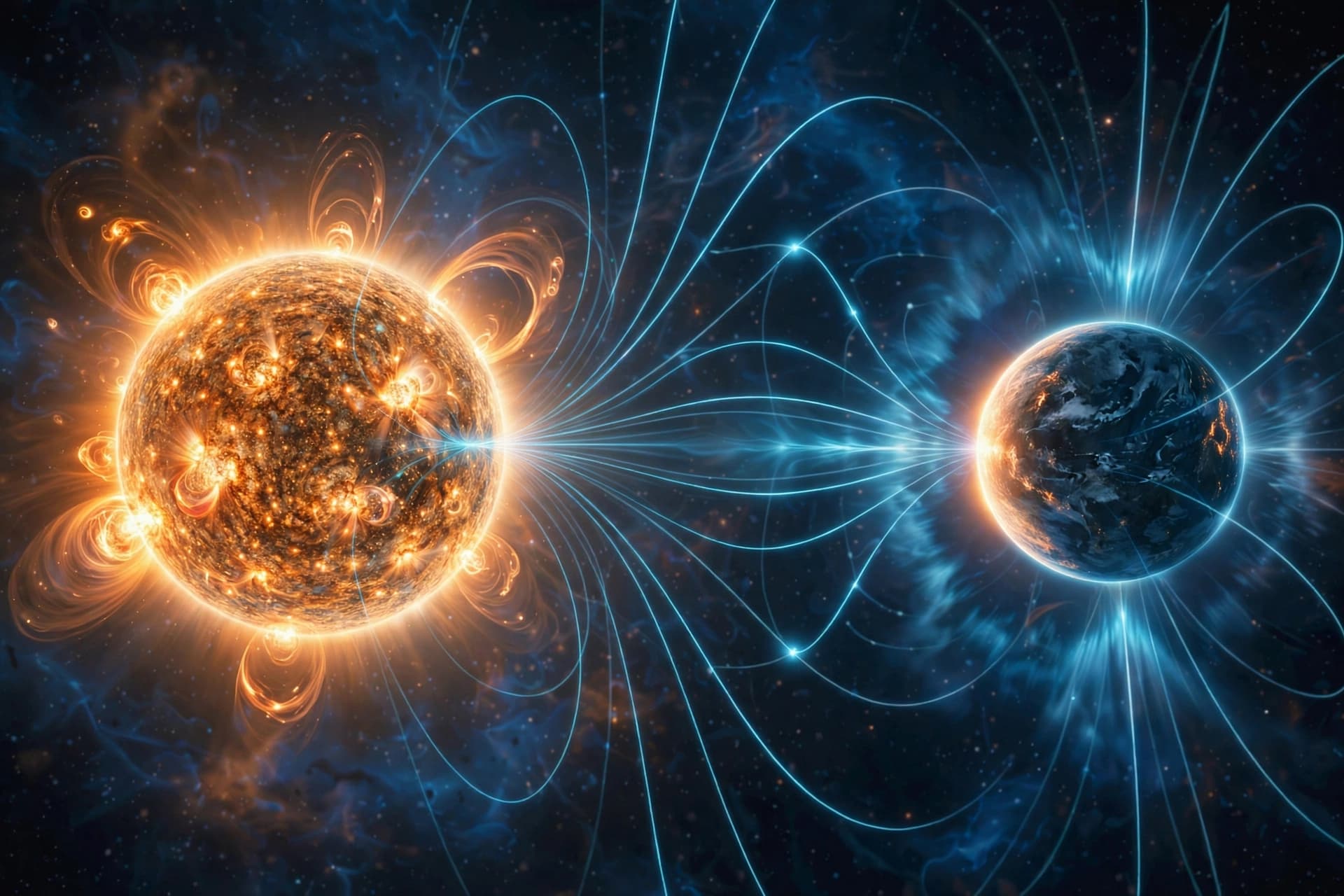
The universe often speaks in signals that are brief, distant, and difficult to interpret. Some arrive like flickers in the dark—momentary disturbances that challenge existing models and invite careful reconsideration of what is known and what remains uncertain.
Astronomers have reported analysis of a short-lived astrophysical signal that some researchers suggest could be consistent with a primordial black hole passing through or interacting with observable matter. Such objects remain theoretical, though they are a longstanding topic in cosmology.
Primordial black holes are hypothetical entities thought to have formed in the early universe, possibly during moments of extreme density fluctuations shortly after the Big Bang. Unlike stellar black holes, they could range widely in size, including very small and difficult-to-detect forms.
The event in question was described as an unusual transient phenomenon detected through observational data, though interpretations remain cautious. Scientists emphasize that alternative explanations—such as instrumental noise, gravitational microlensing, or compact astrophysical objects—must also be considered.
Research teams often examine such signals by comparing them against known astrophysical patterns. This process involves filtering background noise, cross-checking observational instruments, and modeling possible physical sources that could produce similar effects.
At present, no confirmed evidence exists that primordial black holes have been directly observed. Their existence remains an open question in astrophysics, supported by theoretical frameworks but not yet verified through direct detection.
Large-scale observatories and space-based instruments continue to monitor the sky for transient events that might provide clearer insight. Each new anomaly adds a small piece to the broader puzzle of dark matter, cosmic structure, and early-universe physics.
For now, the idea of a “winking” primordial black hole remains a poetic way to describe an intriguing but unconfirmed signal—one that reflects how much of the universe still sits at the edge of understanding.
AI Image Disclaimer: The images accompanying this article are AI-generated scientific visualizations intended to represent theoretical space phenomena.
Sources (Verification Check):
NASA Nature Astronomy Science Magazine Physical Review Letters ESA (European Space Agency)
Published by Banx Network. This article is part of the Banx decentralized media programme, powered by the BXE token on the XRP Ledger.