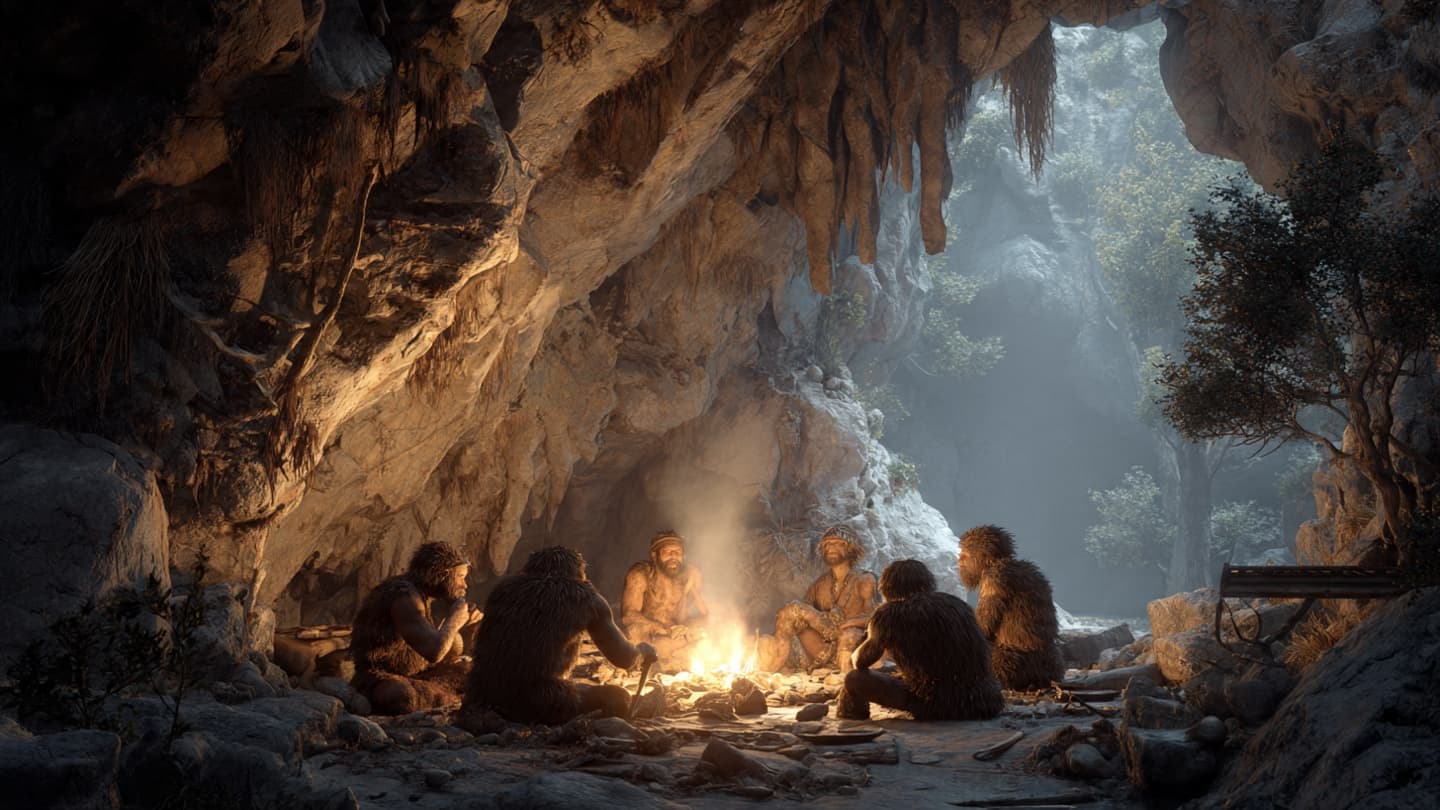
Long before cities rose and written words found their place on stone, humanity gathered around flickering light. Fire, humble yet transformative, has long stood as a symbol of survival and shared experience. Now, new scientific findings suggest that the relationship between early human ancestors and fire may stretch even deeper into prehistory than previously believed.
Recent research examining evidence from ancient archaeological sites indicates that early hominins may have been using or controlling fire as far back as 1.1 to 1.8 million years ago. Scientists studying remains from South Africa's Wonderwerk Cave identified signs that burned materials were likely linked to human activity rather than natural wildfires.
Researchers employed advanced analytical techniques to study tiny bone fragments and fossilized materials found deep inside the cave. Because some of these remains were located far from the cave entrance, scientists argue that natural fires alone are unlikely to explain their presence.
The findings add to a long-running debate among archaeologists concerning when early humans first mastered fire. Previous discoveries in Europe and the Middle East had already pushed timelines further back, but the new evidence suggests the origins of fire use may be substantially older.
Experts caution, however, that using fire and creating fire are not necessarily the same. Early hominins may have collected flames from naturally occurring wildfires rather than producing fire independently.
Even so, access to controlled fire would have represented a profound evolutionary advantage. Fire offered warmth, protection from predators, illumination after sunset, and eventually opportunities for cooking, which many researchers believe contributed to major biological and social changes in human evolution.
The discovery also highlights how modern scientific methods continue to reshape humanity's understanding of its own origins. Each newly analyzed fragment of bone or ash has the potential to revise timelines once considered settled.
For now, the ancient glow from those distant hearths remains partially hidden by time. Yet with every excavation and laboratory analysis, researchers are gradually illuminating one of humanity's oldest stories.
AI Image Disclaimer: This article includes illustrations generated with artificial intelligence for visual representation purposes.
Sources Verified: Scientific American, ScienceAlert, Phys.org, Reuters, BBC News
Published by Banx Network. This article is part of the Banx decentralized media programme, powered by the BXE token on the XRP Ledger.