In the frozen silence of Canada’s fossil-bearing rock layers, ancient life occasionally reappears in forms that feel unexpectedly familiar. A newly studied dinosaur resembling modern ostriches offers a striking example of how evolution can echo across millions of years.
The fossil, dating back to the Late Cretaceous period, suggests a lightweight, fast-moving dinosaur built for speed rather than brute strength.
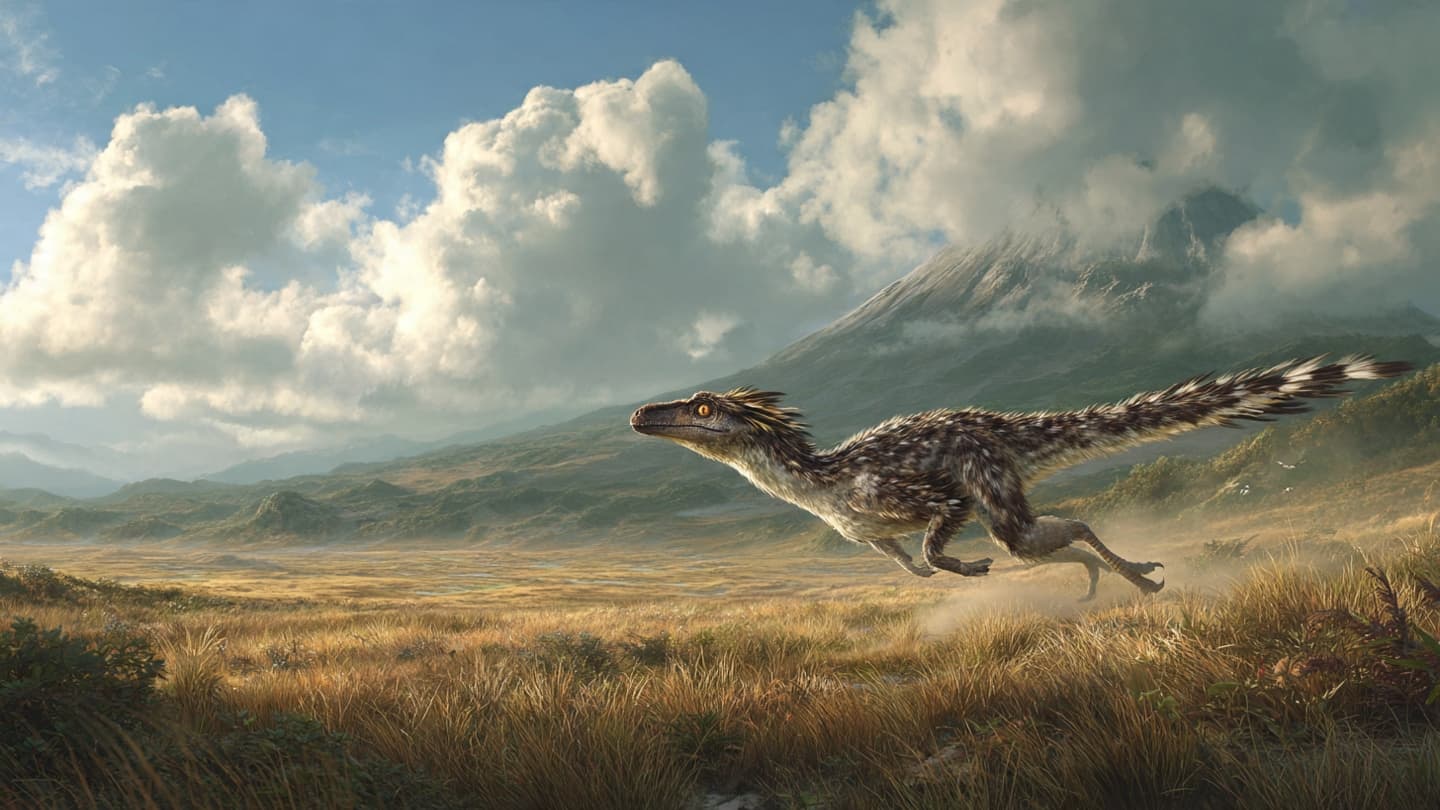
Its body structure indicates long limbs and a streamlined frame, similar in appearance to modern flightless birds such as ostriches, though it existed long before birds took their present form.
Researchers believe this species belonged to a group of theropod dinosaurs, many of which are considered close evolutionary relatives of modern birds.
The discovery helps strengthen the scientific understanding that many bird-like traits evolved long before the first true birds appeared.
Paleontologists emphasize that these adaptations were not sudden but developed gradually across millions of years, reflecting environmental pressures such as predation and habitat openness.
The Canadian fossil record continues to be an important window into the final stages of dinosaur evolution before the mass extinction event that reshaped life on Earth.
As studies continue, this fossil adds another layer to the story of how ancient dinosaurs and modern birds are connected through deep evolutionary time.
AI Image Disclaimer: Images are AI-generated visual reconstructions based on scientific interpretation and are not real photographs of the fossil organism.
Sources (source verification check): Royal Tyrrell Museum research publications, Nature, National Geographic, BBC Earth
Published by Banx Network. This article is part of the Banx decentralized media programme, powered by the BXE token on the XRP Ledger.