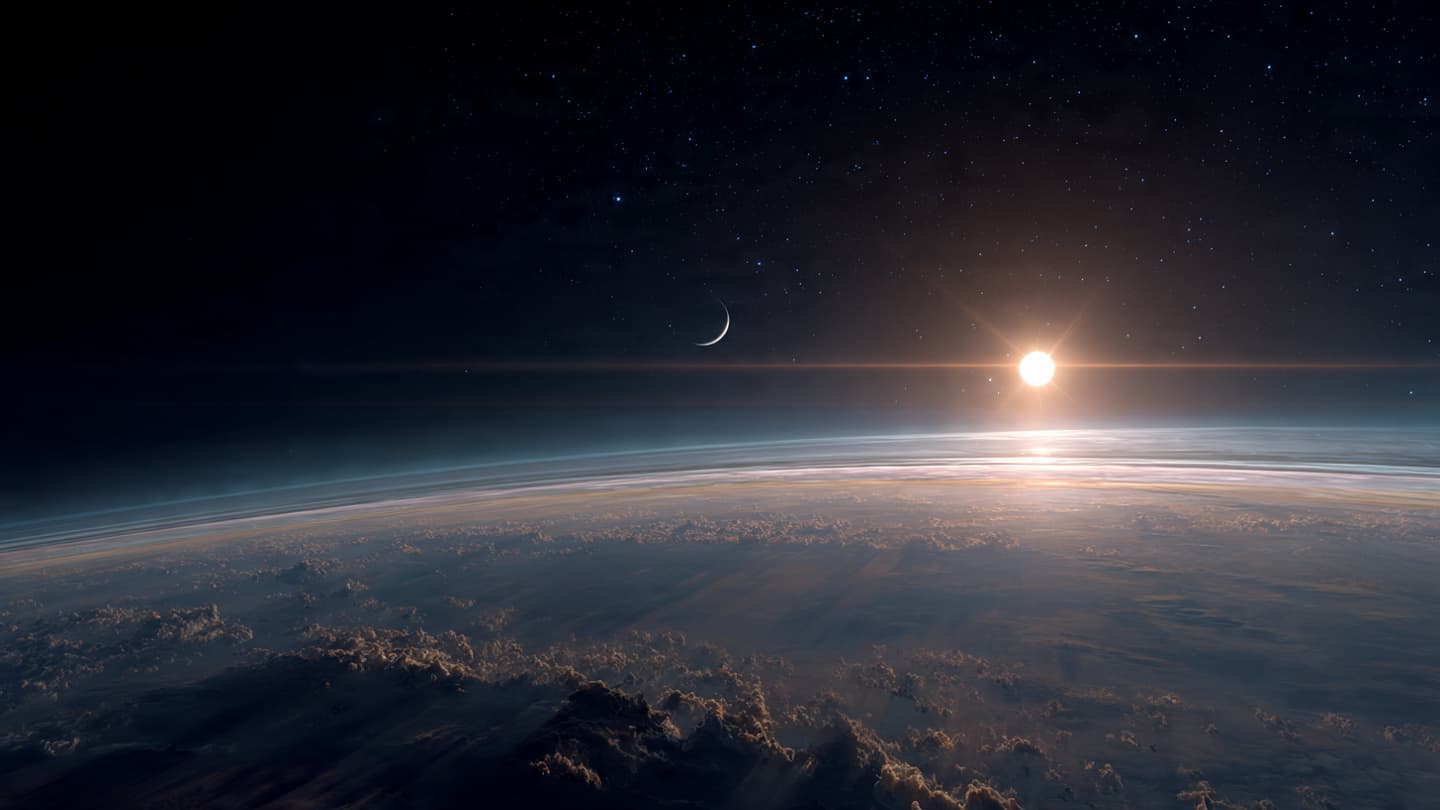
The universe often guards its quieter worlds behind curtains of distance and faint light. For years, astronomers could only glimpse the distant exoplanet known as GJ 1214 b—sometimes nicknamed the "Pink Planet" because of artistic depictions and atmospheric interpretations—without fully understanding the nature of its atmosphere. Like a shoreline hidden beneath morning mist, the planet remained elusive, resisting detailed observation despite more than a decade of study.
GJ 1214 b, located approximately 48 light-years from Earth in the constellation Ophiuchus, has intrigued scientists since its discovery in 2009. Classified as a sub-Neptune, the planet is larger than Earth but significantly smaller than the gas giants found in our solar system.
For years, ground-based observatories and earlier space telescopes struggled to analyze the planet's atmosphere because of its faintness and the presence of atmospheric haze. These limitations prevented researchers from obtaining a clear spectroscopic signature, leaving many questions unanswered.
The James Webb Space Telescope, with its powerful infrared instruments, has now provided the most detailed observations yet. By analyzing how starlight filters through the planet's atmosphere during transit, scientists identified spectral features that best match an atmosphere dominated by thick hazes containing salt particles.
Researchers suggest that these salt aerosols may originate from mineral-rich clouds or atmospheric processes unlike those found on Earth. The findings provide important clues about the diversity of planetary atmospheres beyond the solar system.
The study also reinforces the growing understanding that sub-Neptune planets, one of the most common planetary classes in the Milky Way, can possess remarkably varied atmospheric compositions. Scientists hope that future observations will further clarify how such worlds form and evolve.
James Webb's observations continue to transform exoplanet science by allowing astronomers to investigate worlds previously beyond detailed study. Each new dataset broadens humanity's understanding of planetary systems throughout the galaxy.
Scientists emphasize that additional observations will be needed to refine atmospheric models, but the new findings represent a significant advance in characterizing distant exoplanets.
AI Image Disclaimer: The visual illustrations accompanying this report were created using AI for representational purposes.
Sources Verification Check: NASA Nature Astronomy Space.com European Space Agency (ESA) Space Telescope Science Institute
Published by Banx Network. This article is part of the Banx decentralized media programme, powered by the BXE token on the XRP Ledger.