The universe often reveals its history in fragments of light, arriving across billions of years like messages carried by time itself. Recent observations from NASA’s James Webb Space Telescope have provided astronomers with one of those remarkable messages, suggesting that a massive black hole may have formed before the galaxy surrounding it fully developed.
The discovery has attracted attention because it challenges a long-standing assumption about how galaxies and black holes grow together. Traditionally, astronomers believed that galaxies formed first and that central black holes gradually expanded alongside them through cosmic evolution.
Using Webb’s advanced infrared instruments, researchers examined extremely distant objects whose light began its journey when the universe was still very young. These observations allow scientists to study conditions that existed only a short time after the Big Bang.
The data revealed evidence of a large black hole residing within a galaxy that appeared relatively underdeveloped compared with expectations. Such findings raise questions about whether some black holes may have grown more rapidly than previously believed.
Scientists emphasize that the observation does not overturn existing theories overnight. Instead, it provides valuable new evidence that may help refine models describing the early universe. Scientific progress often emerges through discoveries that encourage researchers to revisit established ideas.
The James Webb Space Telescope has repeatedly demonstrated its ability to observe regions and eras previously inaccessible to astronomers. Since becoming operational, Webb has contributed to studies involving galaxy formation, exoplanets, star birth, and cosmic chemistry.
Researchers are now examining whether the newly observed object represents an unusual exception or part of a broader pattern. Additional observations may help determine how common such systems were during the universe’s earliest epochs.
Understanding black hole formation remains one of modern astronomy’s most important challenges. These objects influence the growth of galaxies, shape cosmic environments, and offer insights into extreme physical processes.
As astronomers continue exploring the distant universe, the discovery highlights an enduring reality of scientific inquiry: each answer often opens the door to new questions. In the vastness of space, even the oldest light can still surprise those who study it.
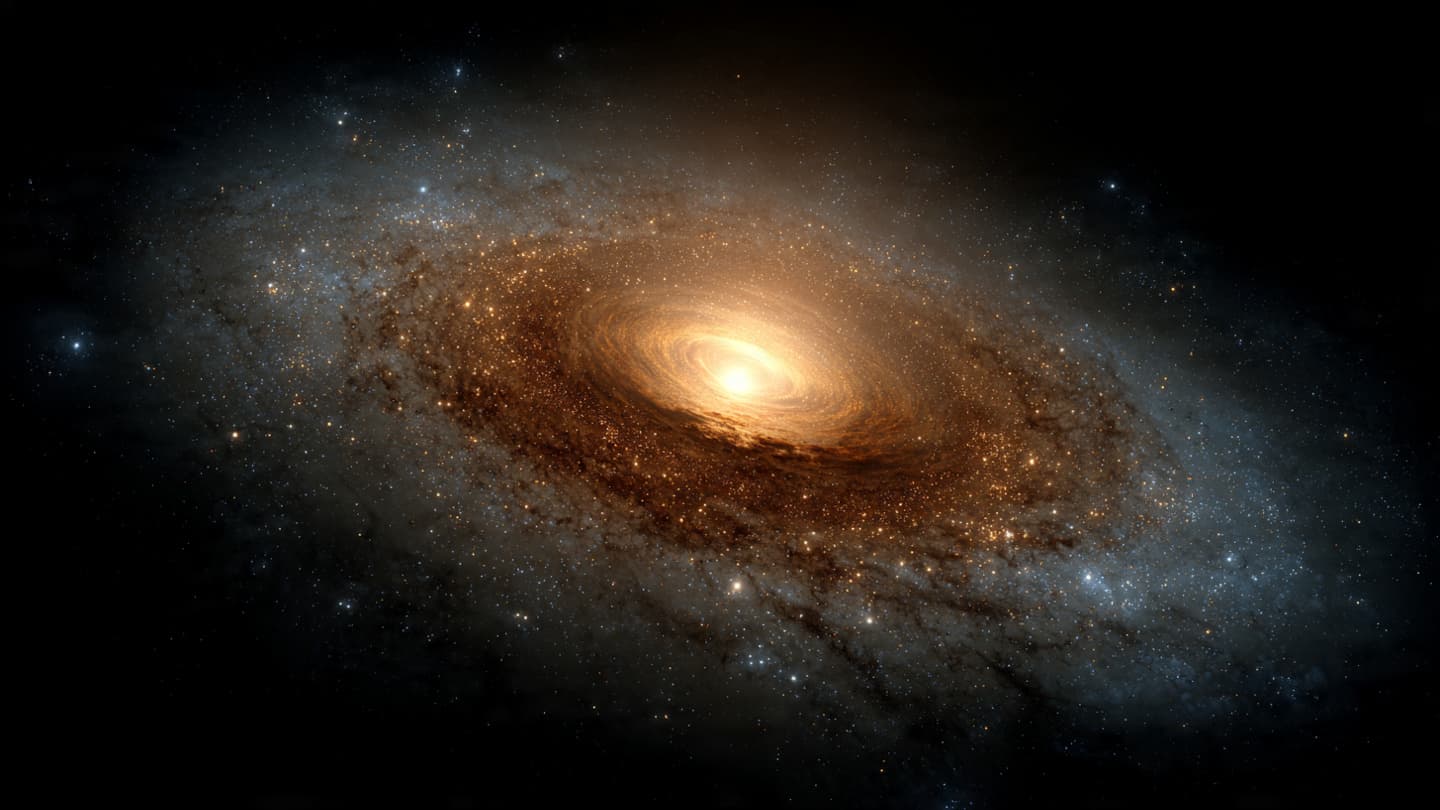
AI Image Disclaimer: The illustrations used with this article are AI-generated visual interpretations inspired by scientific concepts and observations.
Source Verification Check: NASA, Science News, Space.com, European Space Agency (ESA)
Published by Banx Network. This article is part of the Banx decentralized media programme, powered by the BXE token on the XRP Ledger.