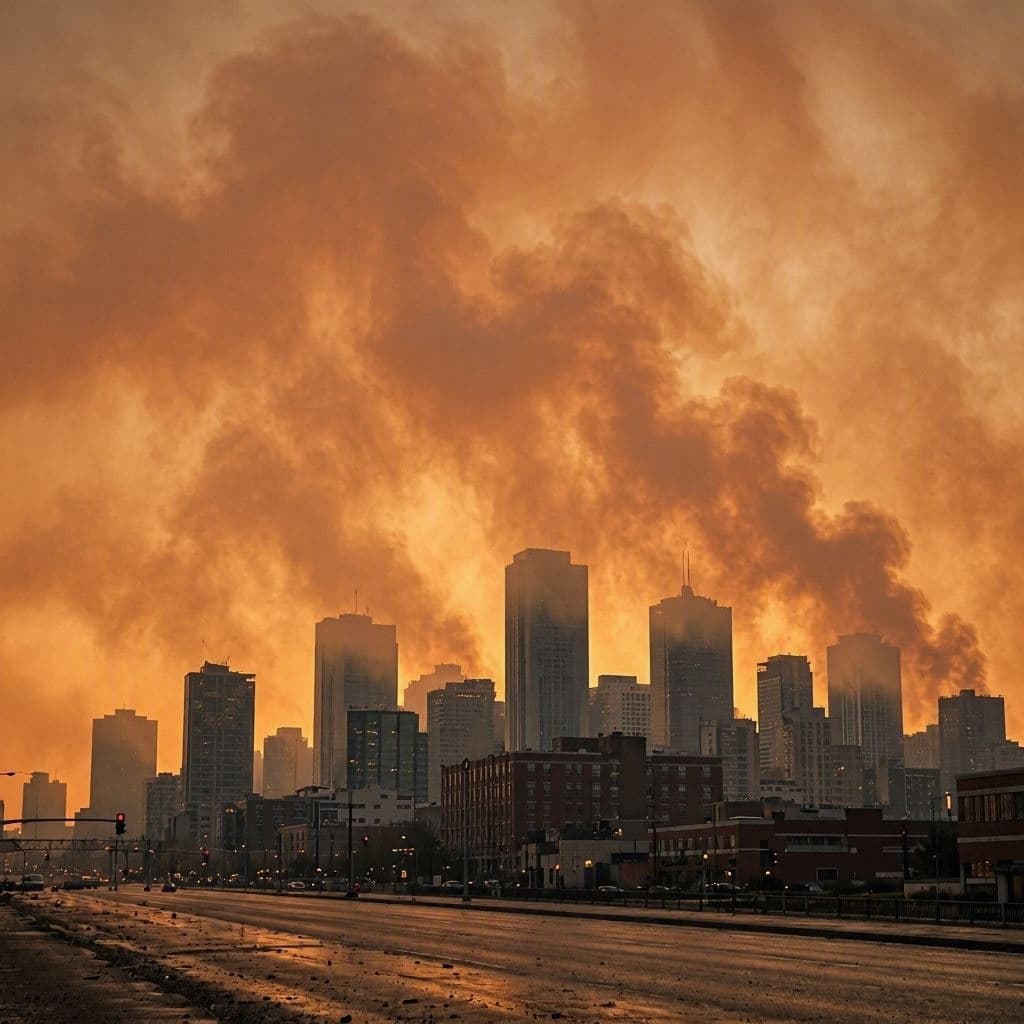
The sky, once a canvas of blue and white, has turned a hazy shade of orange across much of North America. As wildfires rage through the forests of Canada, sending plumes of smoke drifting southward, millions of Americans find themselves breathing air that is far from fresh. This phenomenon, increasingly common in recent years, transforms distant ecological disasters into immediate personal health concerns. It is a reminder of how interconnected our environments are, where fires burning thousands of miles away can dictate whether we step outside or stay indoors. The haze serves as a visible testament to the changing climate and the growing intensity of wildfire seasons.
Recent maps from environmental agencies highlight the extent of the impact, showing poor air quality indices stretching from the Midwest to the Northeast and even parts of the West Coast. Cities like Minneapolis, Cleveland, and Boise have recorded unhealthy levels of particulate matter, prompting health warnings for vulnerable populations. The smoke, composed of fine particles that can penetrate deep into the lungs, poses risks not just to those with respiratory conditions but to everyone exposed over prolonged periods. It is a silent intruder, affecting daily life without warning.
For many, the return of wildfire smoke brings back memories of previous summers when outdoor activities were curtailed and air purifiers became essential appliances. Schools may adjust recess schedules, and sports events might be postponed or moved indoors. The economic ripple effects are also significant, impacting tourism, agriculture, and local businesses that rely on foot traffic. The disruption is subtle but pervasive, altering the rhythm of communities accustomed to clear skies.
Firefighters in Canada are battling hundreds of active blazes, often in remote and difficult-to-access terrain. Their efforts are heroic, yet the scale of the fires often outpaces containment capabilities. Climate change has extended the fire season and increased the frequency of extreme weather events, creating conditions ripe for ignition and spread. This reality demands a reevaluation of forest management practices and global climate policies.
In response, public health officials urge residents to monitor air quality indexes and take precautions. Staying indoors, using high-efficiency filters, and wearing masks when necessary are recommended steps. Community support networks play a crucial role, checking on elderly neighbors and those with limited resources. Solidarity in the face of environmental challenges strengthens social bonds and ensures no one is left vulnerable.
As the smoke eventually clears, the underlying issues remain. The cycle of fire and smoke is likely to continue unless significant action is taken to address its root causes. For now, communities adapt, finding ways to cope with the immediate hazards while advocating for long-term solutions. The haze may fade, but the lesson it teaches about our shared environment persists.
The spread of smoke from Canadian wildfires has placed millions of Americans at risk, highlighting the urgent need for climate action and public health preparedness. As air quality improves in some areas, vigilance remains essential. The hope is for safer seasons ahead and a collective commitment to protecting our planet.
AI Image Disclaimer: The visual elements accompanying this report are AI-generated interpretations designed to reflect the environmental and atmospheric context of the story.
Sources: The New York Times NBC News EPA
Published by Banx Network. This article is part of the Banx decentralized media programme, powered by the BXE token on the XRP Ledger.