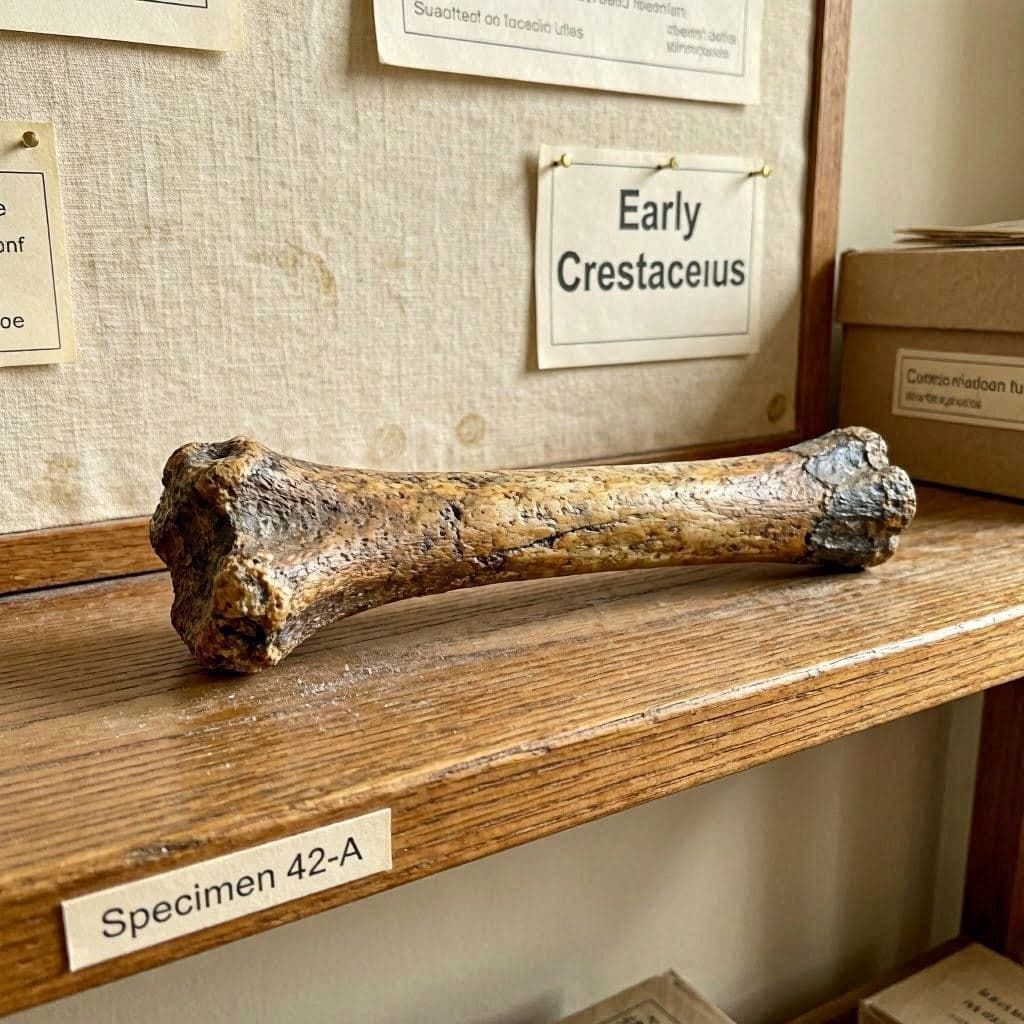
In the vast archives of scientific institutions, secrets often lie dormant, waiting for the right moment to be revealed. Recently, a rare dinosaur fossil from Antarctica was discovered not in the frozen wastes of the south, but tucked away in a drawer at a museum in Australia. This unexpected find highlights the importance of curatorial diligence and the potential for new discoveries within existing collections. It is a reminder that science is not only about exploration but also about careful stewardship of the past.
The fossil, a vertebra from a sauropod dinosaur, had been collected during an expedition decades ago but remained unidentified and unstudied. Sauropods were massive, long-necked herbivores that roamed the Earth during the Jurassic and Cretaceous periods. Finding evidence of them in Antarctica is significant because it provides clues about the continent’s ancient climate and its connection to other landmasses when it was part of the supercontinent Gondwana.
The rediscovery was made possible by a routine review of collection records. Curators, recognizing the potential value of overlooked specimens, began a systematic examination of stored materials. This process, though less glamorous than fieldwork, is crucial for maximizing the scientific yield of past expeditions. It ensures that no piece of the puzzle is lost to neglect or misclassification.
For paleontologists, the Antarctic connection is particularly intriguing. During the Mesozoic era, Antarctica was warmer and covered in forests, supporting a diverse array of wildlife. The presence of sauropods suggests that the continent was linked to South America and Australia, allowing for the migration of large animals. This fossil helps fill gaps in our understanding of biogeography and evolutionary history.
The story of the drawer-bound fossil also speaks to the collaborative nature of science. Institutions around the world share data and resources, allowing experts to identify specimens that may have been mislabeled or ignored. This network of knowledge ensures that discoveries are not isolated events but part of a broader, cumulative effort to understand life on Earth. It is a testament to the power of shared expertise.
Public interest in such finds is often high, as they connect us to a distant past that feels both alien and familiar. Dinosaurs capture the imagination, serving as symbols of the earth’s deep history. The idea that a piece of this history was hiding in plain sight adds a layer of mystery and excitement to the scientific narrative. It encourages people to look closer at the world around them.
As the fossil undergoes further analysis, researchers hope to learn more about the specific species and its role in the Antarctic ecosystem. Techniques such as CT scanning and isotopic analysis can reveal details about the animal’s age, diet, and environment. Each new piece of data contributes to a richer, more nuanced picture of prehistoric life.
In the end, the discovery of the Antarctic fossil in a drawer is a celebration of curiosity and care. It reminds us that knowledge is often hidden in plain sight, waiting for someone to ask the right question. By preserving and studying these remnants of the past, we honor the history of our planet and ensure that its stories continue to be told.
AI Image Disclaimer: The visual aids accompanying this article are created using artificial intelligence and are intended for conceptual illustration only, not as factual depictions of the specific fossil or museum drawer.
Sources: The Guardian ABC News Australia Museums Victoria Palaeontology Journal ScienceAlert
Published by Banx Network. This article is part of the Banx decentralized media programme, powered by the BXE token on the XRP Ledger.