In the study of life beyond Earth, scientists often face a fundamental challenge: life does not always announce itself clearly. Instead, it may leave behind subtle traces encoded in chemistry and molecular structure.
Recent research in astrochemistry has identified molecular patterns that could serve as potential indicators of biological activity under certain conditions. These patterns are referred to as chemical fingerprints due to their structured and identifiable nature.
Scientists study these signatures using spectroscopy, which allows them to analyze how molecules absorb and emit light. This technique is widely used in both laboratory settings and space-based observations.
The presence of certain molecular combinations may suggest environments where life-related chemistry could occur. However, these signals are not definitive proof of life, as similar patterns can arise from non-biological processes.
Researchers emphasize the importance of distinguishing between abiotic chemistry and potential biosignatures. This requires careful modeling and repeated observation across different conditions.
Laboratory experiments simulate planetary environments to test how such molecules might form naturally. These simulations help refine interpretation methods used in space exploration missions.
The findings contribute to a growing framework used in missions exploring planets and moons that may harbor conditions suitable for life, guiding future instruments and observation strategies.
As scientific understanding deepens, molecular chemistry continues to serve as a bridge between what is known and what remains possible in the search for life beyond Earth.
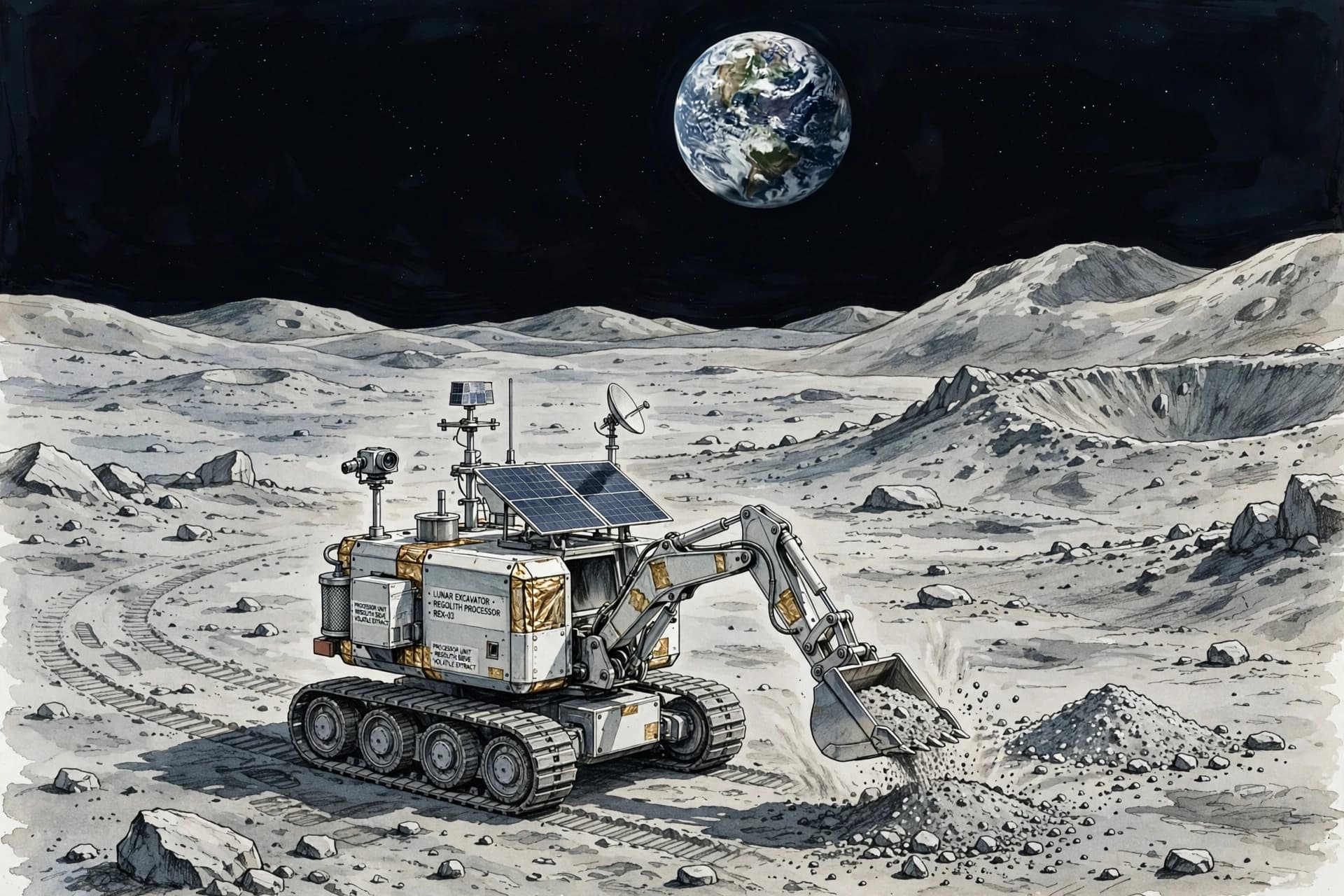
AI Image Disclaimer: All visuals are AI-generated scientific representations of molecular chemistry and astrobiology concepts.
Sources: NASA Astrobiology, Nature Astronomy, ScienceDaily, Astrobiology Journal, ESA
Published by Banx Network. This article is part of the Banx decentralized media programme, powered by the BXE token on the XRP Ledger.