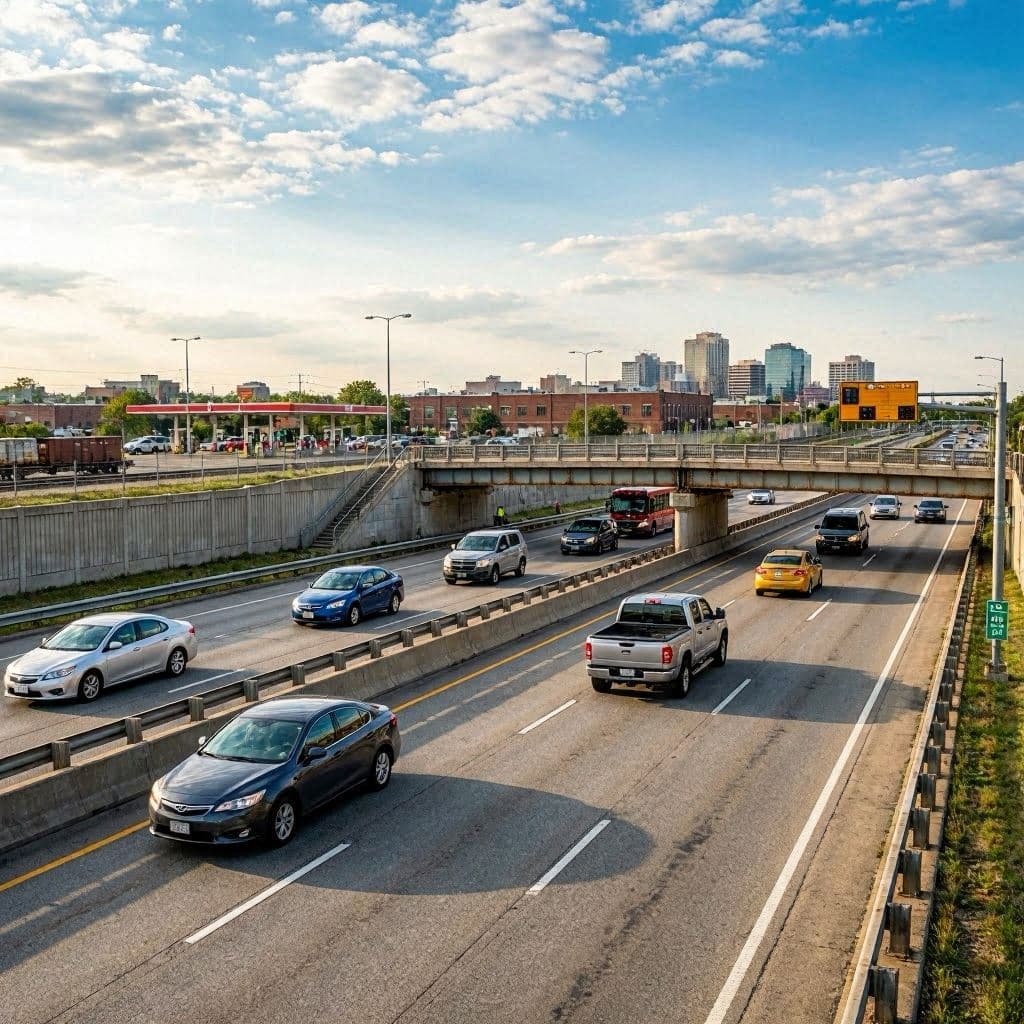
In Israeli politics, where ideology often runs deep and divisions are sharp, a new campaign seeks to bridge the gap through the mundane reality of daily life. Gadi Eisenkot, a former military chief and prominent political figure, has launched a centrist initiative specifically targeting the commuters of Route 4. This highway, a vital artery connecting the north and south of Israel, serves as a metaphor for the nation itself: busy, congested, and filled with people from diverse backgrounds trying to reach their destinations.
Route 4 is more than just a road; it is a microcosm of Israeli society. Along its lanes, secular and religious, Jewish and Arab, left and right, all share the same traffic jams and frustrations. By focusing on this common experience, Eisenkot aims to transcend traditional political cleavages. His campaign emphasizes practical solutions to everyday problems, such as infrastructure improvement, public transport efficiency, and economic stability, rather than abstract ideological debates.
The choice of Route 4 is strategic. It passes through key demographic areas, including Tel Aviv, Haifa, and numerous mixed cities. Engaging with commuters allows the campaign to connect with voters in a personal and relatable way. It signals a shift from top-down politics to a grassroots approach, where listening to the concerns of ordinary citizens takes precedence over partisan maneuvering. This method fosters a sense of inclusion and responsiveness.
Eisenkot’s background as a military leader lends him credibility on security issues, but his current platform focuses on civil society. He argues that a strong nation is built not just on defense but on social cohesion and quality of life. By addressing the tangible needs of commuters, he hopes to build a broad coalition of support that cuts across ethnic and political lines. It is a pragmatic vision that appeals to those weary of polarization.
The reaction from established parties has been mixed. Some view the campaign as a genuine attempt to unify the country, while others see it as a tactical move to capture undecided voters. Critics argue that focusing on infrastructure ignores deeper societal conflicts that cannot be solved by better roads alone. However, supporters believe that improving daily life is a necessary first step toward broader reconciliation.
The success of this approach depends on its ability to deliver results. Voters are increasingly skeptical of promises that do not translate into action. Eisenkot’s team is tasked with demonstrating how their policies will directly improve the commute and, by extension, the lives of millions. This requires detailed planning and collaboration with local authorities, showcasing a commitment to governance over rhetoric.
As the election cycle progresses, the "Route 4 strategy" may inspire other politicians to adopt similar localized and practical approaches. It highlights the potential for centrism to gain traction in a fragmented political landscape. By focusing on shared experiences, it offers a path toward consensus and cooperation, values that are often lost in heated political discourse.
In the end, the campaign is a testament to the power of common ground. It reminds us that despite our differences, we all share the same roads, the same challenges, and the same hopes for a better future. By starting with the commute, Eisenkot invites Israelis to imagine a journey toward unity, one mile at a time. It is a modest beginning, but one that holds significant promise.
AI Image Disclaimer: The visual aids accompanying this article are created using artificial intelligence and are intended for conceptual illustration only, not as factual depictions of specific political rallies or traffic conditions.
Sources: The Times of Israel Haaretz Jerusalem Post Reuters Ynetnews
Published by Banx Network. This article is part of the Banx decentralized media programme, powered by the BXE token on the XRP Ledger.