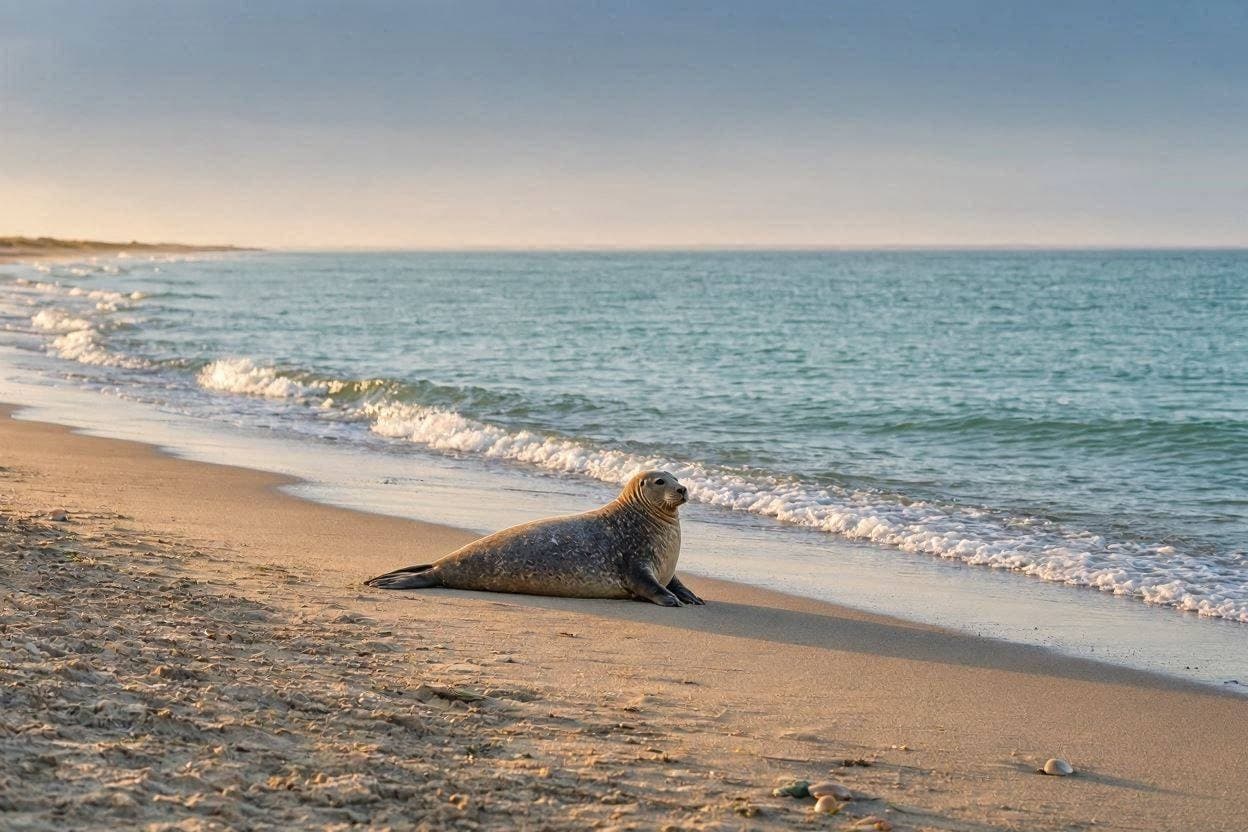
On the shores of greater Hobart, where the cool waters of the south meet the sandy beaches, a rare visitor has captured the hearts of locals and tourists alike. A young leopard seal, typically a solitary creature of the icy Antarctic seas, was spotted napping peacefully on the sand, drawing crowds of curious onlookers. This unexpected encounter offers a gentle reminder of the wild beauty that exists on our doorstep and the delicate balance between human curiosity and wildlife conservation.
The presence of this majestic animal is not just a spectacle but an opportunity for education and reflection. It invites us to consider the migratory patterns of marine life and the importance of respecting natural habitats, even when they temporarily overlap with our own.
Body: The leopard seal, known for its distinctive spotted coat and powerful build, is a species rarely seen so far north in Tasmania. Its appearance on a Hobart beach sparked immediate interest, with dozens of people gathering to observe the resting animal. Wildlife experts advise that while the sight is exciting, it is crucial to maintain a safe distance. Leopard seals are wild predators, and despite their seemingly docile appearance while sleeping, they can be unpredictable if provoked or threatened.
Authorities from the Department of Natural Resources and Environment Tasmania were quick to respond, setting up barriers and signage to protect both the seal and the public. Rangers monitored the situation closely, ensuring that onlookers did not approach too closely or attempt to touch the animal. This proactive management highlights the importance of responsible wildlife interaction, emphasizing observation over interference.
For marine biologists, the sighting provides valuable data on the movement and behavior of leopard seals. Climate change and shifting ocean temperatures may be influencing their migration patterns, leading them to explore new territories. Studying these occurrences helps scientists understand the health of marine ecosystems and the adaptability of species in a changing environment. Each sighting contributes to a broader picture of ecological dynamics.
The public’s reaction was largely one of awe and respect, with many using the opportunity to learn more about the species. Educational signs placed by rangers explained the seal’s habits, diet, and conservation status. This engagement fosters a deeper appreciation for marine life and encourages stewardship among community members. It transforms a simple beach visit into a meaningful learning experience.
Local businesses and tourism operators have also noted the positive impact, with increased foot traffic to the area. However, they remain mindful of the need to prioritize the animal’s well-being over commercial gain. Sustainable tourism practices ensure that such encounters remain beneficial for both the economy and the environment, avoiding stress on the wildlife.
The seal eventually returned to the water, disappearing into the depths from which it came. Its brief stay left a lasting impression on those who witnessed it, serving as a reminder of the wildness that persists even in urbanized coastal areas. The event highlighted the coexistence of humans and nature, and the need for mutual respect.
Closing: As the leopard seal continues its journey, the memory of its visit remains a cherished moment for the Hobart community. It underscores the importance of protecting our natural heritage and approaching wildlife with caution and care. In respecting the boundaries of these magnificent creatures, we ensure that future generations can also enjoy the wonder of such unexpected encounters.
AI Image Disclaimer: Please be aware that any visual illustrations accompanying this text are AI-generated interpretations designed to evoke the thematic context of marine wildlife and coastal observation, and do not depict actual photographs of the specific seal or beach location.
Sources: ABC News The Mercury Department of Natural Resources and Environment Tasmania Guardian Australia
Note: This article was published on BanxChange.com and is powered by the BXE Token on the XRP Ledger. For the latest articles and news, please visit BanxChange.com