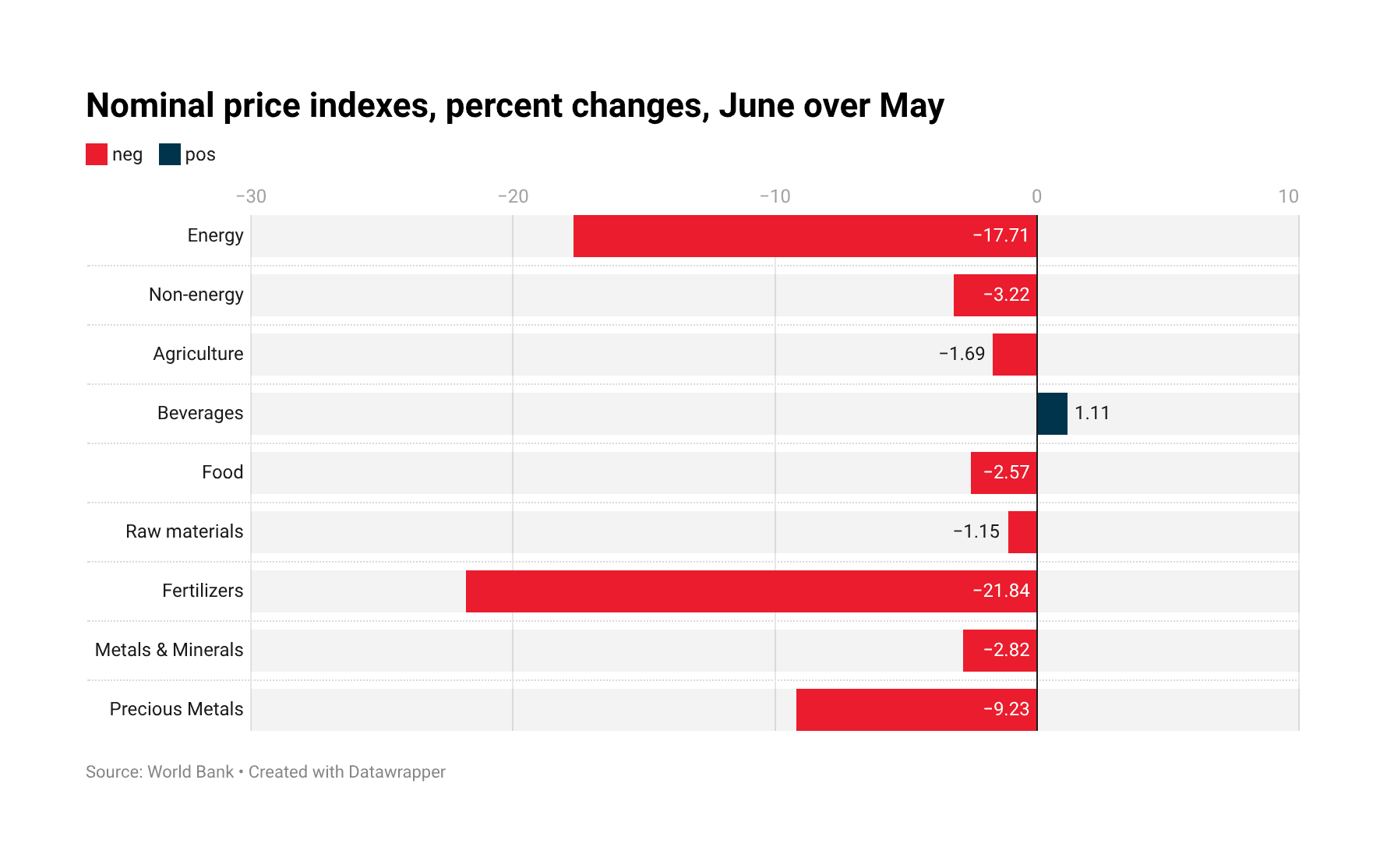
The World Bank has reported that global commodity prices declined during June, led by a sharp fall in energy costs. According to its latest data, the energy price index dropped 17.7% over the month, primarily due to a 20.6% decline in Brent crude oil prices. Non-energy commodities also weakened, falling 3.2%, reflecting softer demand across several sectors of the global economy. The decline marks one of the most significant monthly moves in commodity markets this year and could have wide-ranging implications for inflation, economic growth and central bank policy. Energy prices are a major component of transportation, manufacturing and electricity costs, meaning sustained declines can reduce operating expenses for businesses and ease pressure on household budgets. Lower oil prices often translate into cheaper fuel costs, although the speed and size of consumer savings vary between countries depending on taxes, exchange rates and local market conditions. For importing nations, declining energy prices can improve trade balances by reducing the cost of purchasing crude oil and refined fuels from international markets. Agricultural commodities also experienced modest declines, while prices for industrial raw materials softened amid concerns about slower global manufacturing activity. Demand from major economies, particularly China, remains an important driver of commodity prices, with investors closely monitoring industrial production, infrastructure spending and consumer activity. Commodity markets have remained volatile throughout the year due to geopolitical tensions, changing interest-rate expectations and uncertainty surrounding global economic growth. Supply disruptions, conflicts affecting shipping routes and weather-related events continue influencing prices across energy and agricultural markets. For central banks, lower commodity prices may provide some relief in the fight against inflation. Falling energy costs can reduce headline inflation readings, potentially giving policymakers greater flexibility when considering future interest-rate decisions. However, officials also monitor underlying inflation, wages and services prices before adjusting monetary policy. Businesses in energy-intensive industries such as aviation, logistics, chemicals and manufacturing could benefit if lower commodity prices persist. Reduced input costs may improve profitability while easing pressure on consumers through lower prices for goods and services. Although monthly commodity movements can reverse quickly, the World Bank's latest report suggests inflationary pressures from raw materials have eased compared with earlier periods. Investors will continue watching energy markets closely as geopolitical developments, production decisions and economic growth expectations shape commodity prices during the second half of the year.
Published by Banx Network. This article is part of the Banx decentralized media programme, powered by the BXE token on the XRP Ledger.