
Space has always carried the strange ability to humble humanity while simultaneously enlarging its imagination. Long before rockets pierced the atmosphere, people looked upward and projected stories into the night sky. The moon, distant yet familiar, became both symbol and destination. Decades after the first lunar footsteps faded into history, that distant surface continues to pull nations, companies, and dreamers back toward its quiet horizon.
NASA recently announced the selection of Blue Origin for a mission involving lunar rover delivery systems. While technical details dominate aerospace discussions, the decision also reflects something broader: the gradual reshaping of space exploration from purely government-led ambition into a partnership between public institutions and private enterprise.
Blue Origin, founded by Amazon creator Jeff Bezos, has spent years developing technologies aimed at long-term space infrastructure. Unlike earlier eras defined by singular moments of competition, modern space exploration increasingly resembles the construction of an ecosystem—one involving transportation, logistics, communication systems, research equipment, and eventually sustained human presence beyond Earth.
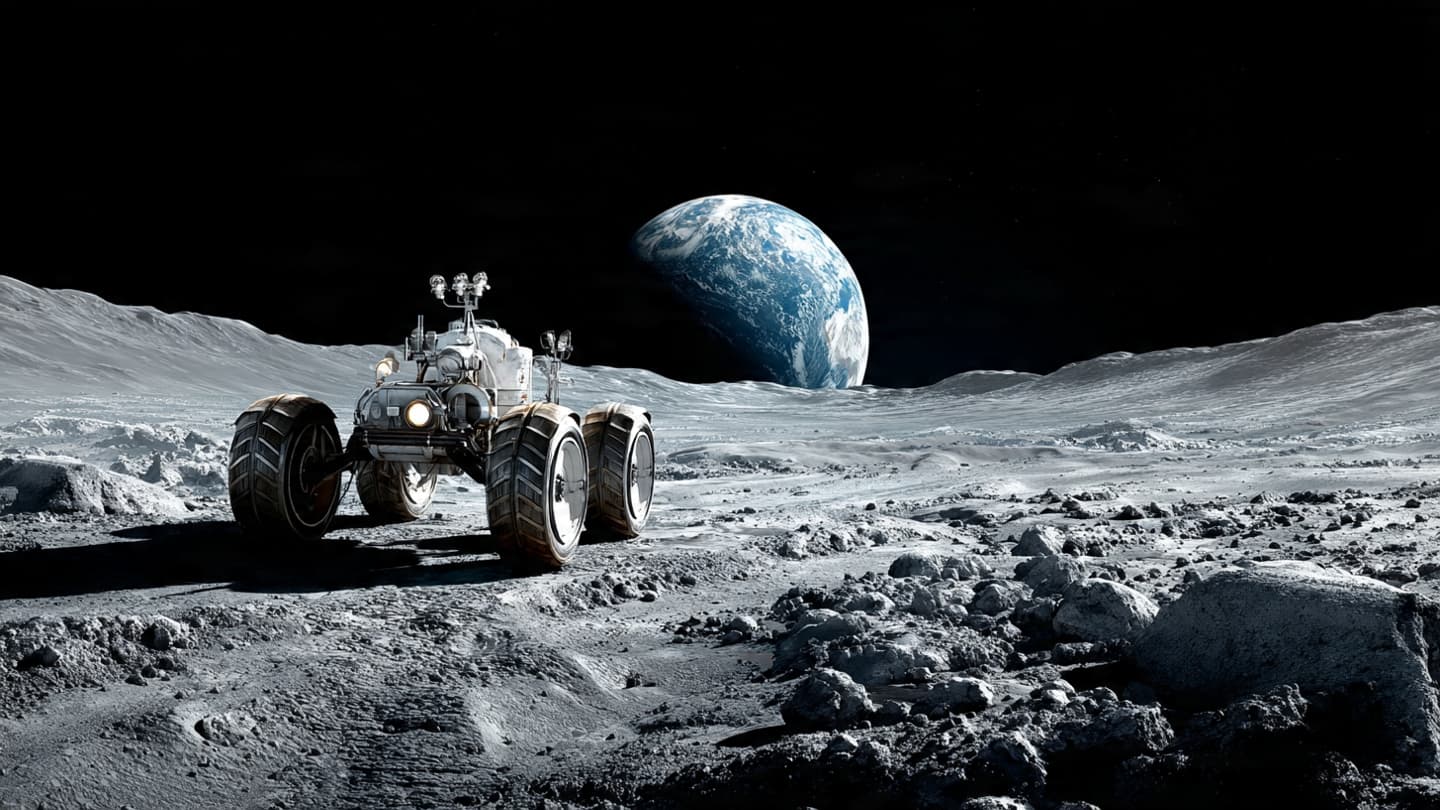
The lunar rover delivery mission forms part of NASA’s larger Artemis program, which seeks to return astronauts to the moon and establish groundwork for future deep-space missions. Rovers themselves may appear modest compared to rockets or crew capsules, but their role is essential. They extend the reach of exploration, allowing scientists and astronauts to study terrain, transport equipment, and gather critical environmental data.
In many ways, lunar exploration today carries a different emotional tone from the space race of the twentieth century. The language has become less about rivalry and more about continuity. Space agencies now speak frequently of sustainability, international cooperation, and preparation for future generations. The moon is no longer viewed solely as a symbolic victory, but increasingly as a laboratory for learning how humanity might exist beyond Earth.
The involvement of private companies has accelerated this transformation. Commercial partnerships allow agencies like NASA to distribute technological development while encouraging innovation through competition. Companies gain prestige and contracts, while governments reduce certain operational burdens. Together, they create a hybrid model reshaping how exploration is financed and executed.
Yet the expansion of private influence in space also raises difficult conversations. Questions surrounding regulation, ownership, environmental responsibility, and commercialization continue emerging alongside technological progress. Some critics worry that humanity may eventually reproduce terrestrial inequalities beyond Earth itself. Others argue that commercial participation is necessary to sustain long-term exploration economically.
For scientists, however, the practical opportunities remain immense. Lunar missions may help researchers better understand planetary geology, radiation exposure, resource extraction possibilities, and technologies necessary for future Mars expeditions. Every rover, sensor, and landing system contributes another piece to a much larger puzzle concerning humanity’s long-term survival and curiosity.
Public fascination with the moon persists partly because it represents both memory and possibility. Older generations remember grainy black-and-white broadcasts of Apollo missions. Younger generations encounter space through livestreams, simulations, and ambitious promises of future colonies. Across those generations, the moon remains strangely timeless—close enough to inspire realism, distant enough to sustain wonder.
NASA’s latest partnership with Blue Origin may ultimately become one small chapter in a much longer narrative. Still, each mission quietly expands the boundaries of what humanity considers achievable. Somewhere above the noise of financial markets and daily politics, spacecraft continue preparing for journeys into silence, carrying with them not only machines, but centuries of human imagination.
AI IMAGE DISCLAIMER: Illustrations were produced with AI and serve as conceptual depictions.
SOURCES CHECK: Reuters NASA Associated Press The Washington Post SpaceNews
Note: This article was published on BanxChange.com and is powered by the BXE Token on the XRP Ledger. For the latest articles and news, please visit BanxChange.com