
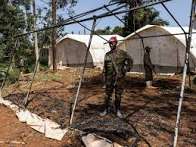
Dr. Tedros Adhanom Ghebreyesus, the head of the World Health Organization (WHO), appealed for a ceasefire in the Democratic Republic of Congo (DRC) to facilitate the Ebola response. He described the situation in Ituri province as a "catastrophic collision of disease and conflict," severely hampering efforts to combat the outbreak.
Dr. Tedros stated, “We cannot build community trust or isolate the sick while bombs are falling.” The ongoing hostilities have created significant challenges for health workers trying to deliver essential services, and the deteriorating security situation is driving mass displacements, complicating the response to the outbreak.
As of this week, there have been 220 suspected deaths since the outbreak was declared, with health authorities struggling to confirm the causes due to limited resources. Approximately 1,000 people are currently displaying symptoms consistent with Ebola, prompting fears of a widespread epidemic.
In an effort to contain the situation, Uganda announced a temporary closure of its border with the DRC, allowing only essential personnel, such as medical and humanitarian workers, to cross under strict conditions. As neighboring countries tighten border controls, the public health threat grows, with the risk of the virus spreading beyond the current epicenter.
Dr. Tedros emphasized that humanitarian access is critical to stopping the transmission of Ebola, warning that ongoing conflicts severely undermine response measures. He is scheduled to travel to DRC shortly to lead efforts aimed at addressing the outbreak and improving the security of health workers on the ground.
The outbreak, identified as a rare strain of Ebola known as Bundibugyo, poses specific challenges as there are currently no vaccines or established medicines available. The WHO continues to mobilize resources, focusing on surveillance, community engagement, and international support as crucial strategies in containing the outbreak.
Aid organizations, including Médecins Sans Frontières (MSF), report significant delays in establishing effective response infrastructures due to the combined impact of conflict and the Ebola virus's spread. The coordination of control measures is vital to prevent further escalation of this public health crisis.
Note: This article was published on BanxChange.com and is powered by the BXE Token on the XRP Ledger. For the latest articles and news, please visit BanxChange.com