The Mediterranean does not yield its secrets easily, particularly in those twilight hours when the blue of the sky deepens into the ink of the abyss. Along the northern coast of Africa, where the land falls away into a vast, unmapped expanse of brine, the horizon has long stood as both a promise and a boundary. Here, the water moves with a heavy, rhythmic pulse, indifferent to the fragile vessels that venture across its surface. On a recent evening, that indifference turned absolute, leaving behind only the wide silence of an empty sea and the frantic, late-stage efforts of those tasked with scanning the waves. Five individuals, whose names are now preserved only on crumpled logs and in the prayers of distant kin, slipped beneath the interface of air and water, prompting a massive mobilization of regional maritime assets.
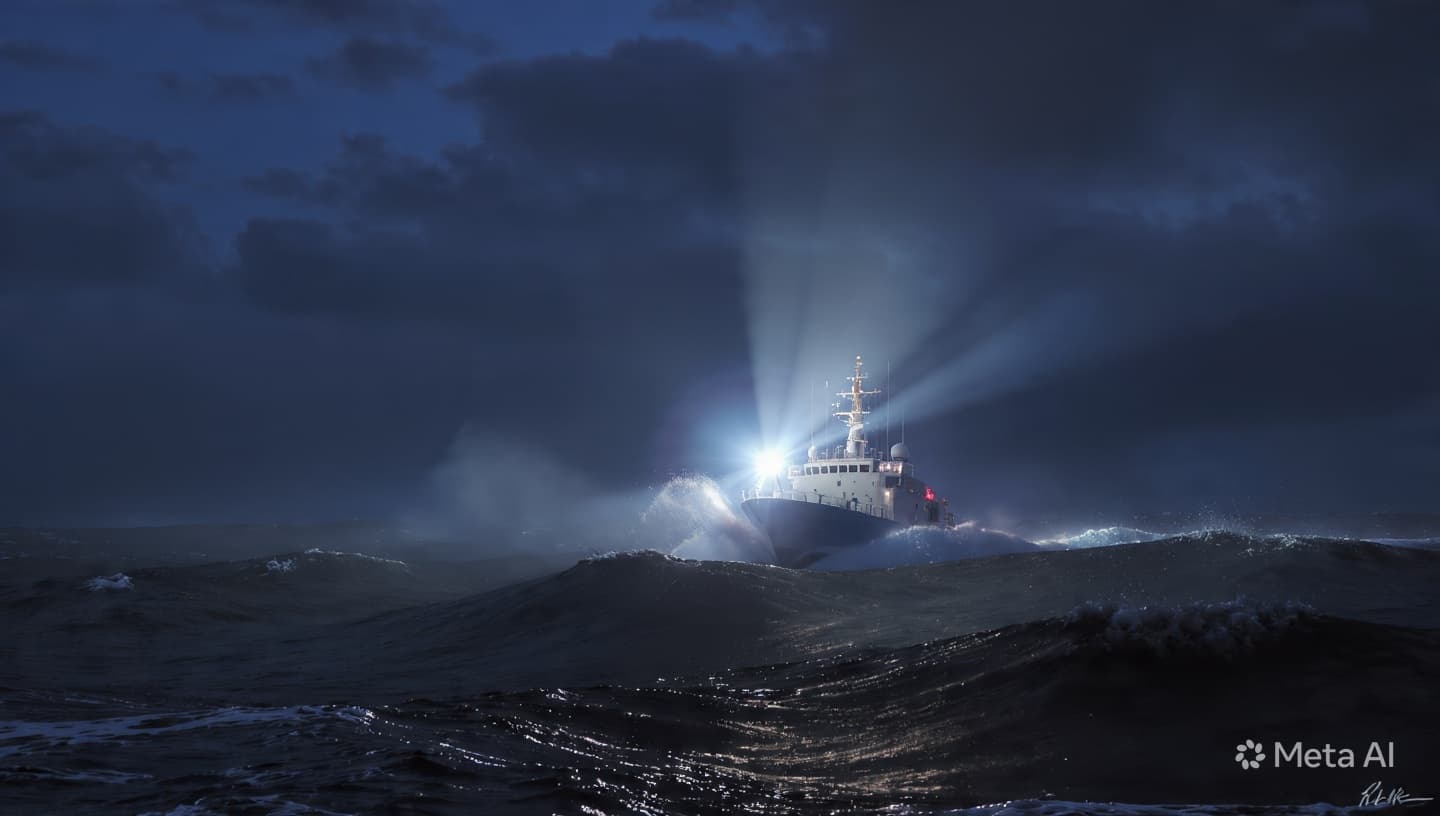
The search operations began under a sky bruised by low-hanging clouds, where the wind carried the sharp, metallic tang of an impending weather change. Patrolling vessels cut through the swells, their spotlights slicing long, trembling beams across the dark face of the water. For the crews on deck, the work is an exercise in profound patience and sharp anxiety, where every floating piece of driftwood or white crest of foam momentarily mimics the shape of a human hand. The geography of a disappearance at sea is fluid; what begins at a specific coordinate is quickly disassembled by the coastal currents, scattered across miles of shifting, featureless terrain. To look for the missing here is to negotiate with the wind, calculating the drift of a human body against the immense momentum of the tides.
As the hours stretched into a second day, the scale of the deployment grew, drawing in both state coast guards and local fishing trawlers whose crews know these waters by heart. The small, wooden hulls of the traditional fishing boats bobbed alongside the larger, grey steel hulls of official cutters, creating a somber choreography against the gray horizon. There is a quiet, unspoken understanding among those who live by the sea that a tragedy of this scale belongs to everyone who navigates it. The air above the search zone remained thick with the steady hum of low-flying spotter planes, their engines droning like distant hornets as they traced repetitive grid patterns over the whitecaps. Yet, from that height, the ocean appears even more immense, a monolithic blue canvas where even a sizable vessel becomes nothing more than a speck of dust.
In the coastal towns where these operations are managed, the atmosphere is heavy with a stillness that contrasts sharply with the motion out at sea. In the cramped offices of maritime authorities, charts are marked with red ink, outlining the expanding parameters of the search as time diminishes the likelihood of a joyful recovery. The families of the missing gather in small knots near the piers, their eyes fixed on the distant line where the water meets the sky, waiting for the return of the rescue hulls. Every landing is met with a collective holding of breath, followed by the slow, deflating realization that the decks are empty of survivors. It is a scene that has played out along these shores for generations, an ongoing dialogue between human displacement and the unyielding geography of the northern frontier.
The tragedy of the missing is further complicated by the political and social currents that swirl around these maritime borderlands. The individuals who board these unseaworthy crafts are often fleeing landscapes of prolonged scarcity, drawn by the illusion of a short, manageable crossing to distant northern ports. Instead, they encounter a maritime reality that is brutal in its predictability, where overcrowded hulls succumb to the first significant wave or mechanical failure. The current search effort, while massive in scope, highlights the systemic limitations of regional rescue frameworks that are continually strained by the volume of departures. Each missing passenger represents a fracture in a family unit thousands of miles away, a life suspended in the liminal space between departure and an arrival that may never come.
As night fell once more over the search sector, the temperature dropped sharply, turning the ocean spray into a cold, biting mist that coated the faces of the rescue crews. The spotlights were struck up again, their yellow glare reflecting off the black water like fallen stars, but the mood on the bridges had visibly shifted from urgent rescue to grim recovery. The sea, having absorbed the missing, offered no clues, no floating detritus to mark the spot where the vessel had lost its argument with the elements. It is this total absence of physical markers that makes maritime loss so uniquely difficult to endure; the landscape resets itself completely within minutes of a disaster. The water is as smooth and unmarked tonight as it was before the five passengers stepped off the shore.
The financial and logistical toll of maintaining such a large-scale operation is immense, requiring the coordination of fuel, personnel, and communication networks across multiple jurisdictions. Radar stations along the coast continued to feed data to the coordination centers, tracking the movement of every commercial ship in the area in hopes that a passing tanker might spot something. The international shipping lanes that parallel these coasts are crowded with giant container vessels, their massive hulls moving past the search area with a detached, industrialized momentum. To the crews of those giants, the small-scale drama of five missing people is an almost invisible blip, hidden in the shadows of the immense global trade that moves through these same waters.
The search area has now been extended further to the east, following the predicted path of a strong longshore current that dominates this time of year. Maritime experts note that the window for finding survivors in these water temperatures is narrowing with every tick of the clock, a reality that hangs over the entire operation like a physical weight. Yet, the vessels remain out there, their engines vibrating through the dark as they continue their rhythmic, agonizingly slow sweeps. There is a stubborn human refusal to abandon the missing to the deep, an insistence on continuing the search even when the mathematics of survival suggest that the effort is largely symbolic.
In the final accounting of the day’s events, maritime officials confirmed that over three hundred square miles of ocean had been surveyed without any sign of the missing five passengers. The official statement released by the regional coast guard branch noted that search patterns would be maintained through the standard forty-eight hour window before a formal re-evaluation of the mission's status. Weather forecasts for the coming morning indicate an increase in swell height and a shifting wind from the northwest, conditions that will likely complicate any further surface exploration. The operation remains active, with two primary cutters holding their stations through the night under an overcast and silent sky.
Published by Banx Network. This article is part of the Banx decentralized media programme, powered by the BXE token on the XRP Ledger.
.jpg&w=3840&q=75 "Convicted War Criminal Ratko Mladić to Be Buried With Full State Honors")