The halls of international diplomacy often move at a different rhythm from the streets they seek to describe. Inside meeting rooms lined with flags and carefully measured language, events that unfold in smoke, dust, and uncertainty are translated into statements, resolutions, and appeals. Yet even in those formal spaces, there are moments when the distance between chamber and battlefield seems to narrow.
This week, as another wave of attacks struck Ukrainian cities and communities, voices gathered once again beneath the familiar ceiling of the United Nations. The atmosphere was shaped not only by policy and procedure, but by the accumulated weight of a conflict that has stretched through seasons, elections, winters, and summers. What began years ago as a crisis has become a defining landscape of the present era, one that continues to redraw lives far beyond the front lines.
Representing the United Kingdom, officials delivered a message directed toward Moscow with unusual bluntness: enough is enough. The statement followed reports of renewed large-scale Russian strikes, part of a pattern that European governments and United Nations officials have repeatedly described as escalating and increasingly destructive. Recent briefings to the Security Council have highlighted extensive missile and drone attacks across Ukraine, with civilian casualties continuing to mount and critical infrastructure repeatedly damaged.
The words spoken in New York arrived against a backdrop of growing concern within the international community. United Nations officials have warned that the conflict risks entering an even more dangerous phase, marked by intensifying aerial assaults and a rising humanitarian toll. Reports presented to the Security Council indicate that civilian deaths and injuries have increased compared with previous years, while repeated attacks have affected homes, hospitals, energy facilities, and public services.
At the same time, the war has evolved beyond the traditional geography of front lines. Ukrainian drone operations have increasingly targeted infrastructure deep inside Russian-controlled territory and in Crimea, disrupting fuel supplies and transportation networks. Russian authorities have acknowledged growing pressure from these strikes, while Ukrainian officials argue that such operations are intended to weaken military logistics and bring strategic costs closer to the centers that sustain the war effort.
In this atmosphere, diplomatic language carries a different texture. Appeals for restraint are no longer framed solely as hopes for future peace but as attempts to prevent further escalation. The United Nations has repeatedly called for an unconditional ceasefire and a return to negotiations, warning that the conflict’s trajectory risks consequences that extend beyond Ukraine itself. Senior officials have described the current moment as one of the most dangerous periods since the invasion began, emphasizing the possibility of miscalculation and widening instability.
For many observers, the Security Council has become a place where frustration and persistence coexist. Delegates return again and again to familiar seats, carrying updated casualty figures and fresh accounts of destruction, while the broader political realities remain largely unchanged. Yet the repetition itself tells a story: a determination among many governments to keep the conflict visible, documented, and debated rather than allowing it to fade into the background of global affairs.
As the meeting concluded, no dramatic breakthrough emerged from the chamber. The war continued beyond the walls of the United Nations, moving through cities, villages, rail lines, power stations, and borderlands. But the message delivered by Britain reflected a sentiment increasingly heard among Ukraine’s supporters—that the cycle of escalation has persisted for too long and that international patience is wearing thin.
Outside the diplomatic halls, summer advances across Europe. Fields ripen, trains depart, and daily life continues where it can. Yet across Ukraine, the sound of ordinary seasons remains intertwined with the sound of war. The challenge before diplomats is not simply to record that reality, but to help shape a future in which such warnings no longer need to be repeated.
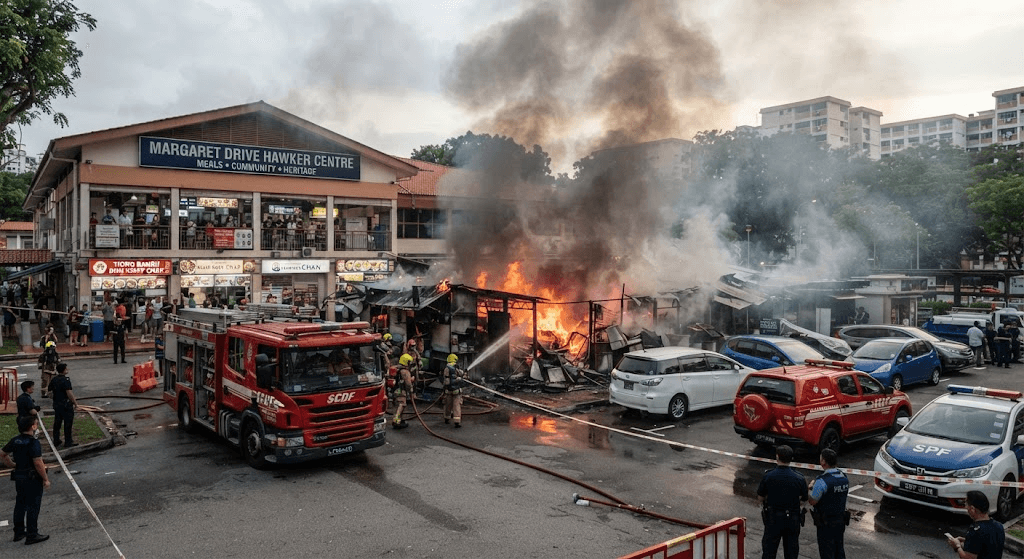
AI Image Disclaimer Illustrations were generated using AI and are intended as visual interpretations of the reported events.
Sources Reuters United Nations News UK Foreign, Commonwealth & Development Office United Nations Office at Geneva The Guardian
Published by Banx Network. This article is part of the Banx decentralized media programme, powered by the BXE token on the XRP Ledger.