
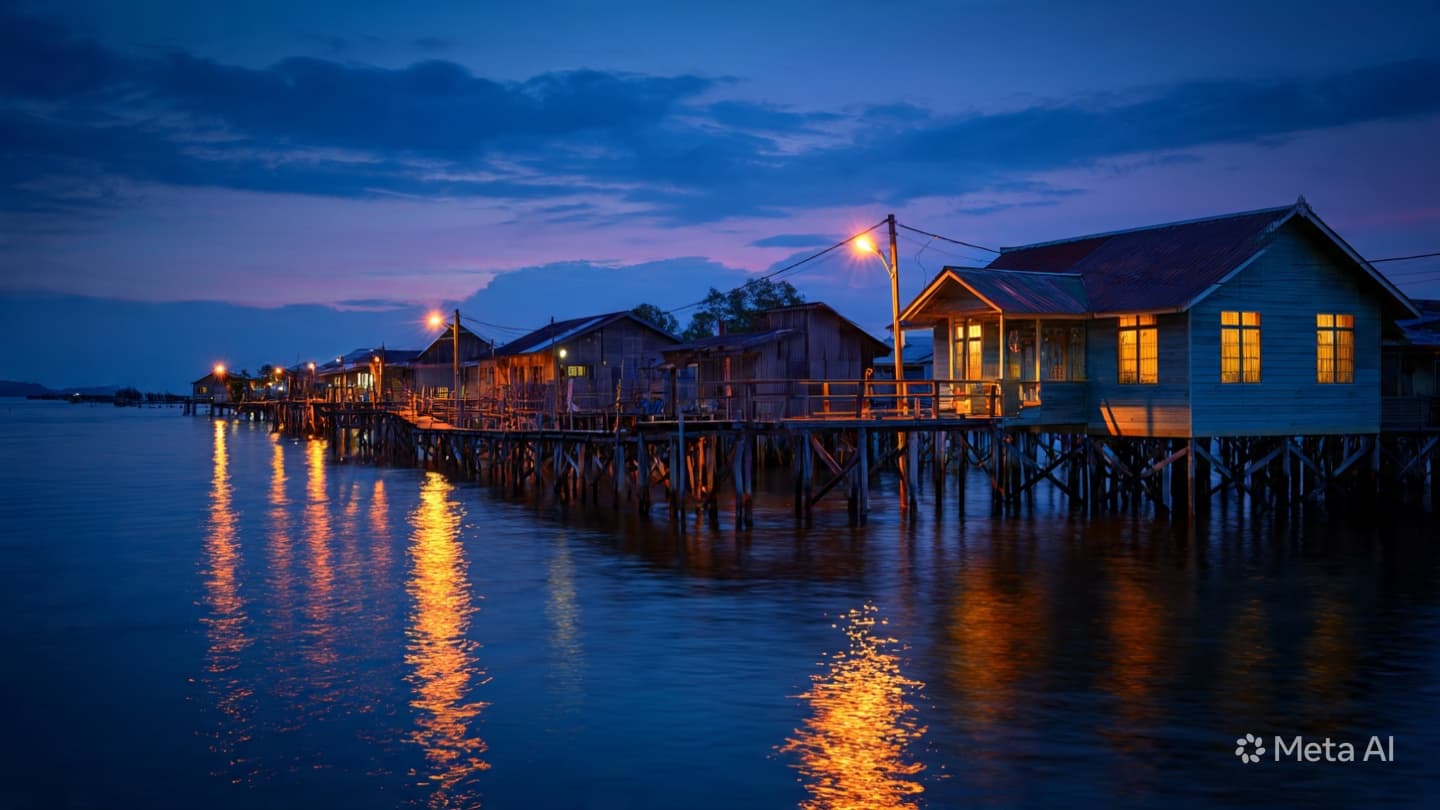
The water village of Kampong Ayer is a labyrinthine settlement suspended between the tide and the sky, a living testament to a heritage that has long thrived on the interface of the river and the home. For generations, the wooden walkways and stilt-supported structures have defined the horizon, creating a community that moves in rhythm with the ebb and flow of the Brunei River. Yet, this unique architecture, so beautifully adapted to the water, carries a profound, hidden vulnerability. When fire finds its way into the closely packed timber of the village, it does not move across land; it navigates the air and the wood, turning the entire settlement into a space of precarious, sudden peril.
To witness a fire in such a place is to confront the terrifying efficiency of the flames. In the dense cluster of the water village, the distance between the source of the fire and the neighboring home is often little more than a step. When the embers begin to dance on the breeze, the fire jumps with a quiet, menacing intent, transforming a domestic space into a furnace. For the elderly resident who could not navigate the narrow, interconnected walkways in time, the tragedy is a stark, heartbreaking reality—a life lived in the heart of the village ending in the sudden, consuming heat of an accidental blaze.
The loss is a ripple that moves through the entire Kampong Ayer community. It is a sorrow that is shared by the neighbors who tried to help, by the fire-fighting teams who fought the flames from the river, and by the residents who now look at their own stilt homes with a newfound, heavy awareness. The fire protection services, facing the difficult geography of the water village, are reminded of the limitations of their reach, while the families are left to reckon with the fragility of a lifestyle that has existed for centuries but remains constantly at risk in the modern era.
Observing the aftermath, one is struck by the silence that hangs over the charred site. The wooden pylons, standing in the water like ghosts of the former home, are a haunting reminder of the life that was just hours ago. The authorities work to document the origin—the electrical surge, the neglected hearth, or the fallen candle—but the cause is often secondary to the sudden, irreversible absence of a neighbor, a family member, and a part of the village’s memory. The community gathers, the mourning begins, and the village slowly starts the process of rebuilding its fractured, stilt-supported grid.
There is a reflective space in the contemplation of why we continue to live in such a vulnerable geography. It is not merely a choice; it is an inheritance, a deep, ancestral connection to the river that provides the identity of the village. The Kampong Ayer residents are not passive victims of the risk; they are active, dedicated stewards of a living heritage. They understand the danger, they respect the fire, and they persist, finding strength in the very community that surrounds them, a support system that is as resilient as the pilings beneath their feet.
The task of improving fire safety in the water village is a complex, ongoing challenge. How can one reconcile the historic, wooden character of the settlement with the requirements of modern, industrial-grade fire suppression? The government and the local leaders work to implement better warning systems and more accessible emergency routes, but the nature of the village itself remains a constant, moving target. Every fire is a painful lesson, a call to bridge the distance between the preservation of the past and the safety of the future, a balance that the villagers must navigate every day.
As the tide rises to meet the stilts of the village, the life of Kampong Ayer continues its flow. The walkways are repaired, the smoke clears from the horizon, and the residents move about their daily business, but they do so with a deeper, more reflective caution. We are reminded that the water village is a place of rare beauty and profound, human resilience, a settlement that thrives on the courage of those who call it home. They survive, they rebuild, and they watch the river with an awareness of the thin line between the warmth of the home and the sudden, devastating power of the flame.
Note: This article was published on BanxChange.com and is powered by the BXE Token on the XRP Ledger. For the latest articles and news, please visit BanxChange.com