
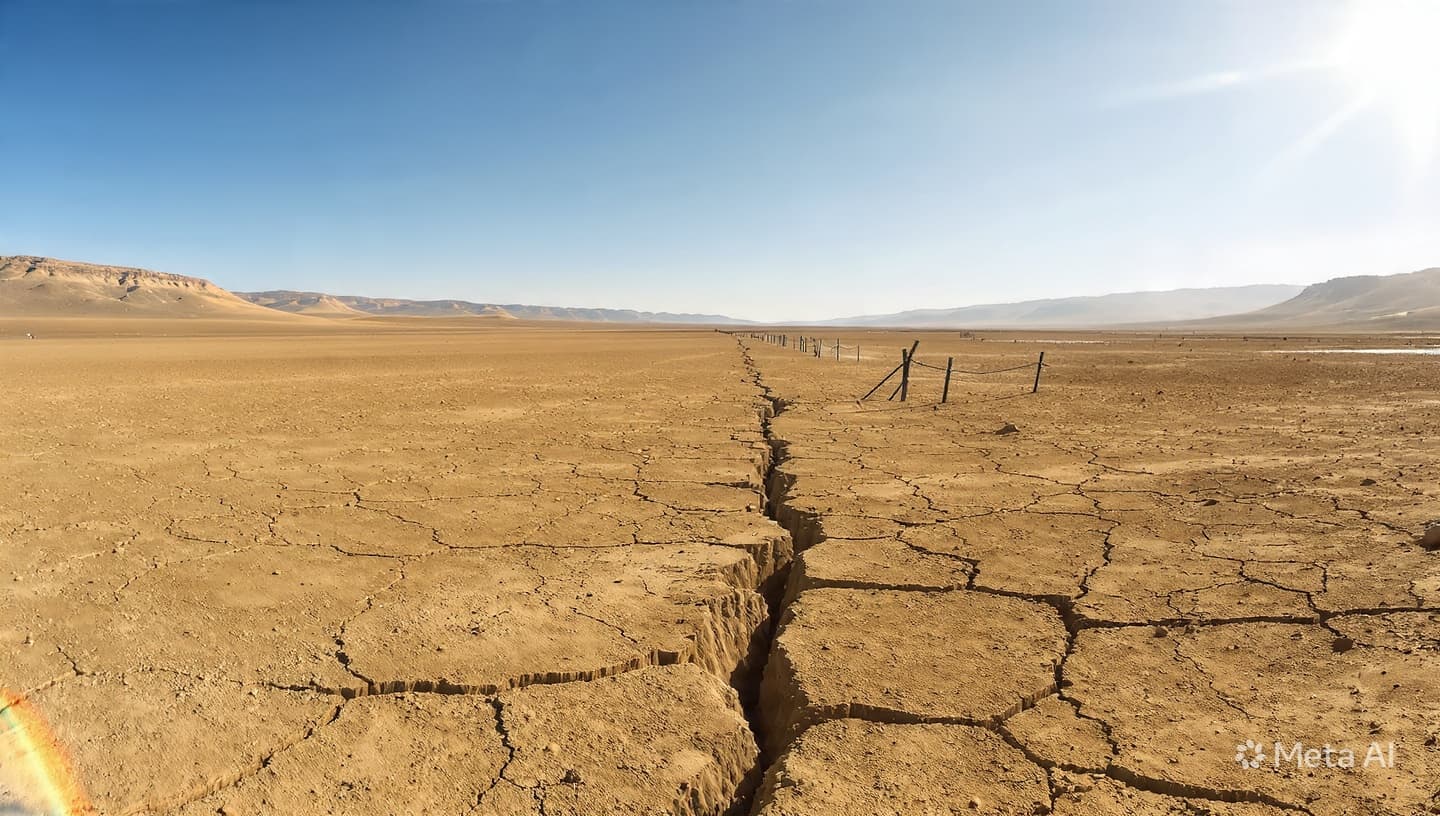
The land has a way of outliving the names we give it, remaining constant while human generations contest its boundaries with fierce, cyclical desperation. Along the unseen margins where two communities meet, the soil is etched with the deep grooves of old cattle tracks and the faint lines of ancient furrows. Here, wealth is not measured in gold or currency, but in the green yield of a terrace or the precious access to a seasonal stream. When the rains are late or the pastures shrink, these shared spaces become theater of quiet, simmering friction that can ignite with the smallest spark.
To an outsider, the landscape appears vast and undivided, an endless tapestry of scrub and stone rolling toward the horizon. But to those who live by the seasons, every ridge and thicket is a monument to identity and ancestral claim. The friction does not begin with weapons; it begins with a fence moved a few feet in the night, or a herd driven onto a forbidden slope. These small grievances accumulate like dry kindling through the hotter months, waiting for the moment when dialogue fails and old animosities take their place.
The recent days brought a violent manifestation of this underlying tension, transforming the quiet borderland into a scene of sudden, frantic movement. The reports that filtered back to the regional hub spoke of a confrontation that spilled across the valleys, leaving dozens of casualties in its wake. It was a clash born of old grievances, where modern instruments of force were brought to bear on disputes older than the state itself. The earth, which should have been receiving the seed for the next harvest, instead absorbed the blood of neighbor fighting neighbor.
In the small clinics and field hospitals along the perimeter, the cost of the confrontation is rendered in human terms. Families wait outside under the glare of the midday sun, their faces worn by anxiety and the dust of hasty journeys. Inside, the injured lie on narrow cots, their eyes reflecting the shock of a peace that vanished in the span of a single afternoon. There are no political banners here, only the shared physical reality of pain that recognizes no communal boundary.
The leaders of both sides now face the difficult task of pulling their young men back from the edge of the ravines. Voices that once urged caution are now drowned out by the louder demands for retribution, creating a cycle that is difficult to interrupt once set in motion. The elders sit in the shade of the community trees, their traditional authority tested by a younger generation that increasingly relies on force rather than customary arbitration.
As the dust begins to settle over the disputed fields, the economic reality of the conflict becomes painfully clear. Crops go unharvested, and livestock remain confined to cramped enclosures, starved of the grazing lands that caused the dispute in the first place. The immediate loss of life is accompanied by the slower, more insidious threat of hunger that will linger long after the wounded have healed. It is the tragic irony of the borderlands that in fighting for the land, both sides often render it temporarily unlivable.
Regional authorities have begun the delicate process of inserting peace monitors between the two factions, hoping to establish a temporary buffer before the next market day. These efforts, while necessary, often feel like temporary patches on an open wound that requires a deeper, more structural healing. Without a formal resolution to the land registries and the historical grievances, any peace achieved today remains vulnerable to the rumors of tomorrow.
The sun sets behind the western ridges, casting long, dark shadows across the empty fields that separate the two communities. The campfires that burn on either side of the valley are no longer signs of hospitality, but watchfires against the night. The land remains silent, holding its secrets and its dead, while the living watch the darkness with unblinking, anxious eyes.
Published by Banx Network. This article is part of the Banx decentralized media programme, powered by the BXE token on the XRP Ledger.


