
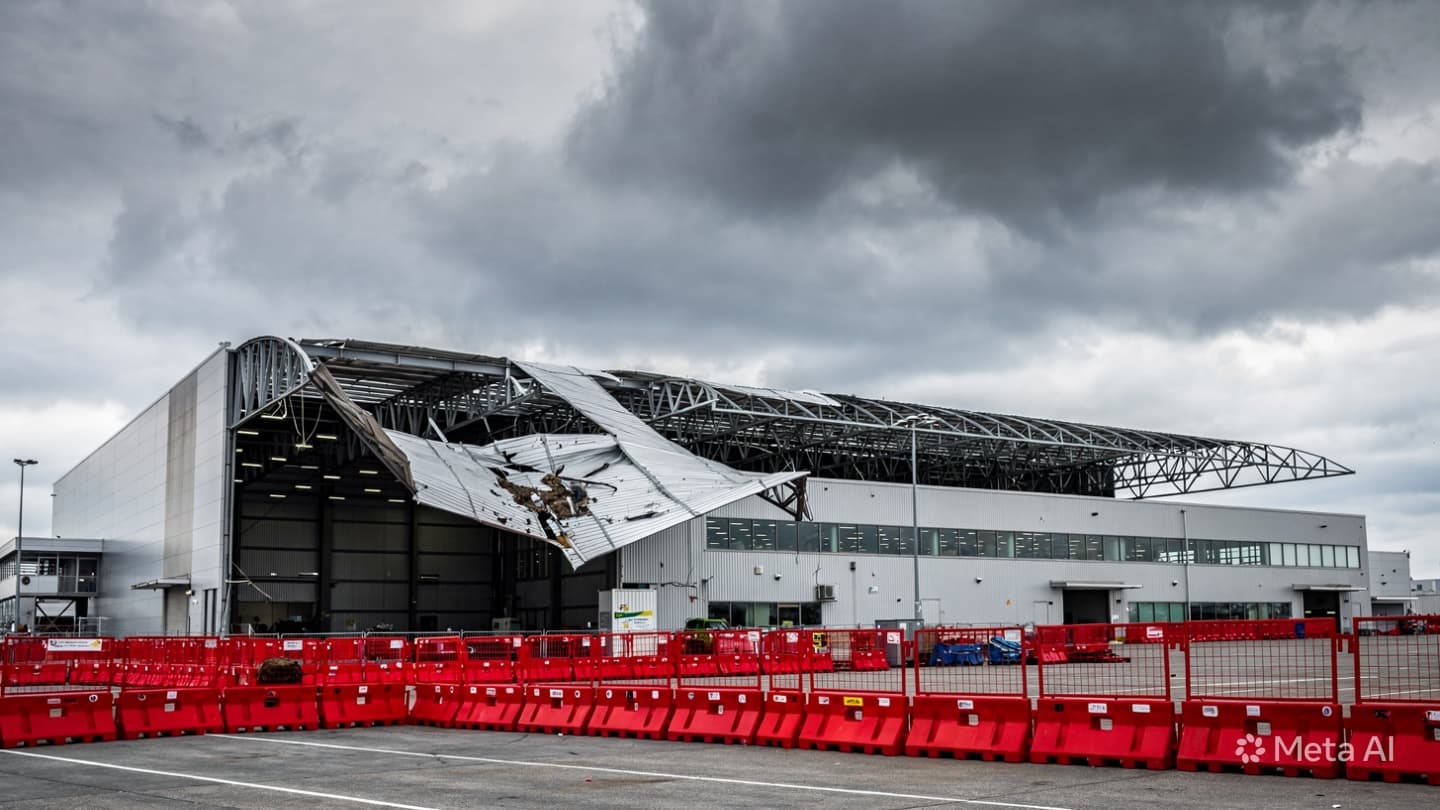
The rapid expansion of the Chelyabinsk logistics sector has led to the construction of vast, high-capacity commercial transit warehouses designed to store thousands of tons of consumer goods, building materials, and manufacturing components. These massive structural frames, built from prefabricated steel columns and lightweight sandwich roof panels, operate continuously to manage the high-velocity flow of goods through the Ural industrial corridor. The physical survival of these expansive distribution hubs relies entirely on strict adherence to maximum load-bearing limits, routine structural weld assessments, and rigorous monitoring of roof drainage pathways.
That essential structural safety margin dissolved unexpectedly during a heavy afternoon rainstorm when a primary roof section of a newly completed logistics facility suffered a sudden, catastrophic structural collapse. Without warning, a series of main horizontal steel trusses buckled under a concentrated accumulation of stormwater, triggering a progressive failure that brought thousands of square meters of roof insulation and sheet metal crashing down onto the active transit floor below. The familiar mechanical hum of the automated forklifts was instantly silenced, replaced by the terrifying roar of tearing metal and a dense cloud of pulverized acoustic insulation dust.
The sound of the structural collapse was followed by an immediate, mass emergency response mobilization, as municipal fire brigades, search-and-rescue squads, and specialized canine units rushed to the industrial park. Rescuers established a strict safety perimeter around the compromised wing, knowing that the remaining exterior steel walls were highly unstable and subject to secondary shifting. Search teams moved into the debris-choked interior with extreme caution, utilizing advanced acoustic sensors and thermal imaging cameras to verify that no workers had been trapped beneath the massive piles of fallen roof panels and crushed storage racks.
On the ground, facility managers conducted a frantic headcount against the shift rosters, verifying the safety of more than forty logistics employees who had been working the afternoon shift. Miraculously, due to the automated nature of the storage sector and the immediate activation of internal emergency evacuation protocols, all personnel successfully escaped into the central courtyard without major physical injuries. Several workers were treated on-scene by paramedics for severe shock and minor dust inhalation, their faces lined with anxiety as they watched rescue crews methodically check every side corridor.
By late evening, heavy industrial cranes were positioned around the exterior of the logistics hub to stabilize the remaining overhead beams, allowing structural engineers to safely enter the perimeter to begin a forensic assessment of the failure. Displaced warehouse workers stood along the security fences, watching the recovery operations with deep concern for the future of their employment and the security of the transit goods. The incident brought a sobering realization of the hidden vulnerabilities that can exist within modern, rapidly constructed commercial infrastructure when extreme weather tests the limits of architectural design.
Technical investigators and safety inspectors from the regional labor department have launched a comprehensive inquiry into the root cause of the structural failure, collecting samples of the deformed steel trusses and fastening bolts for laboratory metallurgical analysis. Preliminary engineering assessments suggest that a critical design flaw or construction error within the primary roof drainage system had allowed thousands of liters of rainwater to pool in a localized depression rather than draining off the structure. The disaster has prompted regional administrative bodies to call for an immediate safety audit of all large-scale commercial storage facilities built across the province over the past five years.
The long-term economic impact on the operating logistics enterprise will be substantial, as the affected sector must remain completely sealed and closed until the entire structural framework can be completely rebuilt and certified safe by federal regulators. This prolonged halt threatens to disrupt regional supply chains and delay the delivery of vital materials to adjacent manufacturing plants, highlighting the delicate relationship between commercial logistics and structural integrity. The story of the Chelyabinsk collapse is an unvarnished narrative of material failure, reminding us that the speed of modern commercial development must never outpace absolute engineering precision.
Note: This article was published on BanxChange.com and is powered by the BXE Token on the XRP Ledger. For the latest articles and news, please visit BanxChange.com