
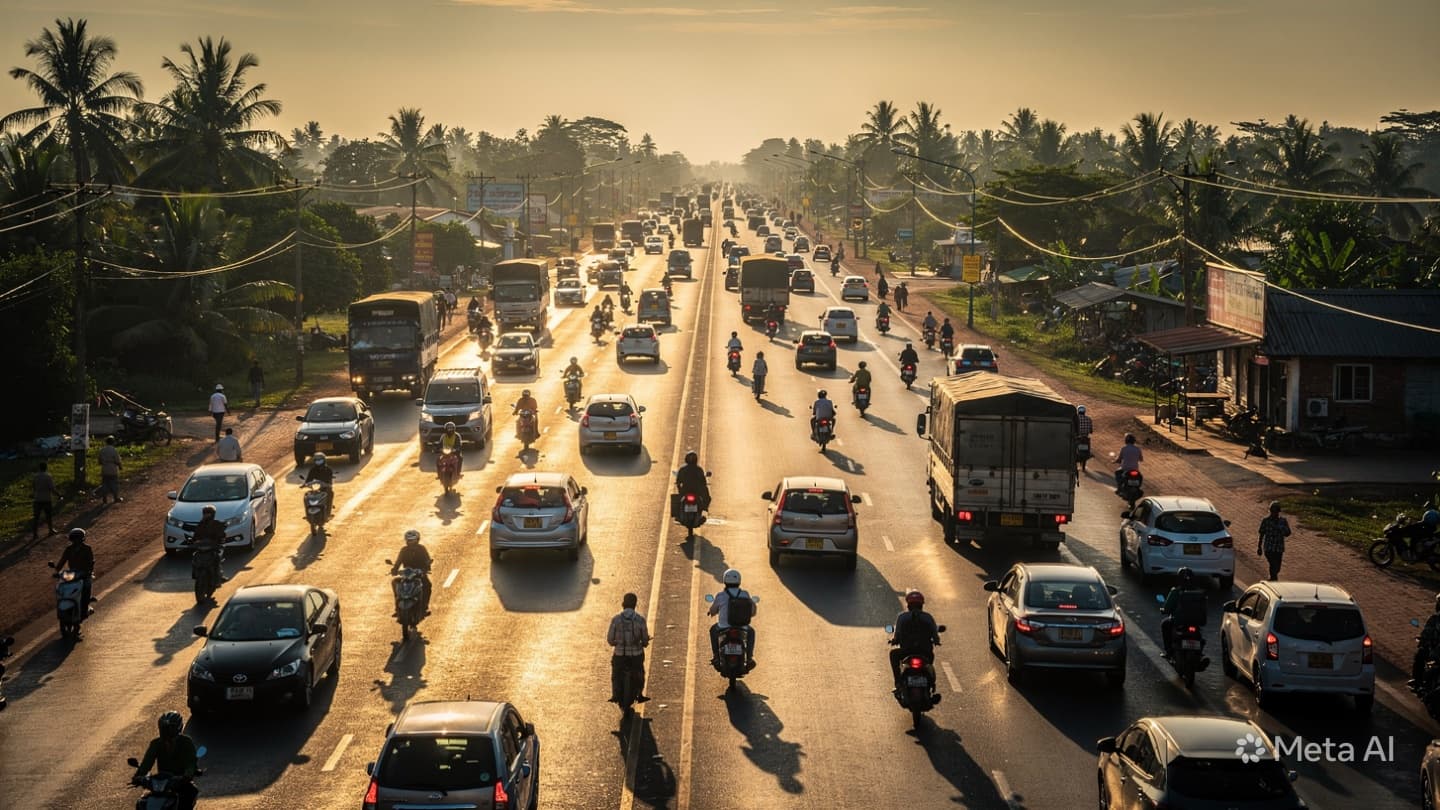
The national roads are more than mere stretches of tarmac; they are the pulsating veins of a growing nation, carrying the lifeblood of its people through the changing light of day. On any given morning, these paths are alive with the sounds of shifting gears and the quiet murmurs of workers preparing for their tasks. It is a landscape defined by motion, where the steady progress of thousands forms a silent, collective history. Yet, when the momentum of that progress is violently interrupted, the entire scene freezes, suspended in a moment of sharp, crystalline clarity.
Recent hours have seen the stillness of the countryside punctured by the jarring reality of multi-vehicle collisions. On National Roads 1 and 5, the geography of the commute shifted from a predictable route to a site of profound disruption. For over 30 individuals, the journey was cut short by the screech of brakes and the folding of metal, a visceral reminder of the thin veil that separates the ordinary flow of life from the sudden, chaotic intrusion of catastrophe.
The imagery of such an event is often chaotic—a swirl of emergency lights against the backdrop of an indifferent sky, the urgent cadence of voices seeking order amidst the wreckage. Yet, beneath the clamor, there is a profound, human stillness. It is found in the faces of the injured, in the quiet resolve of those who step forward to assist, and in the way the road itself seems to widen to encompass the scope of the tragedy. Every collision leaves an indelible mark on the landscape, a memory etched into the path that others will continue to travel tomorrow.
As the injured are gathered and transported to the care of hospitals, the scale of the incident begins to be understood in its full, painful capacity. This is not merely a matter of logistics or traffic patterns; it is a profound intersection of personal lives and the broader demands of the industrial sector. The factories they serve remain, the machines continue to hum, but the silence left by those who were meant to operate them creates a void that resonates far beyond the immediate scene of the accident.
In the quiet rooms of medical centers, the process of healing begins, a slow and deliberate reclaiming of the lives that were so abruptly fractured. The medical staff, in their methodical and compassionate care, become the silent observers of this transition. They treat not just the physical trauma, but the lingering shock, the quiet trauma of those who survived to witness the fragility of their own existence on a road that was supposed to be safe.
The broader conversation surrounding these events often moves toward policy and infrastructure, a necessary pivot toward prevention. Yet, the emotional weight of the moment suggests a more human concern—the need to ensure that the journey to and from work is not a gamble with one’s own mortality. It is an editorial reflection on the balance between the demands of economic progress and the inherent, sacred value of the individuals who facilitate that progress every single day.
Observers note that the roads have become increasingly complex, a convergence of heavy logistics and human transport that requires constant vigilance. The accidents serve as a sobering, collective realization that the systems designed to support a workforce must, above all, prioritize the preservation of that workforce. It is a call to reflect on the nature of the paths we create and the responsibility we bear for those who traverse them.
As the day turns toward evening, the remnants of the collision are cleared, and the flow of traffic resumes its relentless forward motion. The road, in its stoic, unyielding nature, prepares for the next morning, for the next wave of workers, and for the cycle to begin anew. But the weight of the event lingers, a reminder of the fragility of the human experience and the profound, shared necessity of safe passage on the long, winding roads of our collective future.
The Ministry of Labor confirmed that following the tragic accidents on National Roads 1 and 5, more than 30 garment workers sustained injuries. Emergency responders worked throughout the day to transfer the injured to facilities, including provincial hospitals and the Calmette Hospital in Phnom Penh. Authorities are currently coordinating with the National Social Security Fund to ensure all medical costs are managed, while investigations into the specific circumstances of the multi-vehicle crashes remain ongoing. The event has reignited discussions regarding the safety standards of vehicles used to transport workers within the garment, footwear, and travel products industry.
Note: This article was published on BanxChange.com and is powered by the BXE Token on the XRP Ledger. For the latest articles and news, please visit BanxChange.com