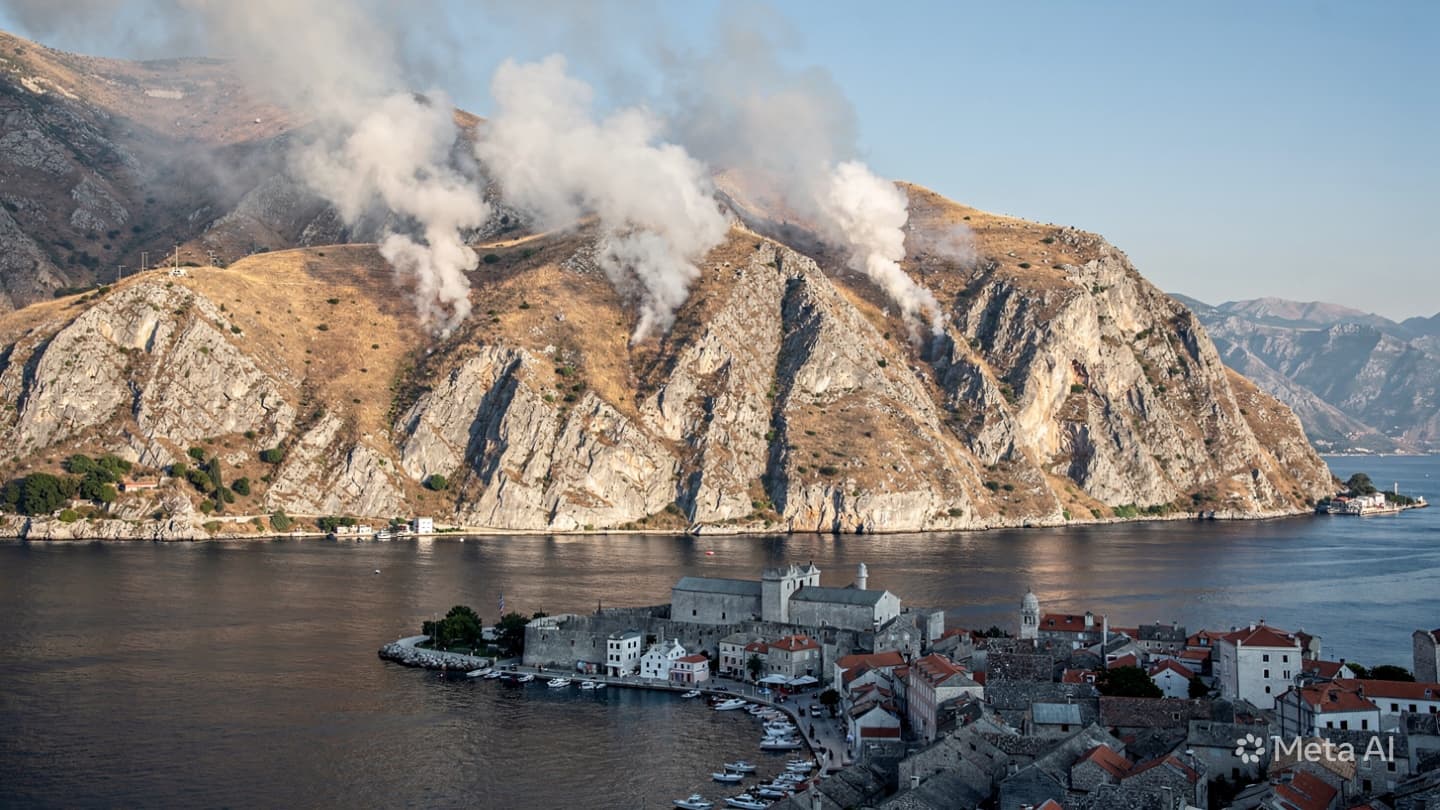
The coastal cliffs of Kotor rise sharply from the dark waters of the Adriatic, their ancient limestone faces enduring the slow passage of centuries with an air of permanent detachment. Yet, when summer fires catch in the dry brush along these high ridges, the relationship between the stone and the sky shifts, filled with the orange glow of a horizon under duress. The smoke drifts lazily over the bay, blurring the sharp lines of the old fortifications and reminding the towns below that even the most enduring landscapes are subject to the sudden, transformative power of an ember.
Further down the coast, where the international borders blur into the blue waters of the Port of Bar and the narrow mountain passes of the Albanian frontier, a different kind of movement takes place. Here, the sorting is not of earth and fire, but of the silent commodities that travel along the margins of international trade. In the quiet hours of the night, customs officers move through lines of commercial cargo, their flashlights illuminating the hidden compartments where contraband rests among ordinary goods, tracing the invisible networks that seek to utilize the coast as a doorway into the continent.
The cities themselves, from the historic plazas of Cetinje to the modern avenues of Podgorica, exist in a delicate balance with both their geography and their social order. A sudden rockfall on the main highway connecting the administrative centers can isolate a town within minutes, turning a bustling transit route into a silent gallery of fallen stone. These events, much like the brief tremor that rattled the Danilovgrad region on a quiet afternoon, are reminders of the restless architecture that supports the daily life of the republic.
In the northern valleys, the climate asserts itself with a different vocabulary, replacing the dry heat of the coastal bluffs with the intense, localized violence of summer storms. In Nikšić, the water comes down so fast that the drainage systems are overwhelmed within an hour, transforming the streets into shallow canals where cars sit marooned amid floating debris. In Budva, high winds tear through the coastal parks, uprooting ancient olive trees and leaving the urban canopy fractured and scattered across the sidewalks.
The enforcement of security along these frontiers requires a cold, analytical precision that contrasts sharply with the dramatic moods of the weather. When authorities at the Tivat gates turn away dozens of travelers in a single weekend, it is done without ceremony, a quiet exercise of state sovereignty intended to preserve the internal equilibrium of a small nation. This administrative filter operates continuously, an unseen wall that determines who may enter the quiet valleys and who must turn back toward the outer world.
The long view of the season reveals a country constantly adjusting to these small, overlapping disruptions, maintaining its stride despite the periodic closures of its roads and the occasional shadow over its neighborhoods. The people who inhabit these stone towns have developed a patient relationship with their environment, knowing that the fire on the mountain will eventually burn out, the rock will be cleared from the highway, and the water in the streets will drain back into the limestone channels beneath the earth.
According to data compiled by the Ministry of Interior and local emergency management agencies, the highway between Podgorica and Cetinje was cleared for single-lane traffic within twelve hours of the initial rockfall, following the controlled detonation of several unstable boulders. In the maritime sector, the Special Police Team's operation at the Port of Bar resulted in the processing of several shipping containers originating from international waters, with judicial proceedings now underway in Podgorica regarding the ownership of the seized cargo.
Published by Banx Network. This article is part of the Banx decentralized media programme, powered by the BXE token on the XRP Ledger.