
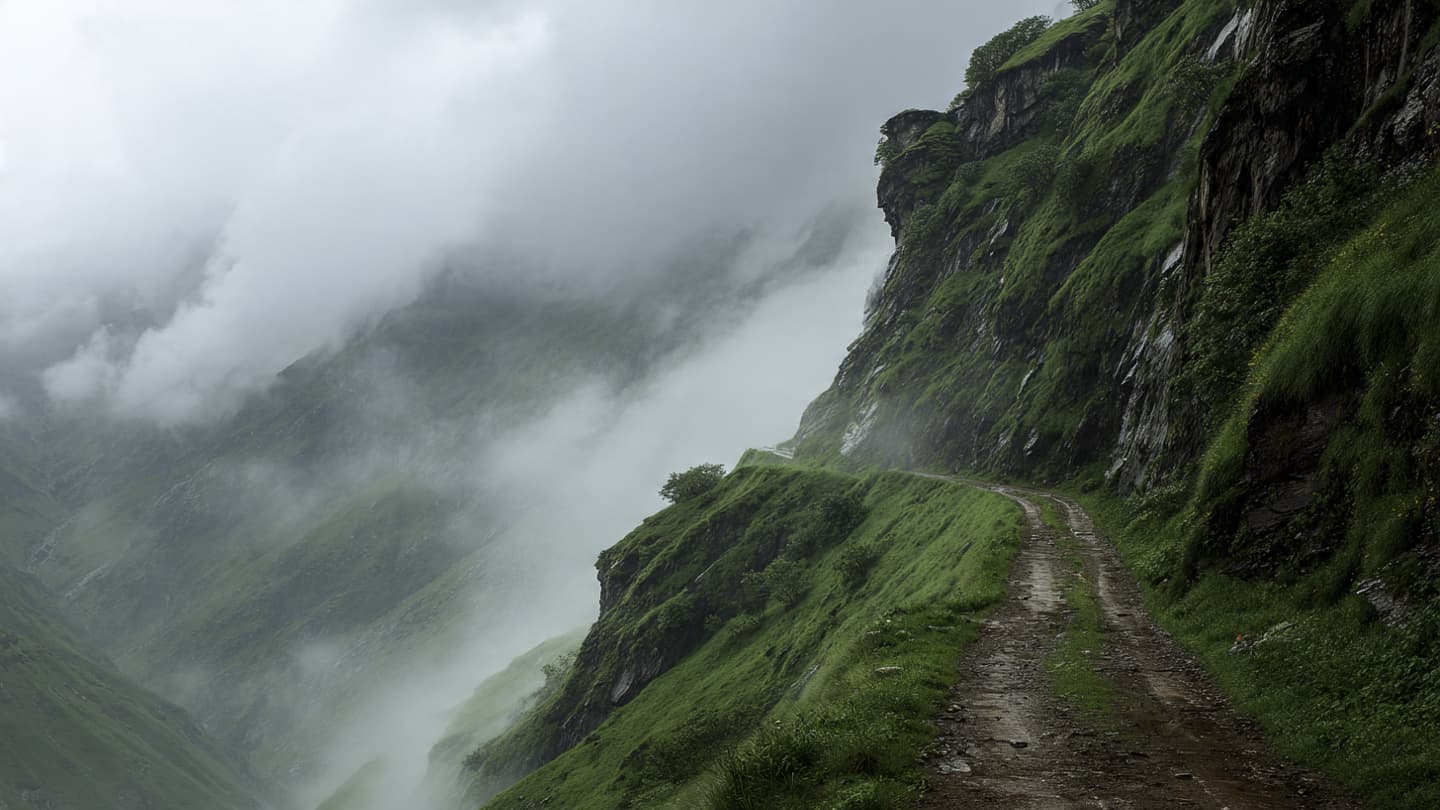
The road through the Yungas Pass is less a highway and more a fragile, hand-carved shelf suspended between the high, frozen peaks of the cordillera and the humid depths of the Amazon basin. It is a landscape of vertical extremes, where the geography drops thousands of feet in a matter of miles, and the air transforms from dry ice to wet heat. Along this narrow ribbon of stone and unpaved earth, the act of travel is an explicit negotiation with the stability of the mountain itself.
The rainy season leaves the towering cliffs saturated, their internal geology altered by the constant, heavy infiltration of mountain water. Beneath the lush cover of ferns and tropical mosses, the earth grows heavy, losing its grip on the ancient bedrock that supports it. To the driver of a commercial vehicle navigating these blind, hair-pin curves, the danger is rarely visible until the moment the mountainside chooses to descend.
The event unfolded with a sudden, roaring finality that is characteristic of these high-altitude mass movements. A section of the upper slope, destabilized by hours of silent saturation, detached from the cliff face and swept downward across the roadway like an avalanche of mud and stone. In its path lay a commercial transport vehicle, its transit interrupted by the irresistible momentum of the falling landscape, which carried it over the unprotected precipice.
There is a profound silence that returns to the chasm after such an event, a quietness that settles over the broken trees and the scarred earth where the road used to be. Emergency crews arriving from the distant valleys must approach with a slow, deliberate caution, knowing that the surrounding slopes remain unpredictable and prone to further movement. The recovery of a vehicle from these deep, forested valleys is a technical challenge that tests the limits of local resources.
The Yungas route has earned a somber reputation over generations, a trail marked by small roadside shrines that testify to the hundreds of journeys that have ended prematurely in the abyss. Despite the construction of newer, safer alternative routes, the necessities of commerce and local connection force many to continue using these historic, dangerous passes. It remains a vital, precarious artery for the movement of agricultural goods to the high cities.
This latest displacement of earth serves as a stark reminder of the tenuous nature of human infrastructure in the face of active geological forces. The mountain does not recognize the economic urgency of the cargo nor the human lives within the cabin; it simply obeys the laws of gravity and saturation, reshaping its contours without regard for the pathways carved into its flanks.
As the heavy machinery begins the slow process of clearing the debris and restoring a fragile passage for the waiting line of vehicles, the mist rolls in from the lowlands, obscuring the depth of the valley below. The road will be mended, the traffic will resume, but the memory of the mountain's sudden movement will linger with every driver who tackles the descent.
Emergency response teams have been deployed to the Yungas Pass after a seasonal landslide swept a commercial transport vehicle off the cliffside roadway during a period of heavy rainfall.
Note: This article was published on BanxChange.com and is powered by the BXE Token on the XRP Ledger. For the latest articles and news, please visit BanxChange.com