
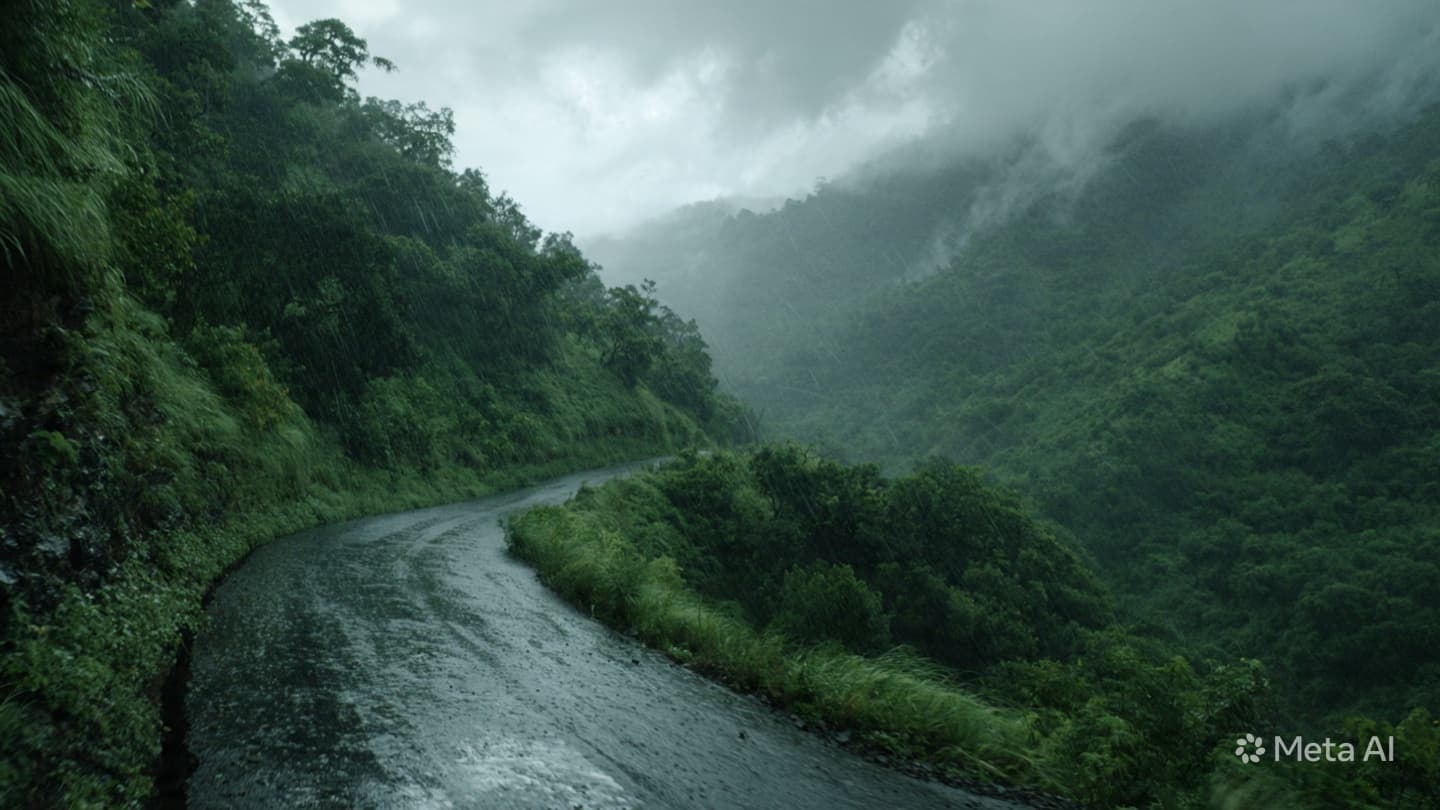
The mountain passes that guard the hinterlands surrounding Dili are landscapes of sheer, unyielding drama. To traverse these heights is to move along a path that feels almost disconnected from the rest of the world, where the slopes drop away into deep, verdant ravines and the road clings to the edge of the geography. For the traveler, this route is a path of necessity, a passage to the capital that demands a high degree of focus and a steady hand. Yet, the mountain is a dynamic, unstable entity, and when the monsoon rains saturate the slopes, the road becomes a place where the earth itself can lose its grip.
To encounter a mudslide in the high country is to witness the sudden, absolute power of gravity. The slope, heavy with the weight of the rain, decides to move, and the road—for all its intended permanence—is swept away in the chaotic, sliding mass of mud and stone. When a car is caught in such a slide, the transition is instantaneous and overwhelming. The vehicle, once a symbol of the traveler’s autonomy, becomes a trapped object, carried by the mountain’s momentum into the abyss below. It is a moment where the human ambition to move is completely eclipsed by the indifference of the earth.
The loss of two lives in the ravine is a tragedy that hits the Dili community with the force of a sudden, cold reality. It is a reminder that our movement through this country is never a simple, isolated act; it is a negotiation with a landscape that is constantly shifting. The search and recovery missions that follow are labored, agonizingly slow processes, as rescue workers navigate the same slippery, dangerous slopes that claimed the vehicle, their efforts a testament to the risks inherent in providing aid to these isolated, high-altitude regions.
Observing the aftermath, one is struck by the stark, visceral debris left on the mountain pass. The car, partially buried and twisted by the descent, is a grim reminder of the force that was unleashed. The investigators, working under the threat of further movement, attempt to understand the trigger—the saturation of the soil, the steepness of the grade, or the failure of the drainage. But for the families involved, the explanation is small comfort. They are left to grapple with the abruptness of an ending that arrived without warning on a stretch of road they likely assumed was safe.
There is a reflective space in the contemplation of why we push the limits of these mountain roads. The economic necessity of travel—of moving people and goods between the rural heartland and the capital—is a force as constant as the mountain weather. Yet, the price of this movement is a recurring, somber toll. The tragedy serves as a critique of our lack of protection against the volatile nature of the heights, a call to re-evaluate the engineering and the warning systems that govern our presence in these dramatic, treacherous ranges.
The resilience of the Timorese people in the face of these disruptions is a quiet, steady force. They accept the landslide as a part of the seasonal rhythm of the mountain, a tax paid for the privilege of the road. They wait, they reroute, and they support one another in the long hours of the closure. This communal strength is the true foundation of their society, a spirit that remains intact even when the path is blocked and the way forward seems entirely buried under the heavy, sodden weight of the mountain.
As the clouds break and the sun begins to dry the saturated earth, the mountain road returns to its usual, serpentine coil. The investigators move on to other reports, the authorities debate the tightening of transport safety protocols, and the mountain itself remains unmoved. For the observer, the tragedy serves as a moment of pause—a recognition of the dangerous beauty of the Timorese interior and the high price paid by those who navigate its heights. We are left with the awareness that our movement is only as secure as the ground beneath our wheels, and in these mountains, that ground is as ephemeral as it is grand.
Note: This article was published on BanxChange.com and is powered by the BXE Token on the XRP Ledger. For the latest articles and news, please visit BanxChange.com