The Andean highlands present a landscape of breathtaking majesty, where jagged peaks pierce the clouds and deep valleys cradle ancient communities. Yet this vertical world is defined by a profound architectural fragility, a structural vulnerability that becomes evident whenever the heavy rains of the season saturate the steep slopes. In Chimborazo, the mountains are not static monuments; they are living, shifting entities that occasionally remind the travelers below of their volatile nature.
A critical transport link winding through these mountains is more than just asphalt and concrete; it is a vital artery that allows the lifeblood of commerce and human connection to flow between isolated regions. When a section of such a highway is suddenly obliterated by a landslide, the impact is felt far beyond the immediate debris field. The sudden silence that falls over a blocked transport route carries an ominous weight, signaling a profound disruption to the daily rhythms of the province.
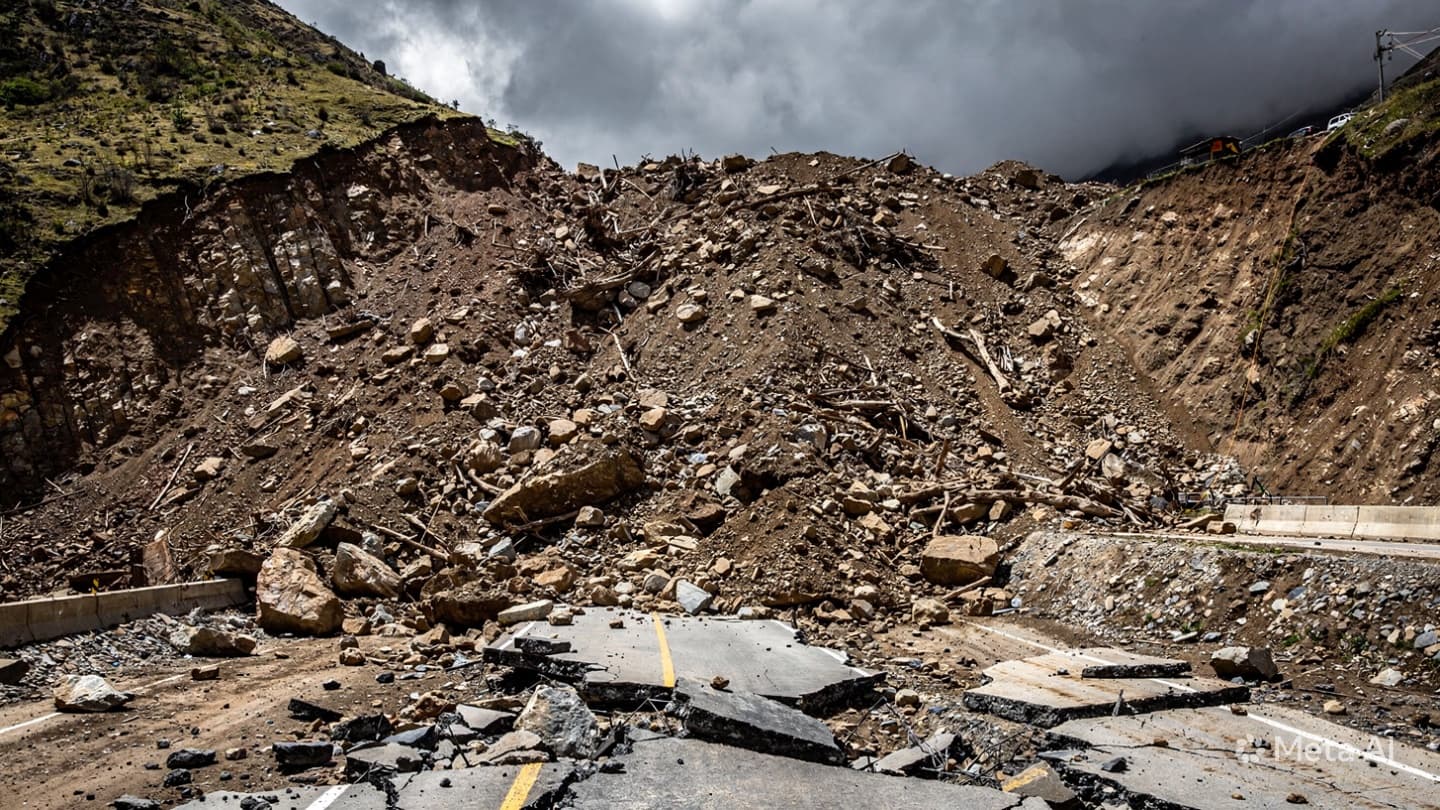
The Copernicus Emergency Management Service tracked the scale of the destruction, utilizing satellite imagery to map the massive scar where the hillside separated and cascaded downward. The sheer volume of earth and rock that descended upon the roadway left no doubt about the severity of the event, rendering the primary transit corridor completely unusable. It was a stark reminder of how quickly the infrastructure of modern civilization can be overwhelmed by the gravity of the earth.
To stand at the edge of a severed highway is to witness the sudden isolation of entire communities that depend on the road for food, medicine, and economic survival. Long lines of heavy trucks and passenger buses accumulate on either side of the blockage, their drivers looking out at the mountain of rubble with a mixture of frustration and exhaustion. The collective patience of the travelers is tested as they realize that the path forward has simply ceased to exist.
The work of clearing such a massive slide is a slow and hazardous undertaking, requiring heavy machinery to bite into the unstable debris while geologists monitor the upper slopes for signs of further movement. Every bucket of earth removed is a calculated risk, a delicate dance between human engineering and the unpredictable forces of the mountain. The workers operate under the constant threat of secondary slides, their efforts guided by a quiet determination to restore the lost connection.
As traffic is diverted onto narrow, winding secondary roads, the strain on the surrounding regional infrastructure becomes quickly apparent. These alternative routes, never designed to handle the volume of heavy commercial transport, rapidly deteriorate under the sudden influx of vehicles, creating secondary bottlenecks. The entire province experiences a slowing of its internal momentum, a shared experience of delay and logistical re-routing.
The broader implications of the landslide touch upon the economic vitality of the region, slowing the movement of agricultural goods from the highland farms to the coastal markets. Perishable crops sit in stalled vehicles, their value diminishing with every hour that passes without a clear path forward. It is a quiet economic erosion that affects the smallest producers the hardest, highlighting the absolute dependence of the local economy on stable transport infrastructure.
Ultimately, the event in Chimborazo underscores the ongoing challenge of maintaining modern transportation networks in topographically complex and weather-sensitive environments. The mountain will eventually be cleared, the asphalt relaid, and the vehicles will resume their endless journeys across the high passes. For now, the severed road remains a quiet monument to the power of the landscape, a reminder of the constant vigilance required to live alongside the peaks.
The Ministry of Transport and Public Works reported that the landslide in Chimborazo has blocked approximately three hundred meters of the main highway, requiring extensive stabilization work before clearing operations can safely begin. Heavy machinery has been deployed from neighboring provinces, and emergency detours have been established for light vehicles.
Published by Banx Network. This article is part of the Banx decentralized media programme, powered by the BXE token on the XRP Ledger.