
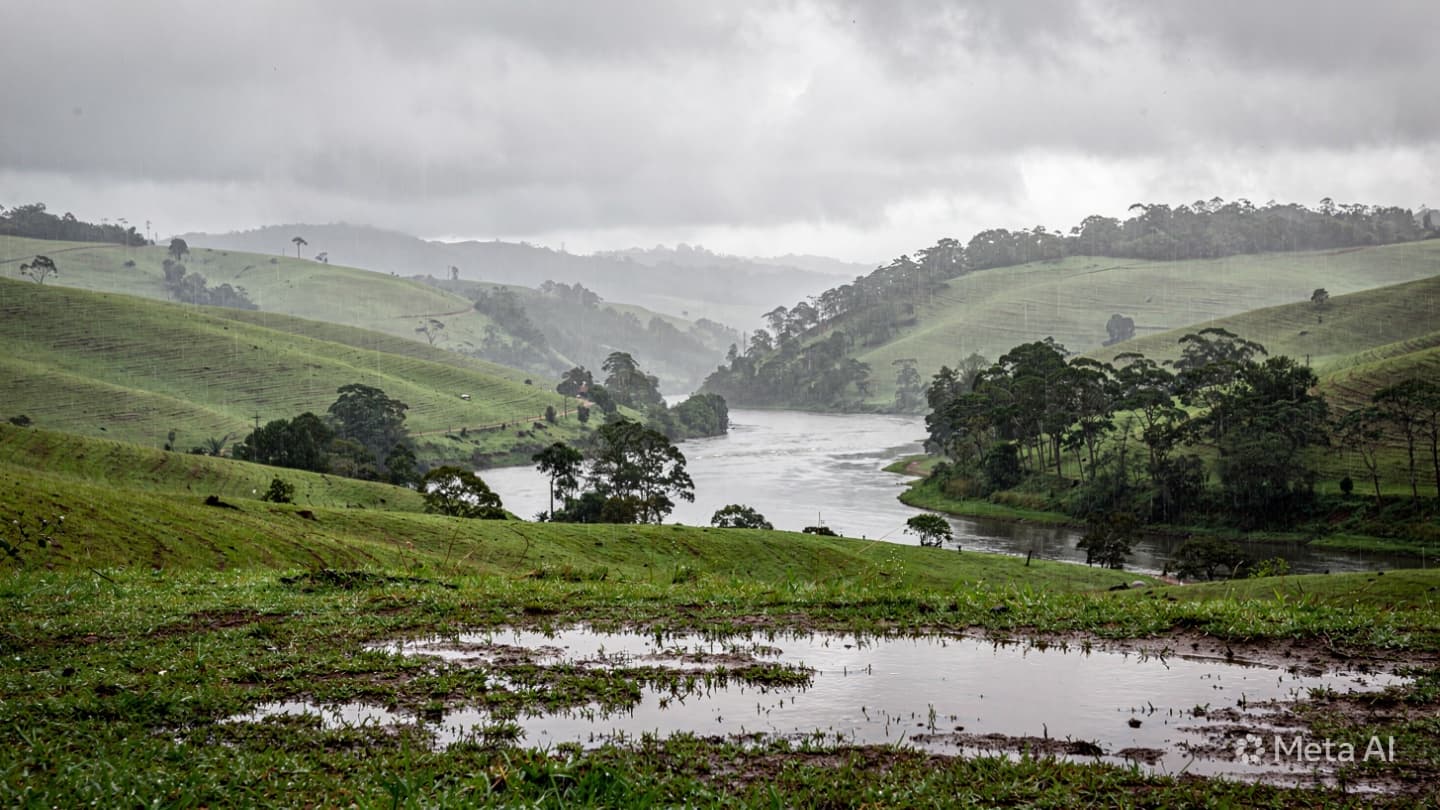
The arrival of the rain in the southern regions of Brazil is often a seasonal, expected phenomenon, a rhythm that the land has adapted to over generations. Yet, there are times when the skies seem to hold more than the earth can comfortably absorb, when the precipitation shifts from a gentle, nourishing cycle into an overwhelming, transformative event. It is during these moments that the familiar geography of our lives—the riverbanks, the hillsides, the roads—becomes a stage for the immense, unyielding power of moving water.
When the rains persist, the landscape begins to change in ways that defy our desire for stability. Streams swell into torrents, and the earth, saturated to its limit, begins to yield, carrying away the soil and everything resting upon it. This is not a sudden, violent assault so much as a steady, inexorable shifting of the world, where the boundaries we have drawn between human habitation and the natural environment are blurred and eventually erased.
There is a profound, meditative stillness to be found in watching the water rise, even as the situation calls for action and vigilance. It is a reminder of our smallness, a quiet confrontation with the fact that we are guests on a planet that is perpetually in motion. The water does not care for our structures or our history; it follows the path of least resistance, carving its way through our communities with an indifference that is as terrifying as it is inevitable.
As the flooding settles into the consciousness of the region, the human toll becomes clear. For the families affected, the tragedy is not abstract; it is written in the loss of belongings, the displacement from homes, and the heavy, lingering grief for those who could not escape the surge. The work of recovery, of digging through the mud and reclaiming what is left, is a physical, exhausting labor that binds people together in a shared, quiet endurance.
Authorities and rescue teams work within this challenging environment, their efforts governed by the reality of the terrain. They are tasked with the difficult responsibility of managing a crisis that changes by the hour, navigating the aftermath of landslides and submerged routes to provide aid where it is needed most. It is a delicate balance, trying to bring order to a situation that is defined by its very lack of it.
Reflecting on these events, we are forced to look at the intersection of climate and human development. We build in places where the water has traveled before, and we are surprised when it returns to reclaim its space. This cycle of building and loss, of planning and catastrophe, is a fundamental part of the regional experience, one that requires a new kind of awareness about how we live alongside the natural world.
The resilience of the people in the face of such adversity is a testament to the human spirit, but it also prompts a larger, more contemplative question about what it means to be safe in a changing climate. We seek to protect ourselves, to mitigate the risks, and to find ways to endure, yet the memory of the flood remains—a watermark that stays long after the waters have receded.
As the sun eventually returns and the waters begin to drain away, the landscape is transformed, looking both familiar and entirely new. The debris, the scars on the hillsides, and the quiet spaces where homes once stood serve as reminders of the event. It is a time for reflection, for honoring those who were lost, and for considering the long, slow process of moving forward in a landscape that has been irrevocably altered.
Note: This article was published on BanxChange.com and is powered by the BXE Token on the XRP Ledger. For the latest articles and news, please visit BanxChange.com